|
Austrians and Triestiners
share a great common history over many
centuries. A formative history that has
created a distinctive Central European
identity that clearly distinguishes us from
the rest of Europe. It is an identity across
linguistic boundaries that the catastrophic
nationalist insanity of the nineteenth and
twentieth centuries could not erase and is
now becoming stronger and stronger .
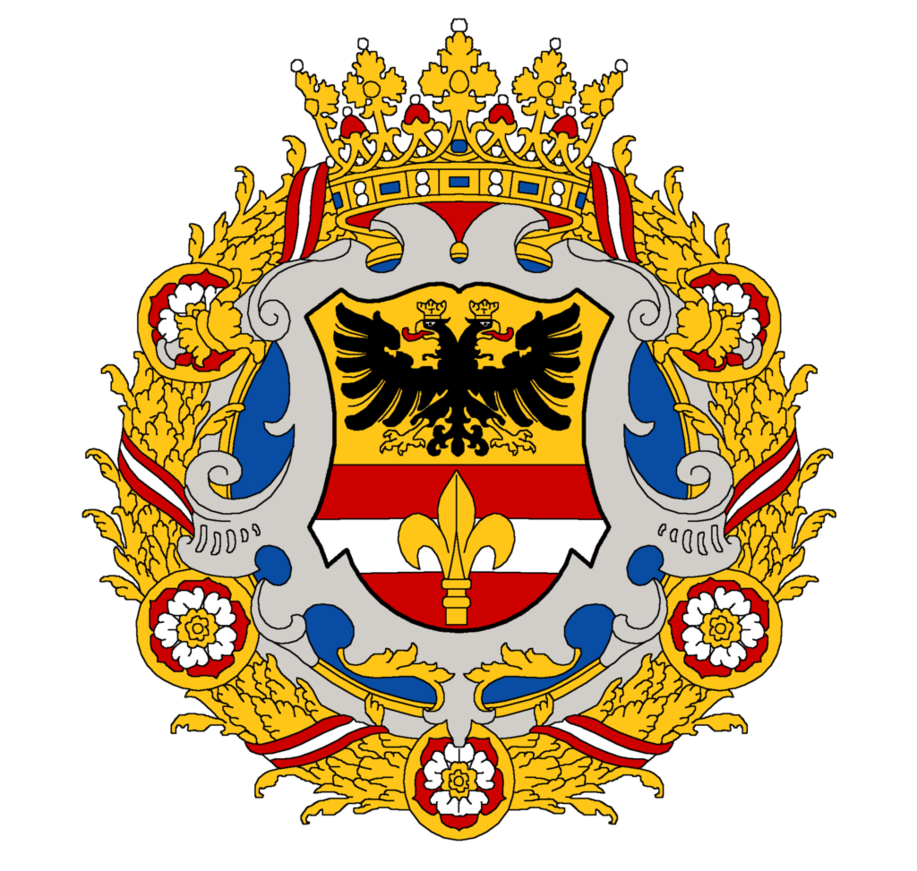
At the time of Austria-Hungary Trieste
experienced rapid economic growth and became
one of the most important ports in the Mediterranean . The
modern Austro-Hungarian
Navy used Trieste as a place to build
their ships and used the city as a base. The
rail and city traffic was also expanded,
which led to a rapid expansion of the
Trieste trade, which reached its peak with
the shipment of more than 6 million tons of
goods in 1913. Trieste had become the center
of trade in Central and
Southeastern Europe .
At the beginning of the 20th century
Trieste was a pulsating cosmopolitan
citywith numerous artists and
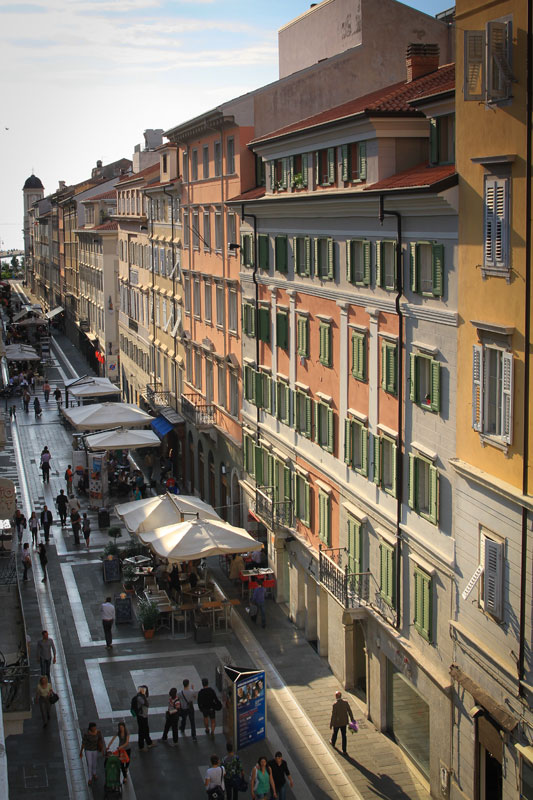
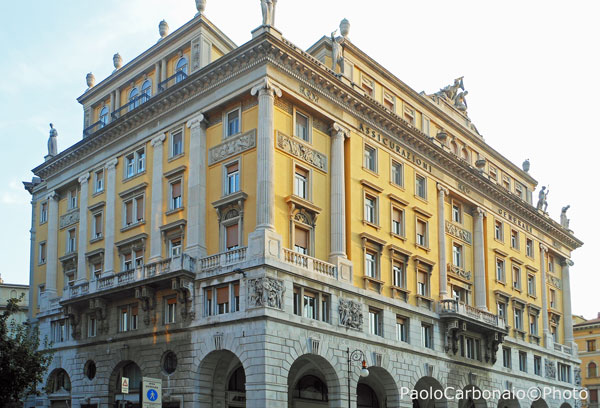
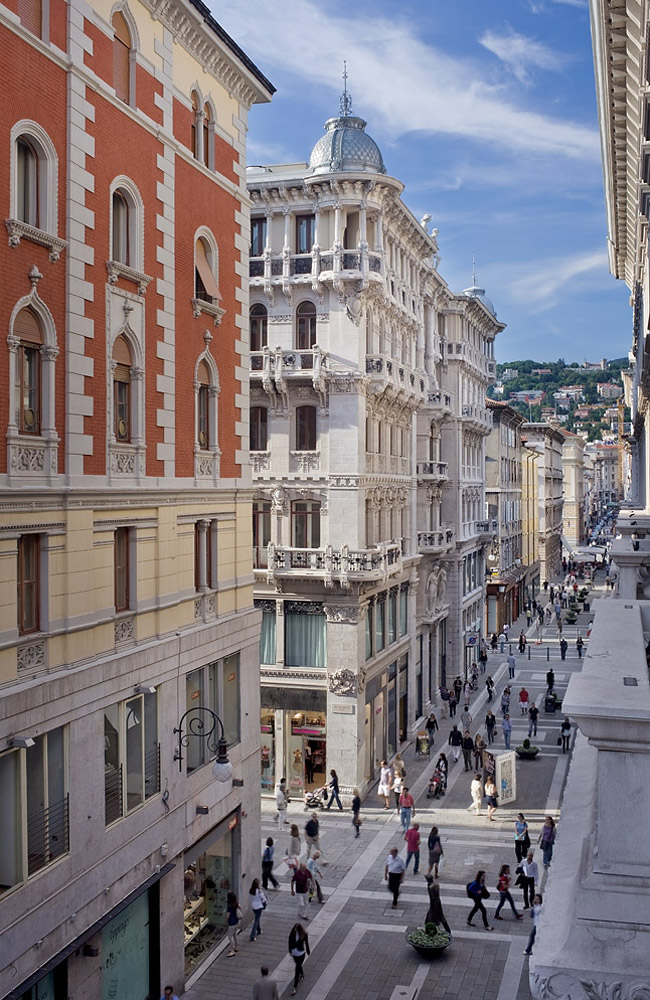
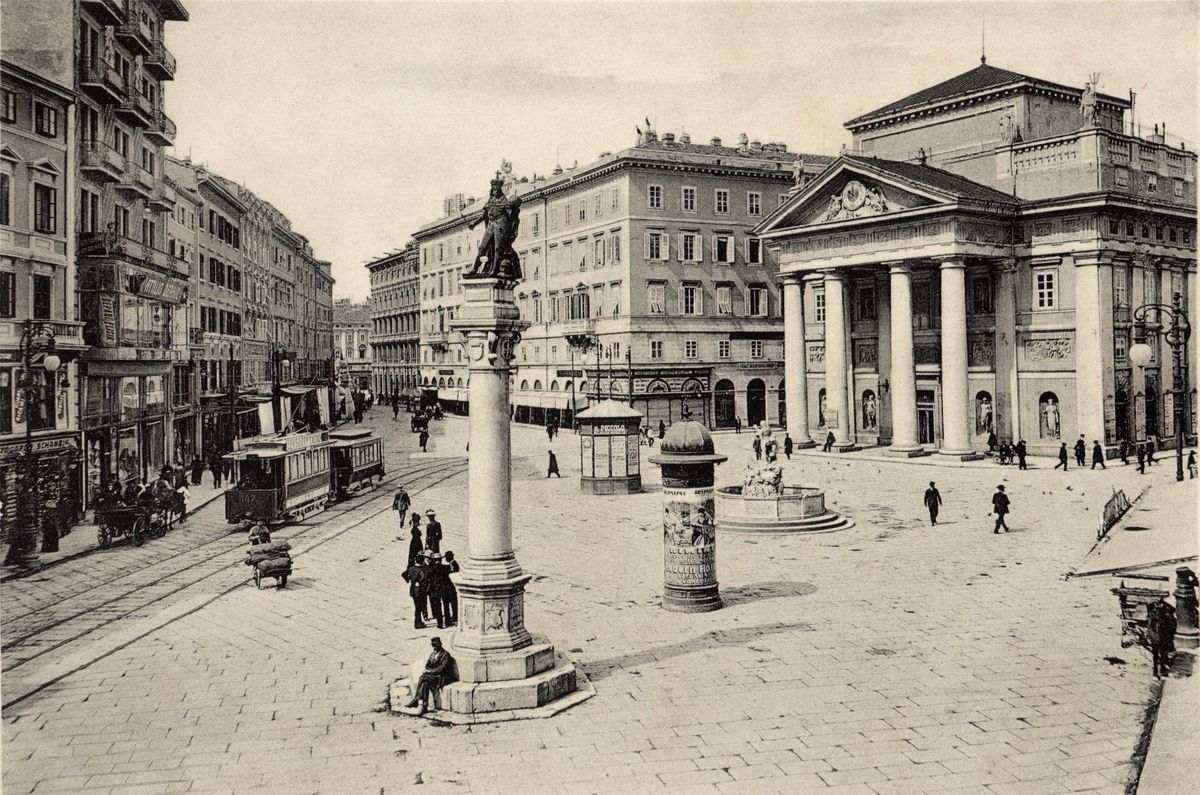
philosophers. The imposing Viennese architecture
and coffee houses dominate the streets of
Trieste to the present day
Historical evidence of even older eras
are, for example, the Richard Arch (Arco di
Riccardo), from the 1st century AD and the Roman
Theater from the 2nd century AD, which
today is used for theatrical performances of
the summer season is being used. Very well
known, on the Gretta hill, the imposing
lighthouse Della Vittoria, a monument of
Istria stone from Orsera and karstic rocks
from Gabria, dedicated to the fallen of the
First World War.
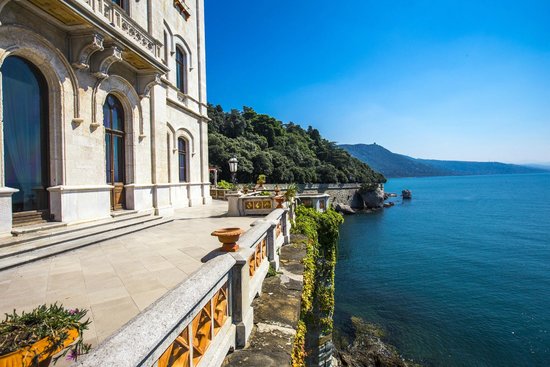
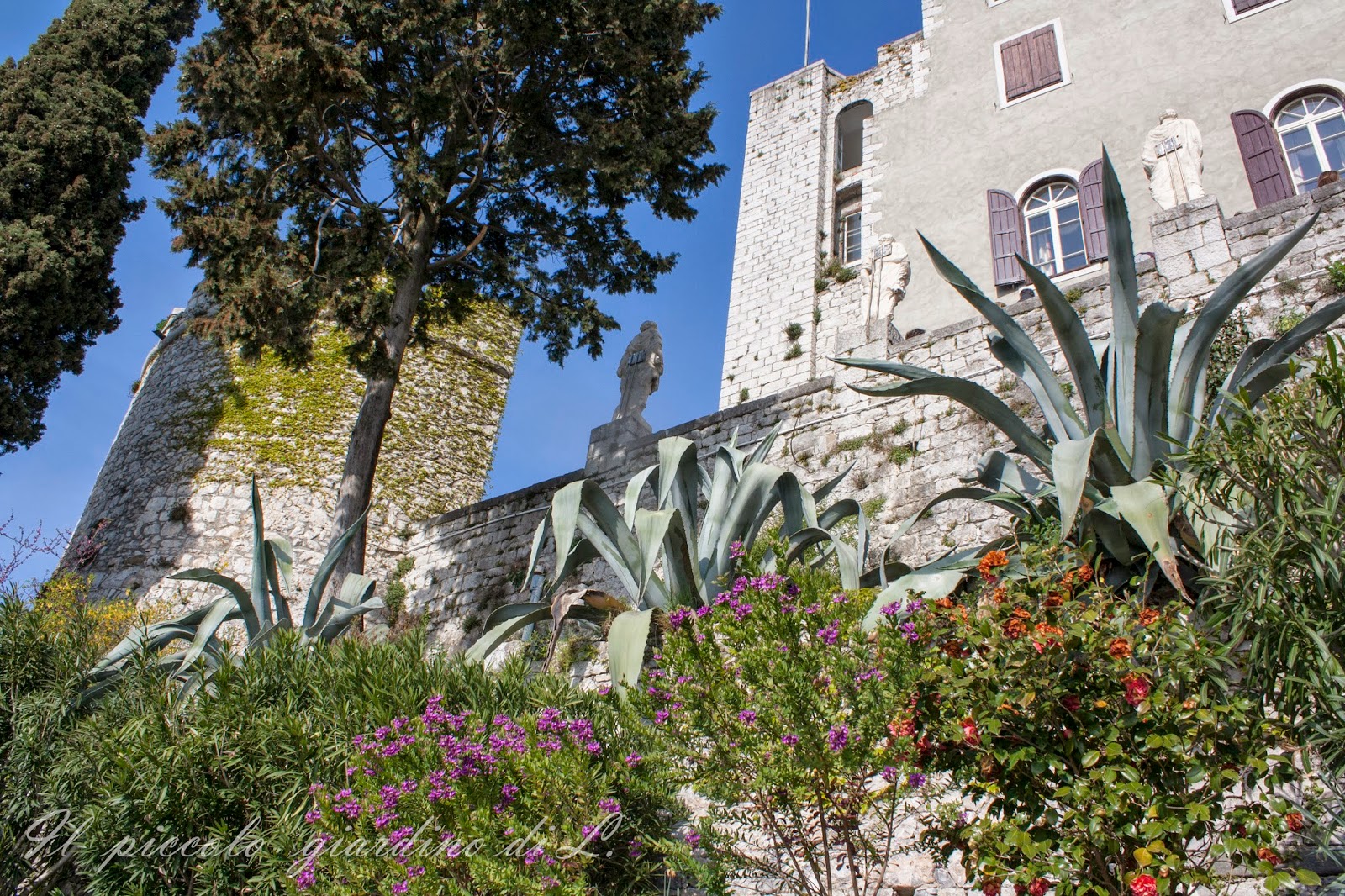
Also worth seeing is the white Castello
Miramarewhich, with its park right on
the sea, resembles a fairytale
castle. Trieste's other attractions include:
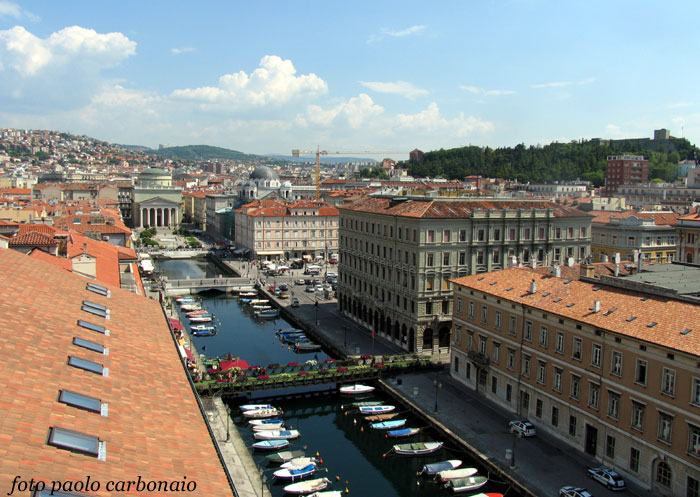
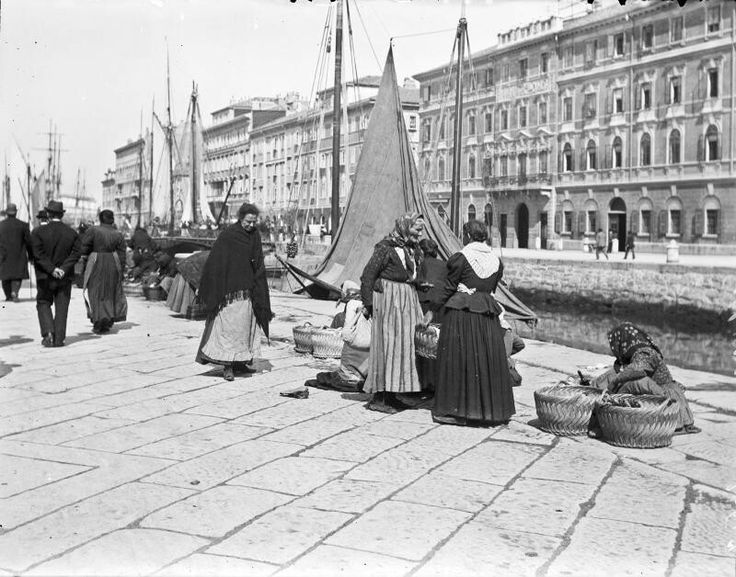
the Grand
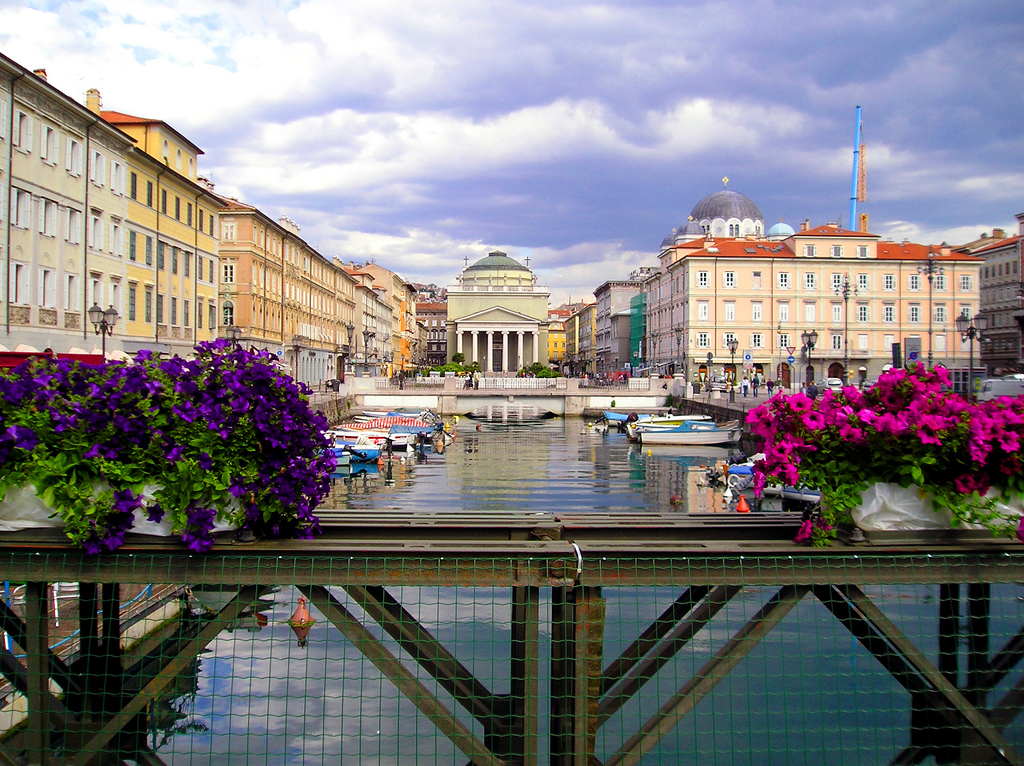
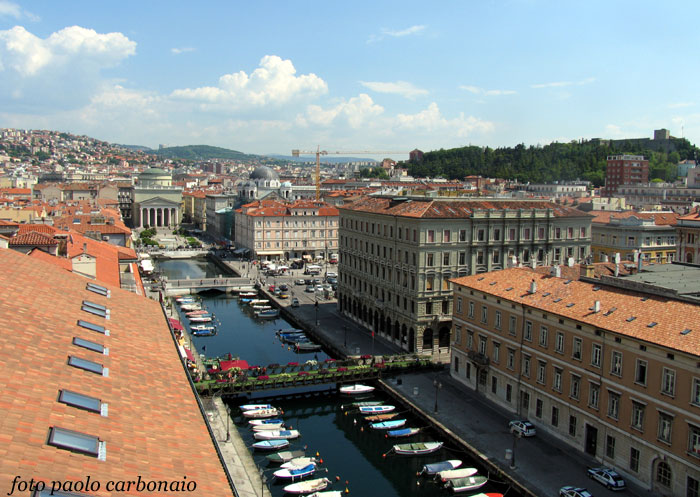
Canal , the extension of the harbor in
the city center, which ends in front of the
façade of the neoclassical church of
Sant'Antonio Nuovo; The Basilica of San
Silvestro, one of the oldest religious
buildings in the city;
ENCHANTING TRIESTE
Trieste has many charms and two faces. One
is a modern city facing forward, the other,
an identity that looks back and preserves
the past for the benefit of the increasing
tourism trade that now plays a significant
part in the local economy.
Historically and culturally, Trieste is a
magical city.
From its theatrical and musical
presentations to the historic cafés with
their many gastronomic delights; it can be
said that Trieste is truly an international
city.Trieste is tucked up in the top corner
of Mediterranean sea, its geographical
position once again ideal for the markets of
central and southern Europe.
Today, Trieste is a great place to unwind
and enjoy yourself with plenty of
opportunities for sightseeing and relaxing.
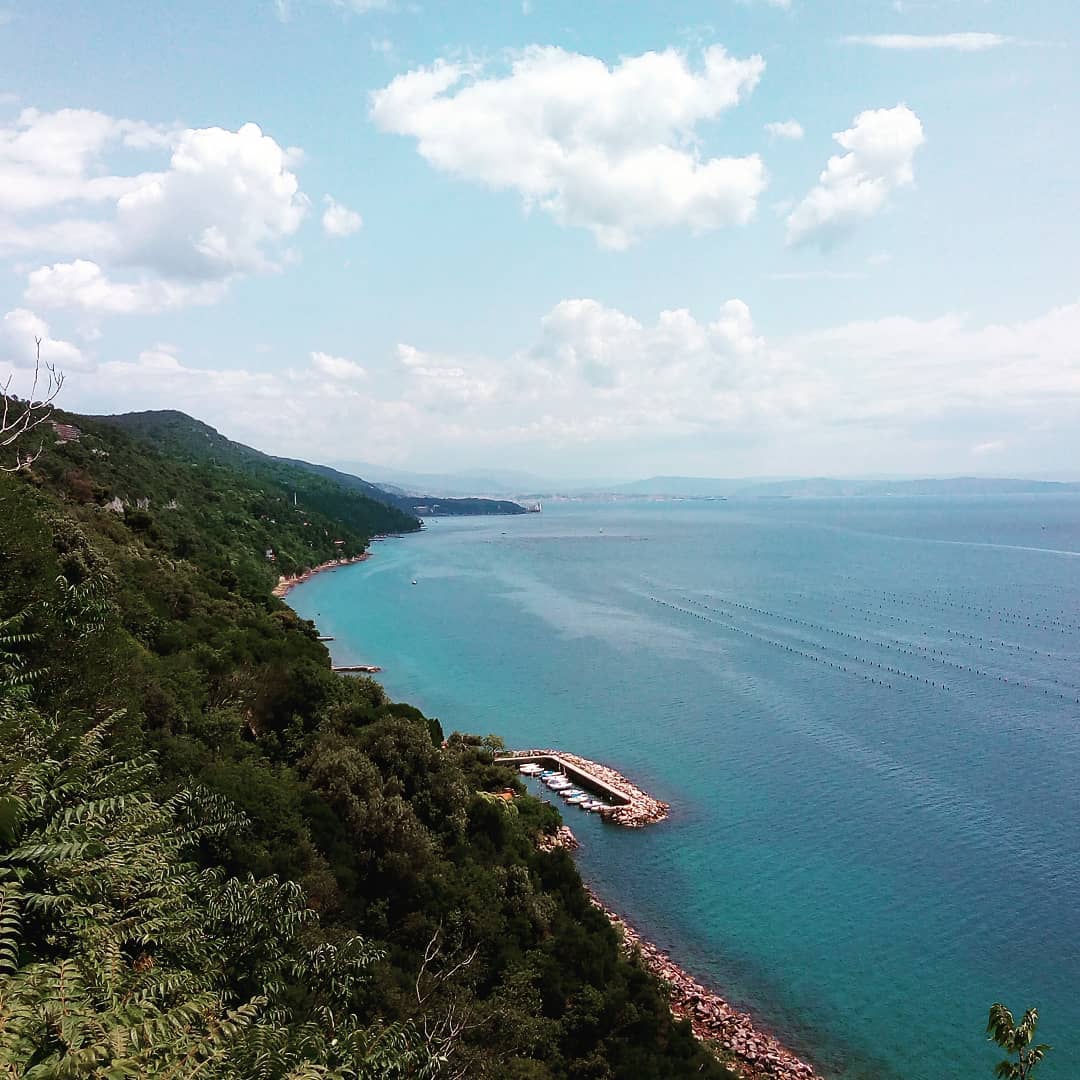
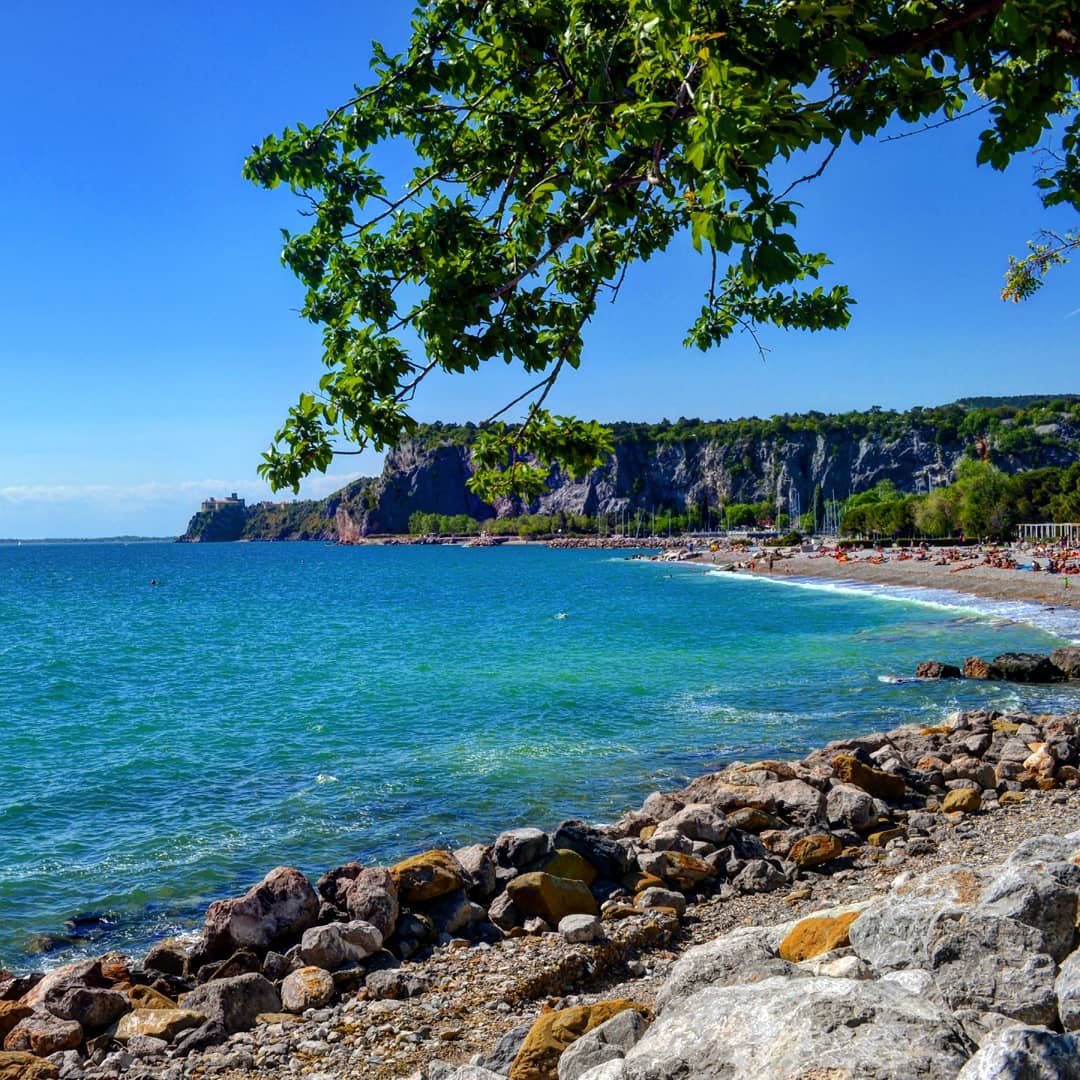
The coast to the west of the city offers a
variety of sandy beaches and the rocky shore
in the suburb of Barcola is often used by
the locals as a place to enjoy the sun.
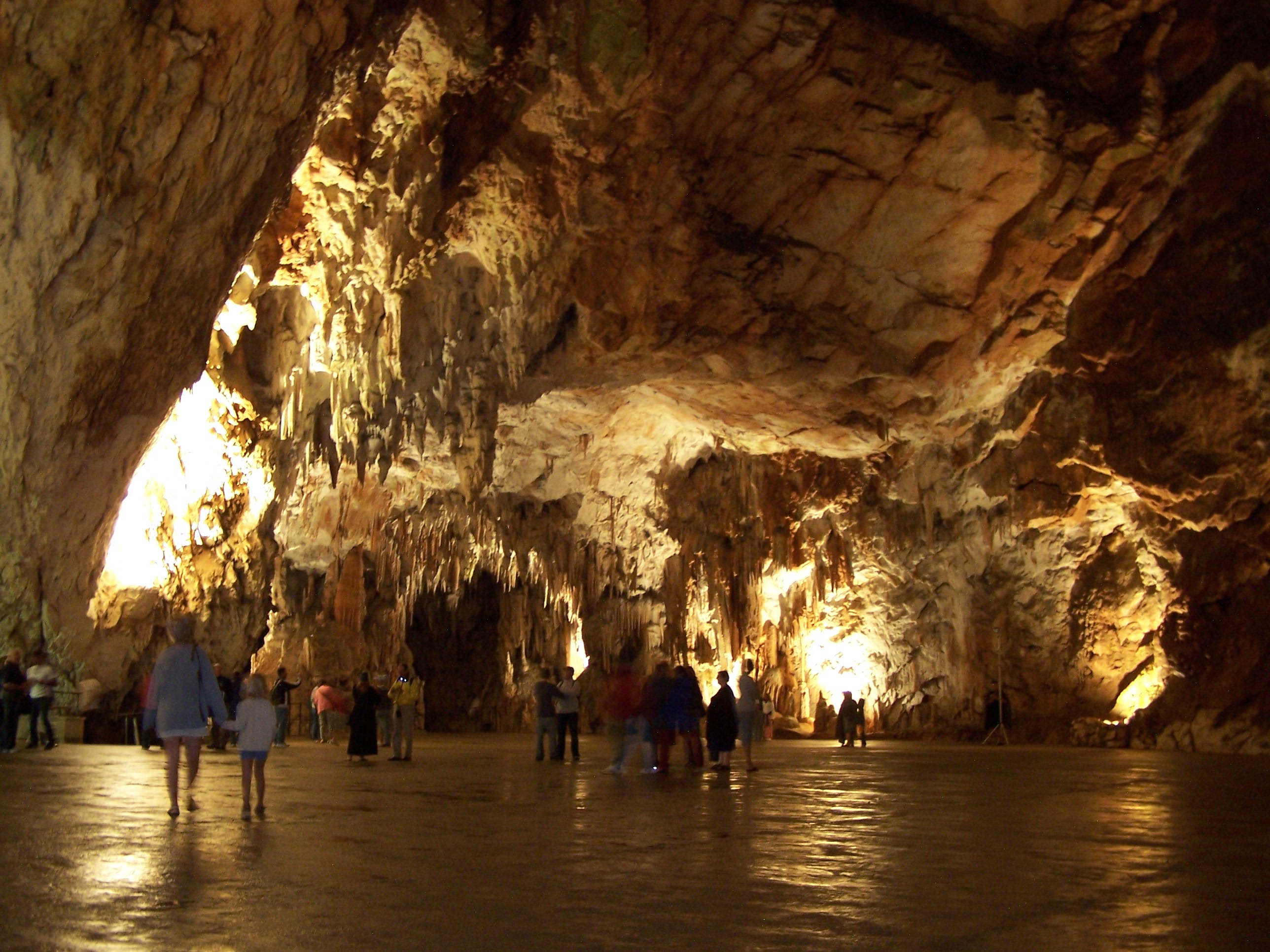
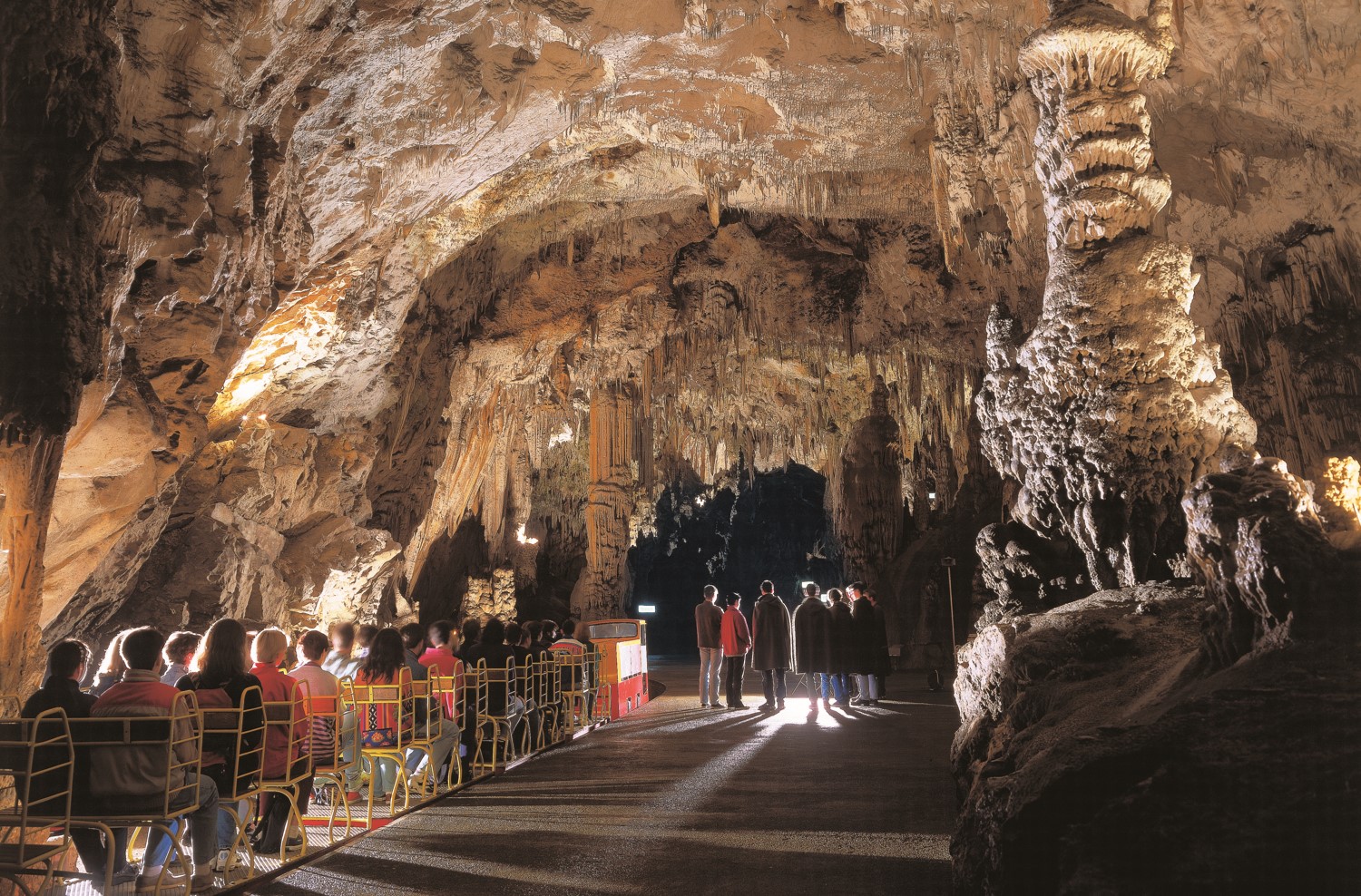
Further inland from Trieste is the Grotta
Gigante, which is the largest accessible
cave in the world.
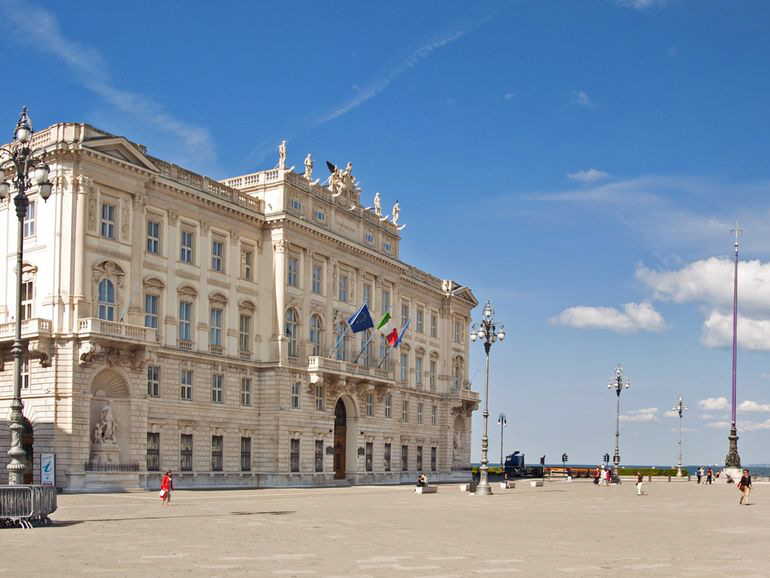
The charms and flavors of a frontier full of
tradition. The frontier city. The door to
the East. Located in the far northeastern
corner of the country, Trieste is one of the
most beautiful cities in Italy, although
considering it "Italian" is not so
appropriate, as this is an aspect of its
recent history. Culture, atmosphere, and a
particular middle-European charm make this
city today an unicum of its kind. Declared a
free port in the 1700s, an indispensable
outlet on the sea for the Habsburg Empire,
it soon became the destination of merchants,
entrepreneurs and adventurers from all
around the world, and began to acquire the
characteristics of a true cosmopolitan city.
The opening of the Suez Canal in 1869
brought the city closer to the Indies and
the far East. In the beginning of the 1900s,
Joyce, Svevo, Stuparich and Saba were just
some of the most famous regular visitors to
its literary cafés.
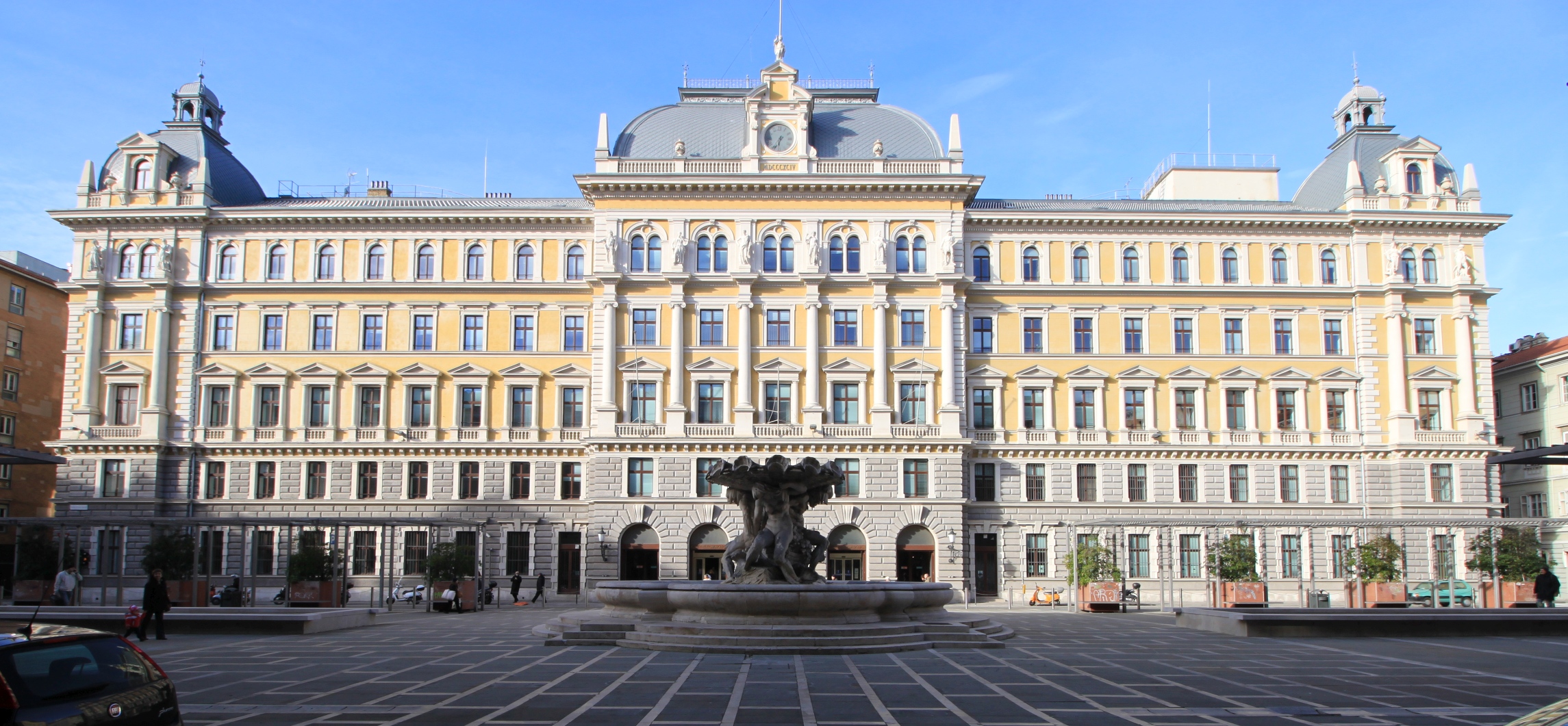
It was a literary and cultural center in
the 20th century (opera stars and literati
spent much time here) and having been owned
by the Austrian/Hungarian Hapsburgs, the
town has quite a Viennese influence and
style. It truly is the crossroads of Central
Europe and the South. With all of these
influences, the town has some grand squares,
palazzi and churches….it’s pretty in a worn
type of way — elegant — like your
grandmother. Add to that the port flavor and
Trieste becomes more interesting and more
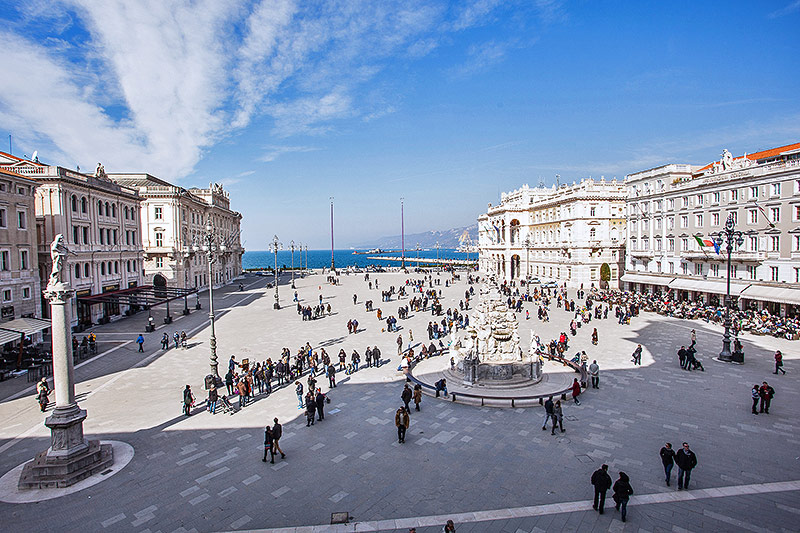
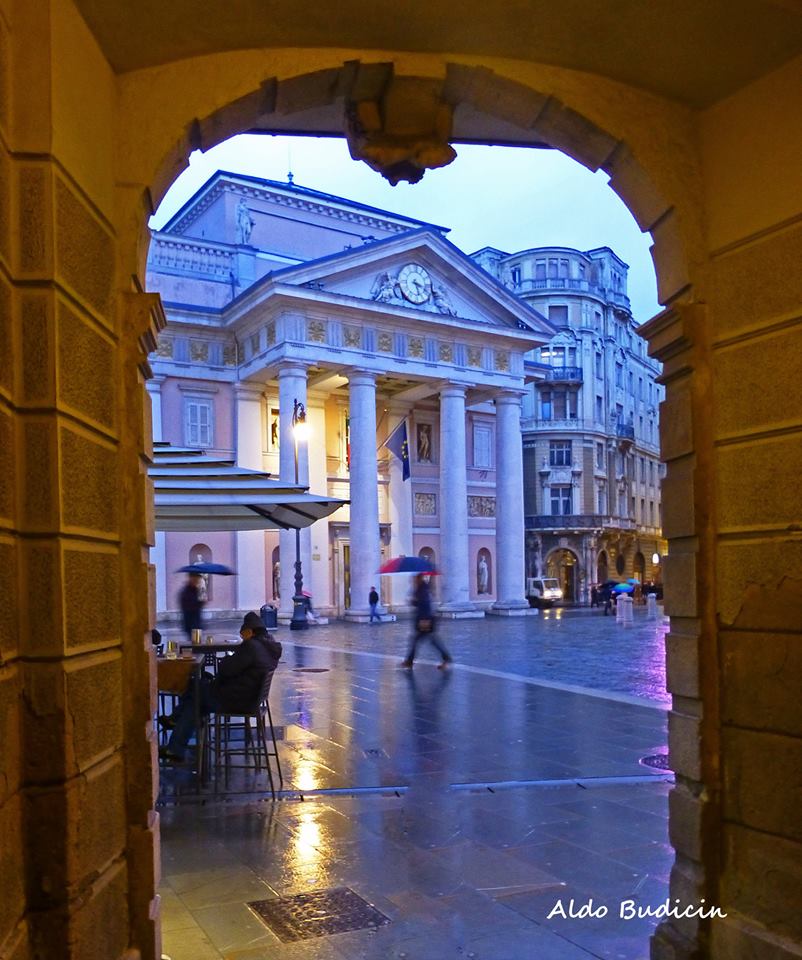
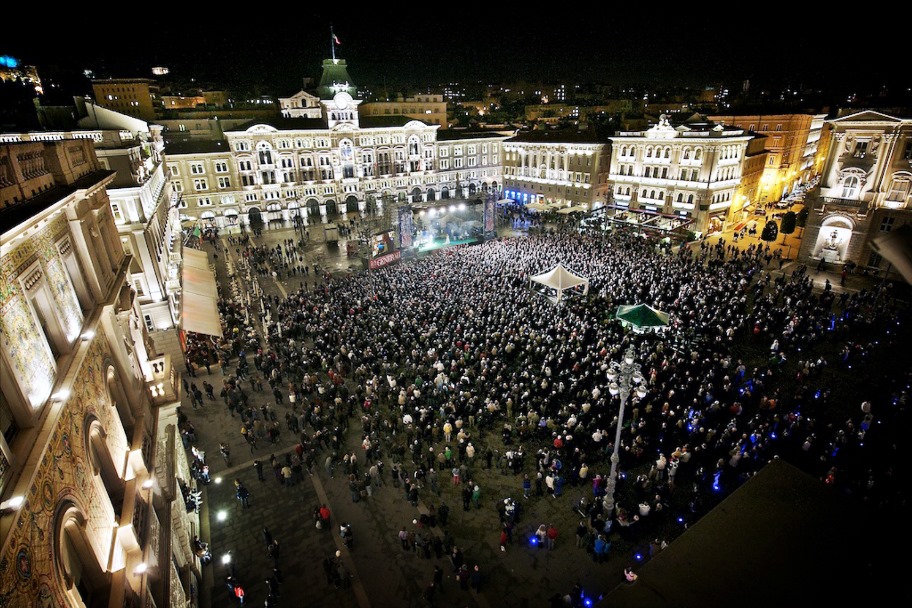
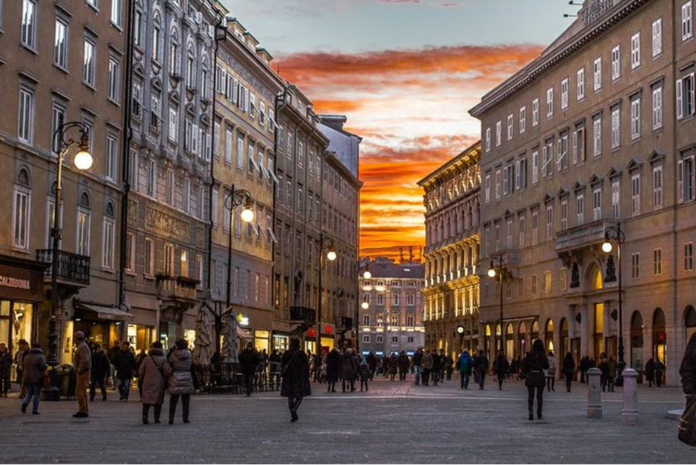
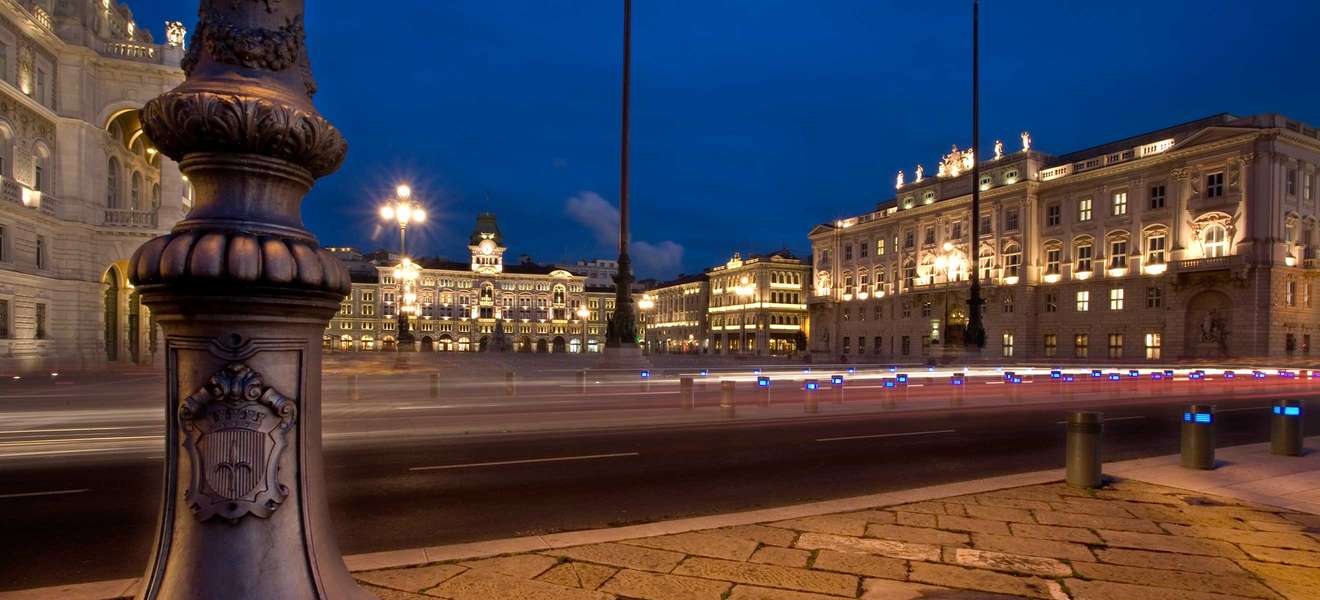
beautiful. The main square in the lower
section of town is the Piazza Grande. It is
here that you see the Viennese cafes, the
Palazzo del Governo, Palazzo del Comune
(town hall) with its clock tower and the
offices of the Triestino shipping line…..all
opening on to the port and sea. All of these
buildings were built in the 19th century.
It’s a grand piazza, said to be the largest
in Italy. The promenade is a fine place to
take a stroll. Your next stop should be the
upper town, Colle di San Giusto (views from
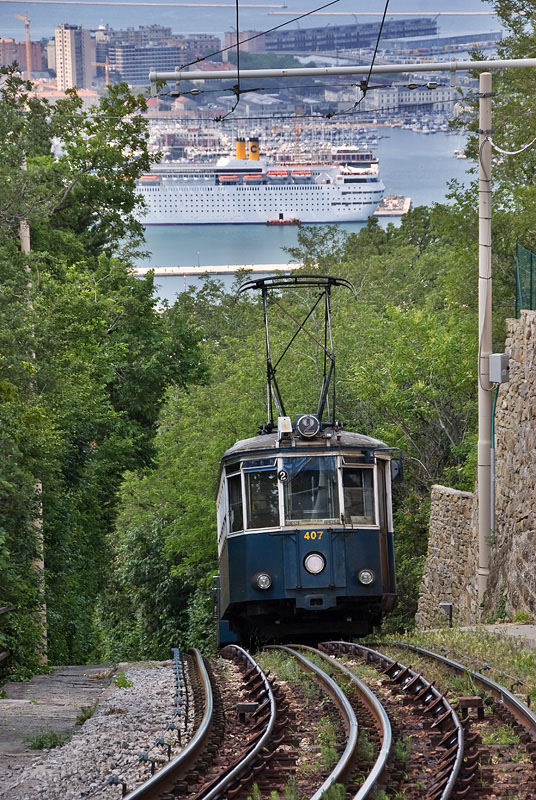
up here are really terrific). A tram or taxi
can get you there quickly or you can walk up
(I usually taxi up and walk back down to the
harbor). At the top of the hill (Piazza
Cattedrale) is the Castello di San Giusto
(15th century). The castle is pretty and you
can roam the grounds (great views) or go
inside to the museum, which offers a
collection of arms, armory and other period
items. The Basilica di San Giusto is really
two churches that were joined in the 14th
century from earlier churches dating back to
the 1st and 5th centuries. The Basilica has
several styles including Roman and
Byzantine. Inside you should check out the
frescoes depicting San Giusto (St.
Justus/Just, the town’s patron saint), the
mosaics and the lovely rose window. If you
climb the campanile you’ll be rewarded with
great views. "Trieste on an autumn evening
suggests the work of those English Victorian
painters who specialized in seaports at the
end of the day, with pale gaslight shining
on wet pavements, and pub windows dimly
illuminated." If you can find it on your
map, it’s worth the trouble getting to,
though once you’re there you may never want
to leave.
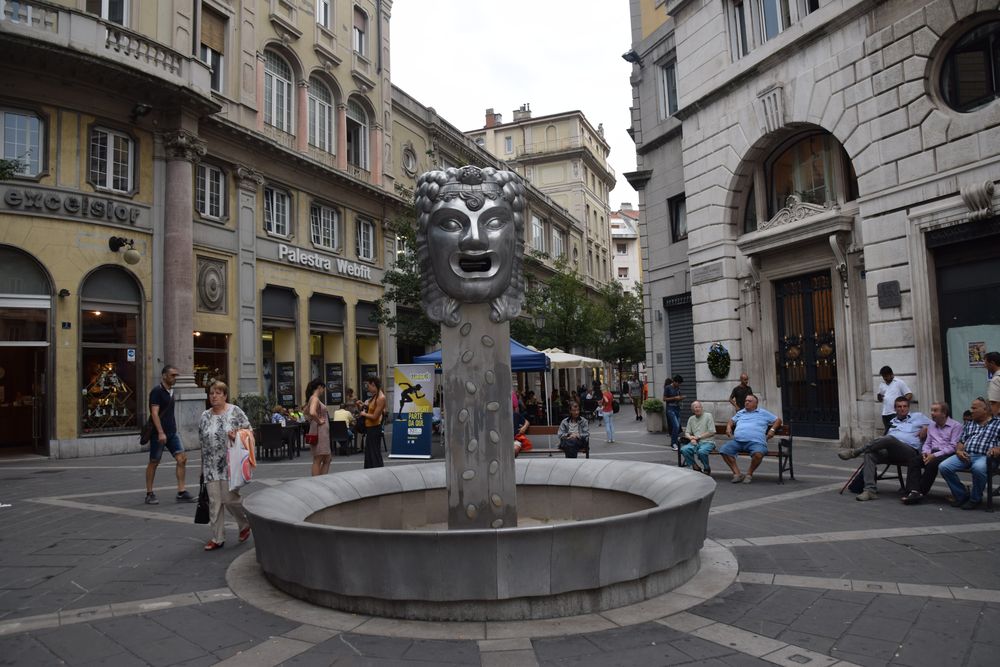
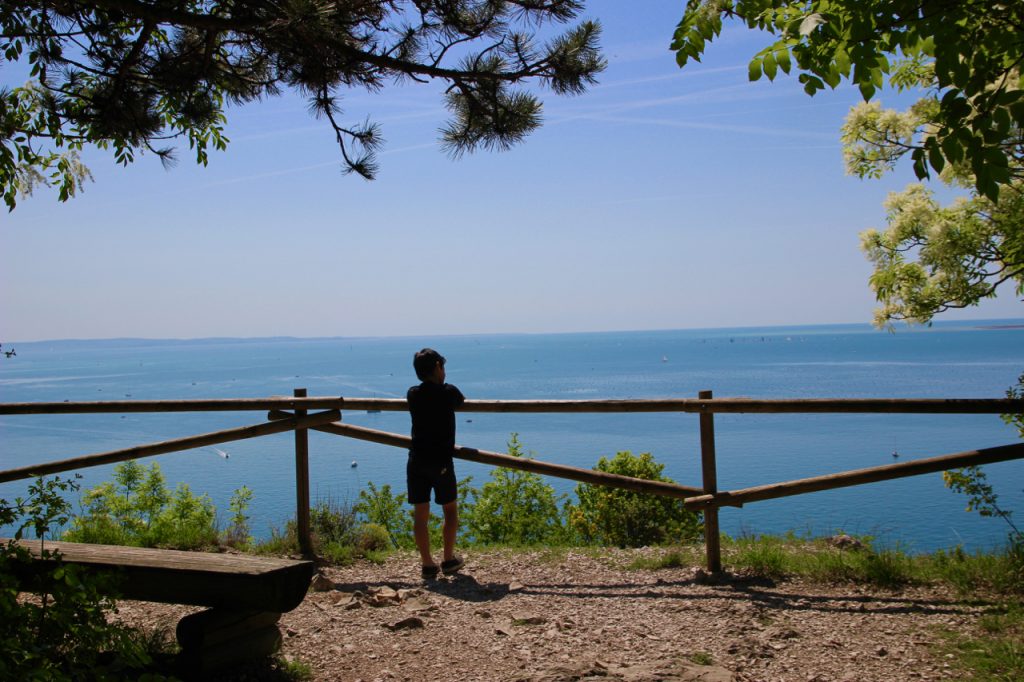
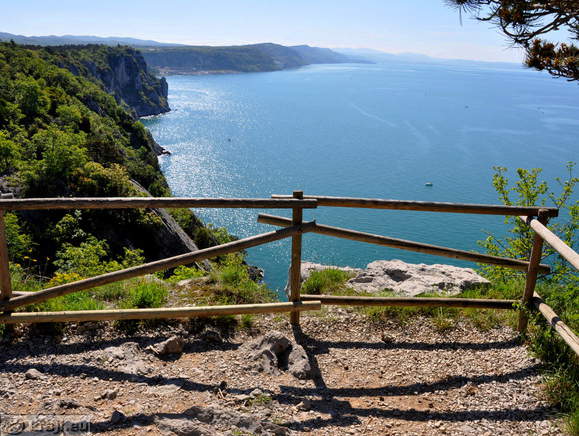
RILKE PROMENADE (Bus
line n. 51
oder per Boat)
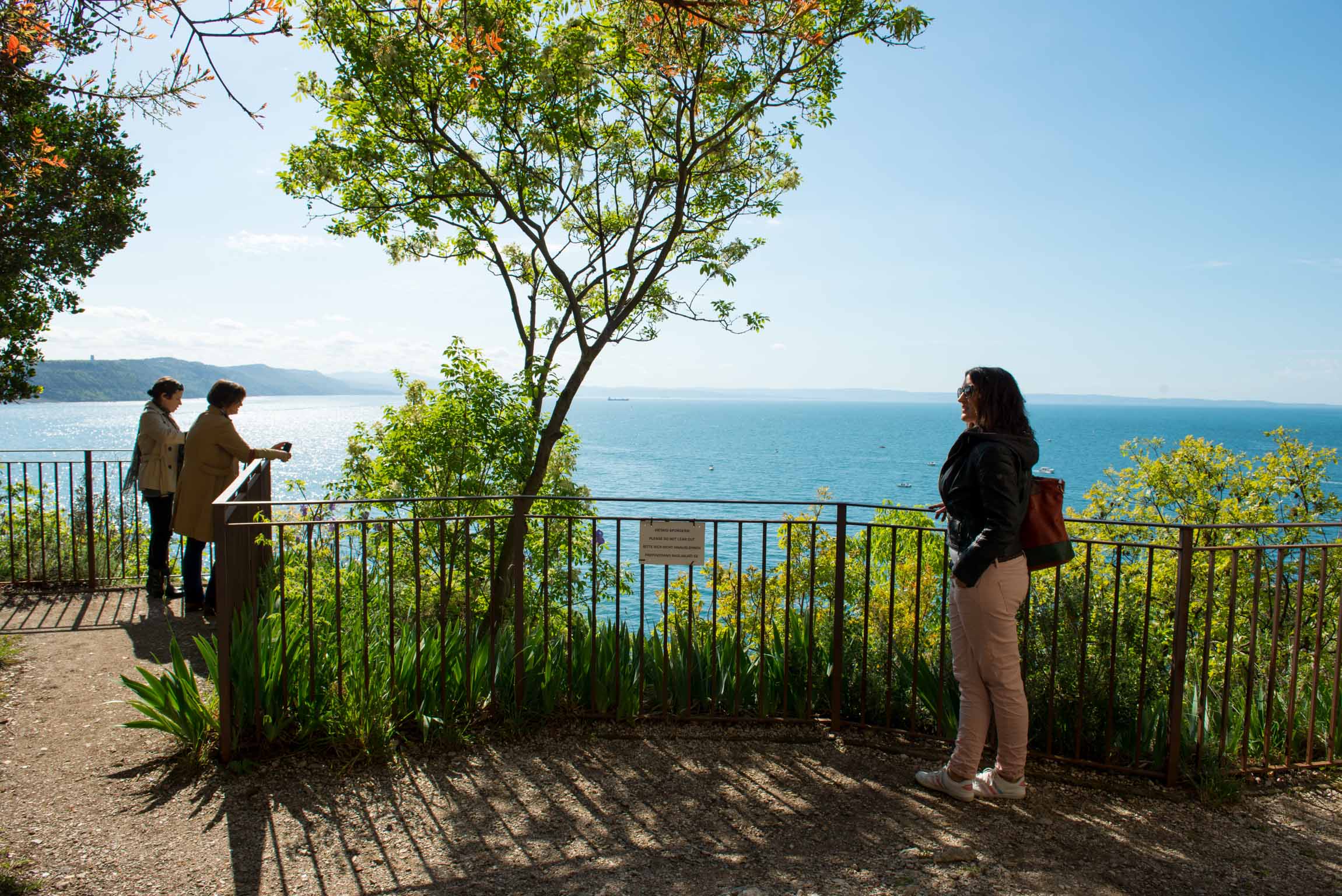
Mediterranean Smoothness
The Rilke's Promenade
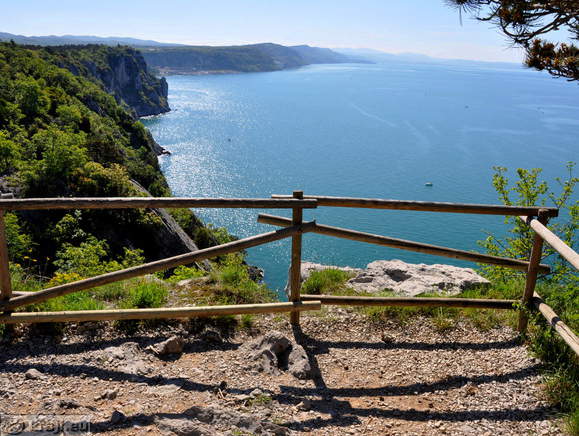
Astonishing, and easily
attained views of the coast await.
From the piazza ask directions for
the coastal road, where before
Duino there's an entrance
through the trees to the Sentiero
Rilke, a path named after the early
twentieth-century German poet Rainer
Maria Rilke, who was the best-known
walker of this cliff path.
Rainer Maria Rilke's great cycle of
ten elegies named after the castle
on the Adriatic had its inception,
according to Rilke's host at Castle
Duino, Maria von Thurn und
Taxis-Hohenlohe, on the morning of
January 21, 1912. Interrupted by the
First World War, the cycle of ten
elegies was completed only a decade
later.
The two great complementary poem
cycles, Duino Elegies and Sonnets to
Orpheus, are not only the result of
an extraordinary kind of contact
with the unseen world; they are an
attempt to understand that world,
and to understand it in its holistic
relationship to the visible.
tangible, world.
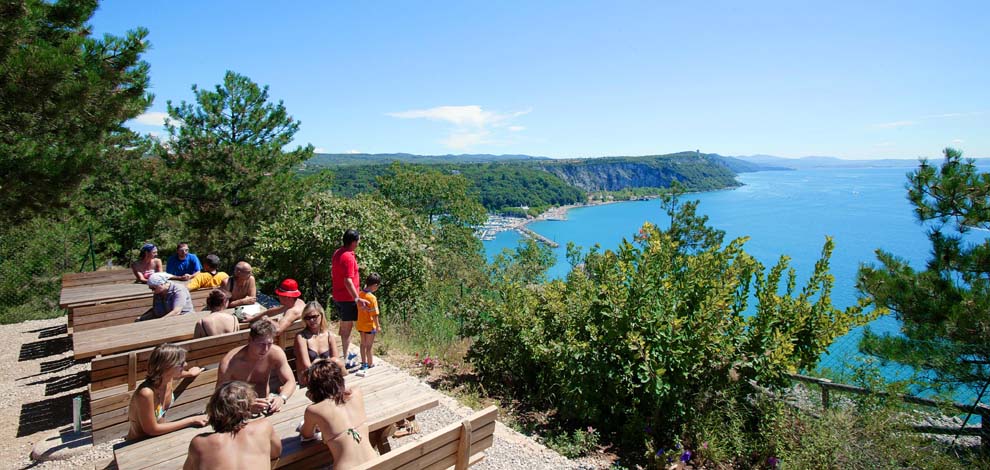
According to National Geographic
this is one of the most beautiful
Promenades of the world.
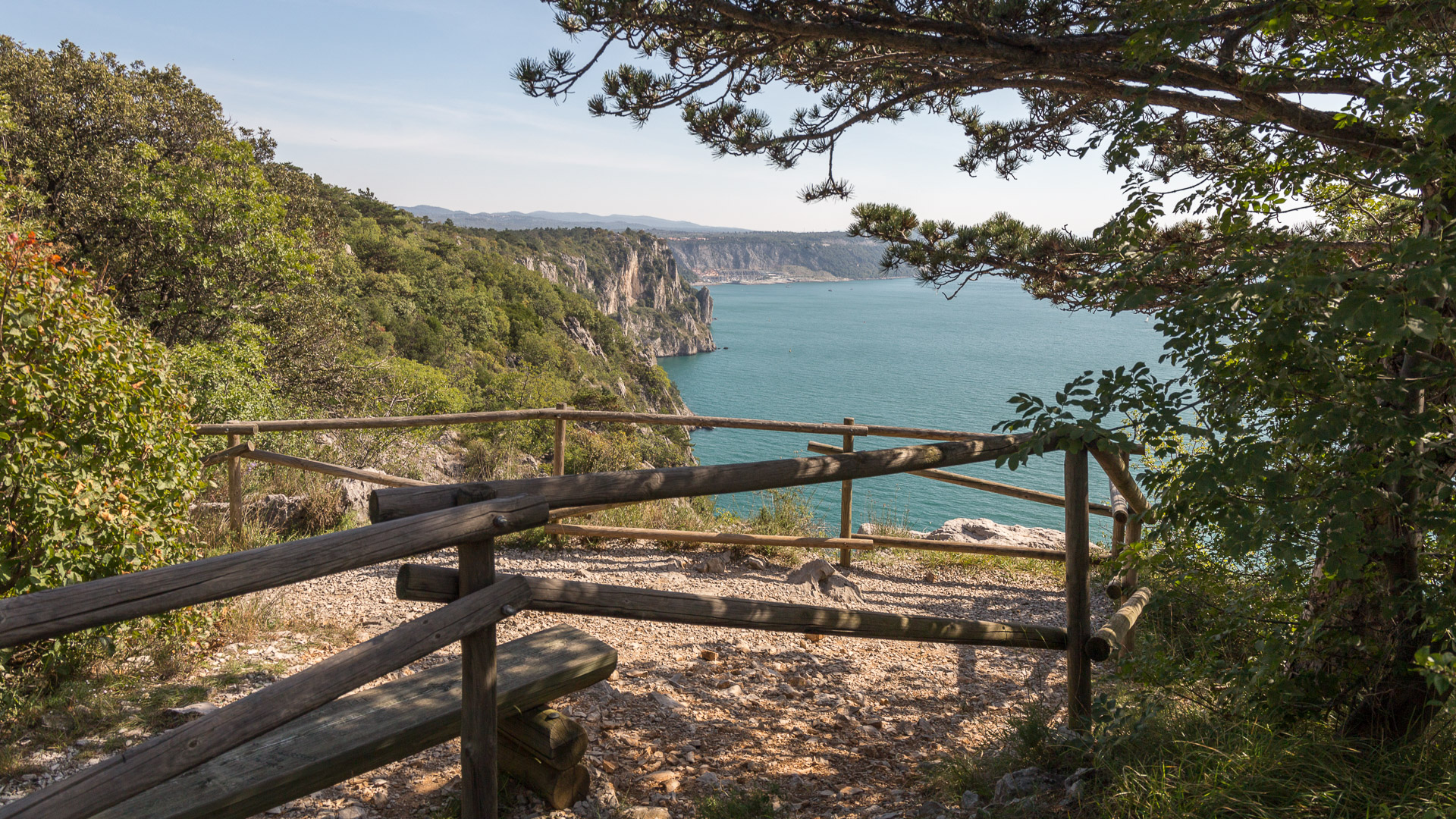
Running on the top of a
perpendicular shoreless cliff on the
sea and reaching the castle of Duino
is a meaningful example of the
Mediterranean smoothness.
The path has been named after the
poet Rainer Maria Rilke, who wrote
his Elegies to Duino (Duineser
Elegien) during his long staying in
the castle.A footpath along the
white cliffs, "towering against the
sea, like foothills of human
existence," as the German poet
Rainer Maria Rilke put it.
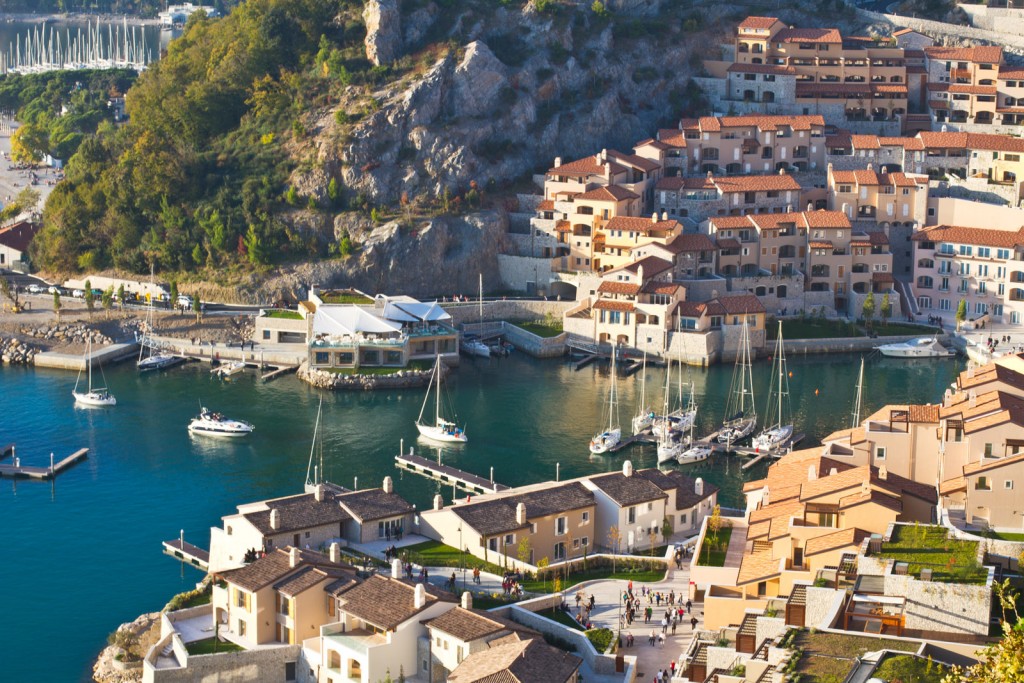
Trieste has many charms
and two faces. One is a modern city
facing forward, the other, an
identity that looks back and
preserves the past for the benefit
of the increasing tourism trade that
now plays a significant part in the
local economy. Historically and
culturally, Trieste is a magical
city. From its theatrical and
musical presentations to the
historic cafés with their many
gastronomic delights; it can be said
that Trieste is truly an
international city.Trieste is tucked
up in the top corner of
Mediterranean sea, its geographical
position once again ideal for the
markets of central and southern
Europe. Today, Trieste is a great
place to unwind and enjoy yourself
with plenty of opportunities for
sightseeing and relaxing. The coast
to the west of the city offers a
variety of sandy beaches and the
rocky shore in the suburb of Barcola
is often used by the locals as a
place to enjoy the sun. Further
inland from Trieste is the Grotta
Gigante, which is the largest
accessible cave in the world.
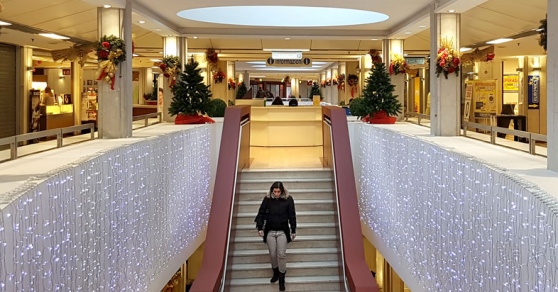
There are about 4500 shops, 6
department stores and 2 huge
shopping malls in downtown Trieste.
SHOPPING TIME The Borgo
Teresiano - the grid-pattern,
neo-classical city center named
after Empress Maria Theresa - is
where Trieste's uninspiring shopping
opportunities are concentrated. In
the Old Town forget about shoes and
clothes and concentrate on coffee
and second-hand books - two
commodities which the city
specializes. One which is so famous
as to feature on the city council
tourist trail is the Libreria
Antiquaria Umberto Saba in Via San
Nicolas 30. Set up by the city's
most famous poet in 1919, it still
retains the musty,
order-through-chaos atmosphere of a
true bibliophile's den. James Joyce
lived with wife Nora and two kids in
a flat above, though he and Saba
never met. Even if you haven't got
the espresso machine with you, a bag
of freshly-ground coffee is a great
traveling companion; try the
CremCaffè, an old-fashioned
torrefazione (coffee roaster) on
Piazza Goldoni, where you can also
pick up a set of limited edition
Illy coffee cups (the design changes
every year). The old town, between
Piazza Grande and the hill of San
Giusto, is dotted with second-hand
bookshops. During the year, there
are numerous Markets and Fairs in
the city. On the third Sunday of
every month, the cities love for
antiques reflected in the coming
together of over 60 or so antique
shops, jewelers and second-hand
dealers offering Art Nouveau and
Secession objects and furniture.
Take a stroll through the street
markets and pick up a few bargains!
Shopping Malls Dont' miss a visit to
The Giulia (via Giulia) with over
60 shops bars and restaurant , and
the Torri d'Europa (via Svevo) with
over 120 shops, department stores,
boutiques, cinemas and restaurants.
Like Marseilles and Miami, Trieste
is not a city to which you go to see
much of anything in particular but
rather just to be there, to
experience the pulse and rhythm of
the place. Department stores and a
lot of shops and boutiques are open
7 days a week generally 9 AM - 21
PM
|
|
Fürstliches Schloss Duino
(Tybein)
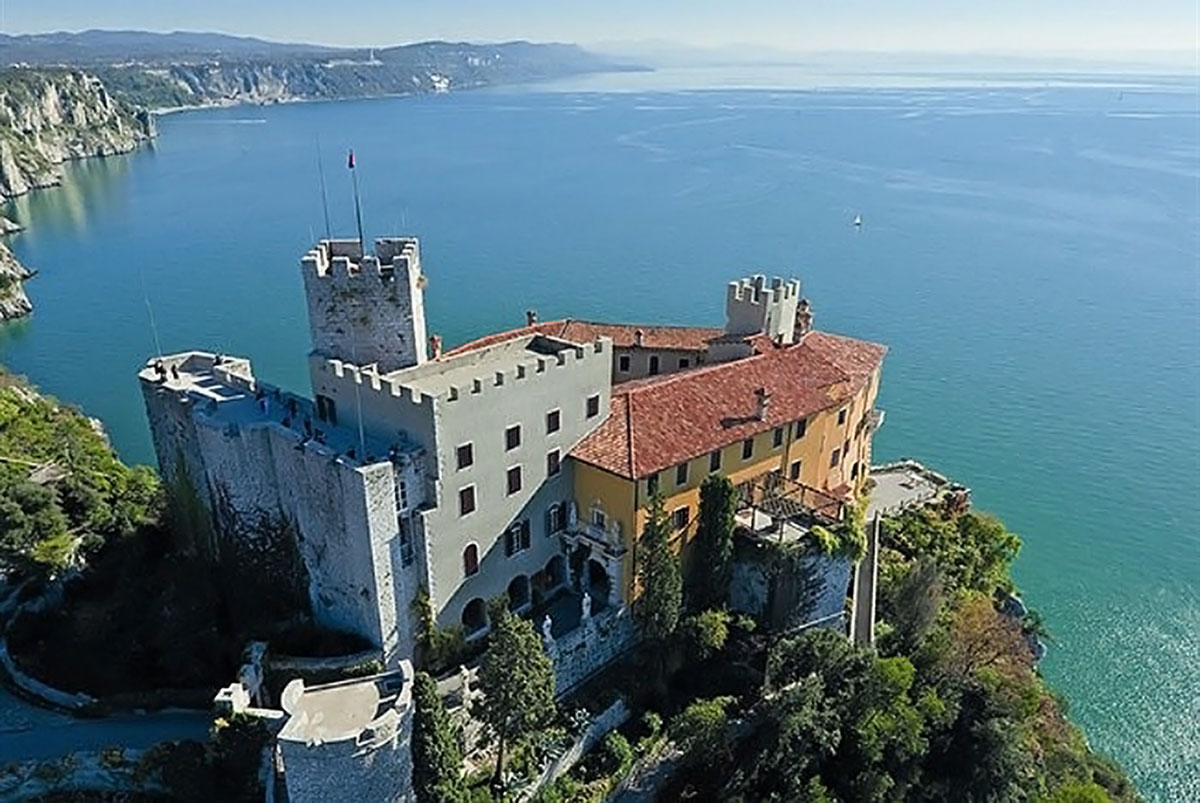
Trieste has a strong, proud
tradition of literary life. The
poet Rainer
Maria Rilke ( the greatest
German speaking poet of the past
century) spent an exquisite and
celebrated period of creativity at
Duino Castle, as the guest of the
Princess Marie von Thurn und
Taxis-Hohenlohe. Her very name
perhaps illustrates just how much
the world has changed, and why
something like The Duino Elegies is
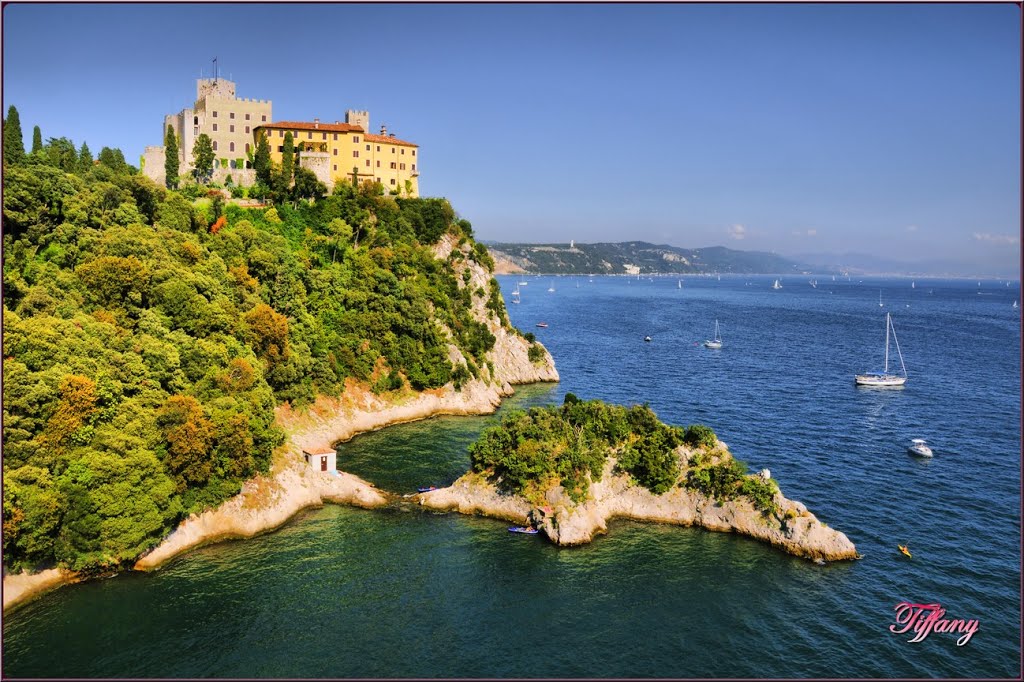
unlikely ever to be written again. The
German poet arrived in 1912, a guest
in this 'newer' castle perched above
the Adriatic, owned then and now by
the Turn und Taxis family. Built in
the 15th century, to your right,
vine-clad and seemingly fused to the
rock, it appears to plunge into the
sea near a little beach. On these
cliffs, the poet began to write some
of the most famous poems in the
German language: the Duino Elegies. The
German poet arrived in 1912, a guest
in this 'newer' castle perched above
the Adriatic, owned then and now by
the Turn und Taxis family. Built in
the 15th century, to your right,
vine-clad and seemingly fused to the
rock, it appears to plunge into the
sea near a little beach. On these
cliffs, the poet began to write some
of the most famous poems in the
German language: the Duino Elegies.
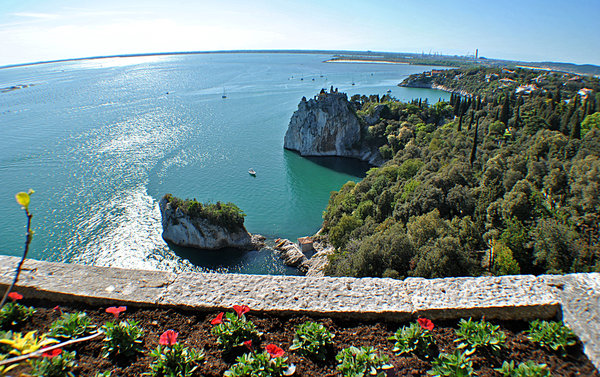
Beim Info-Häuschen (nach dem
Campingplatz Mare Pineta in Richtung
Triest) parken und den Rilkeweg nach
Duino gehen, der wunderschön und
romantisch ist und hoch über dem
Meer entlangführt. Der Weg endet in
Duino und man muß noch einige
Schritte die Straße hinunter zum
Schloßtor gehen..
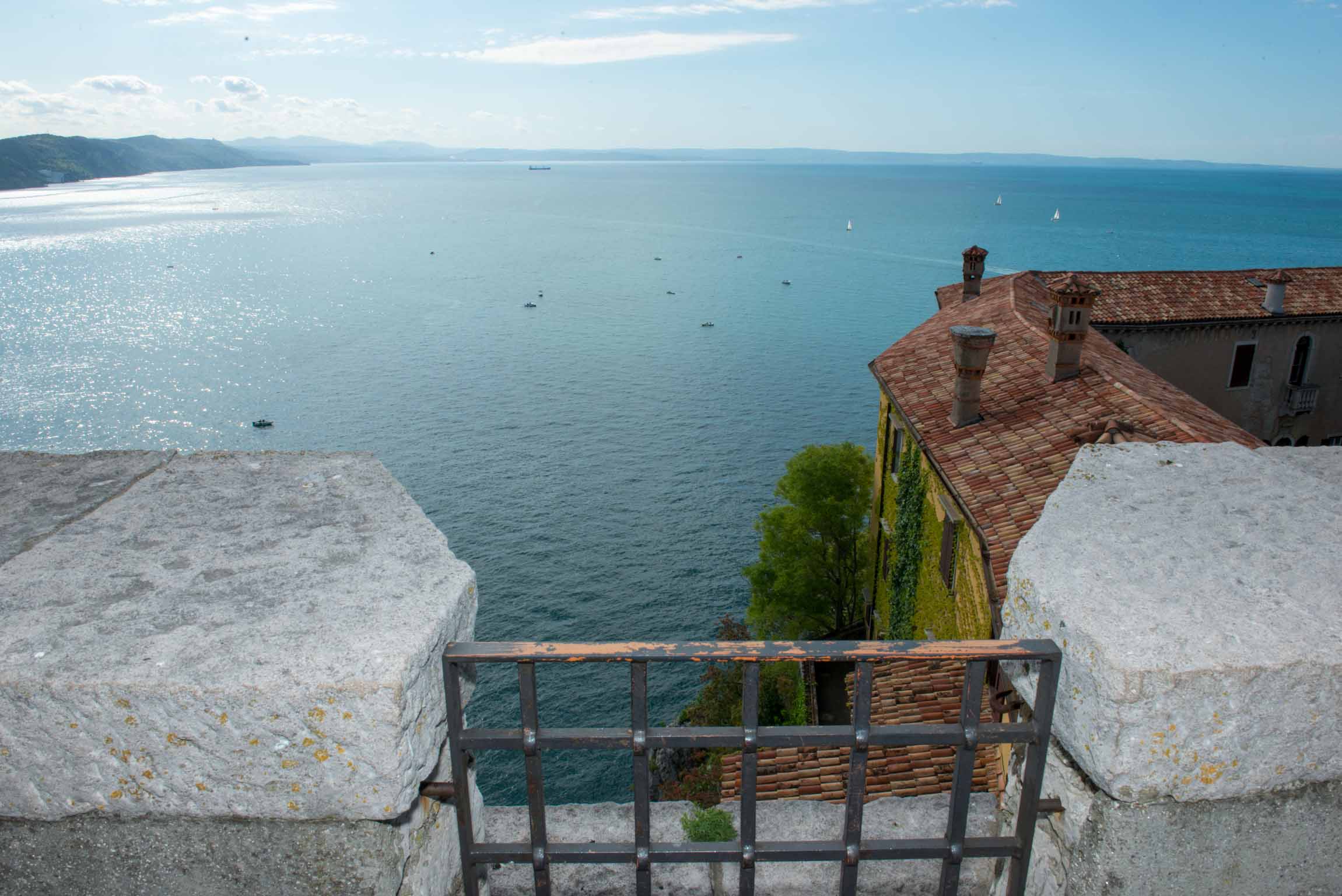
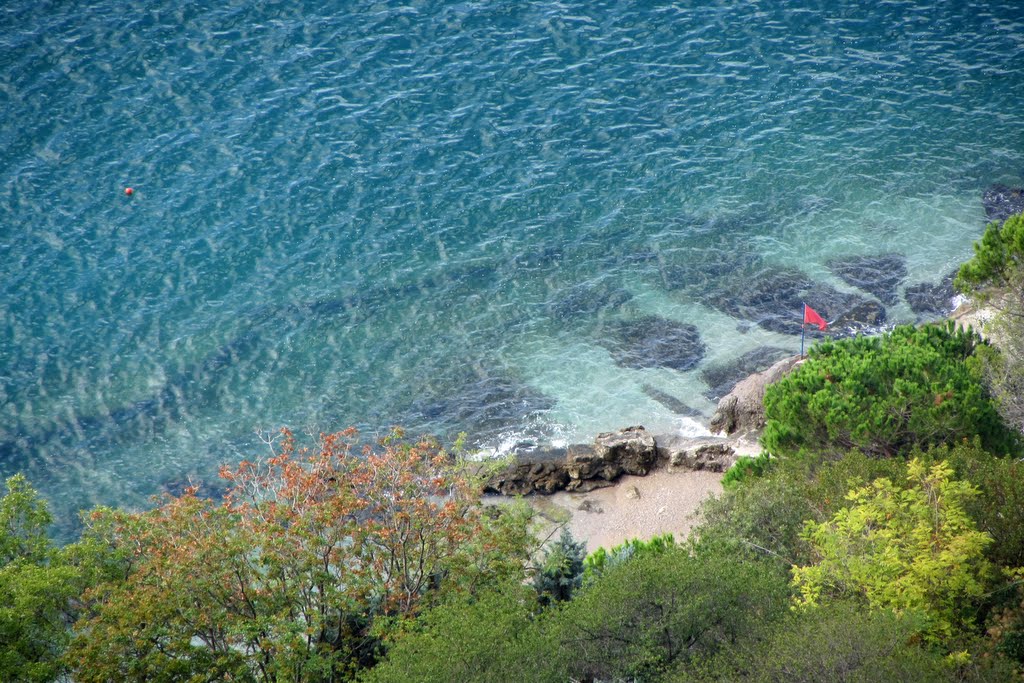
Rilke Promenade, Weiss Wanderweg,
Ressel Wanderweg, Fischern Pfad,
Julius Kugy Wanderweg, und viel
mehr.....immer erfreut eine
prachtvolle Aussicht das Auge:
Wandern mit Blick aufs Mittelmeer an
der Triester Riviera..
EIN LITERARISCHER MYTHOS: DAS
MITTELEUROPÄISCHE TRIEST
In den Jahrzehnten vor und nach 1900
lebten und arbeiteten die großen
italienischen Schriftsteller Italo
Svevo und Umberto Saba in Triest.
Auch ausländische Dichter zog es
hierher: Der Ire James Joyce und der
Engländer Richard Francis Burton,
die Dichter Rainer Maria Rilke, Hugo
von Hofmannsthal und viele andere.
In Triest war der morbide Charme der
Epoche besonders deutlich zu spüren,
und die Literaten sogen ihn begierig
auf. Rilke war Gast des Kultur
beflissenen Prinzen Torre e Tasso
und logierte höchst feudal im
„Castello Duino“ vor den Toren der
Stadt. Seine „Duineser Elegien“ sind
das literarische Andenken an diese
Zeit.
Als Franz Grillparzer 1819 hierherkam,
zeigte er sich beeindruckt, nicht nur vom
"Meer in seiner Herrlichkeit" und den
"zahllosen Masten der Schiffe", sondern auch
durch das "Gewimmel von Menschen aller
Kleidung und Sprache". Der erste Eindruck
von Venedig war danach negativ, der Dichter
empfand einen "verdrießlichen Kontrast" zum
"heitern Triest"..
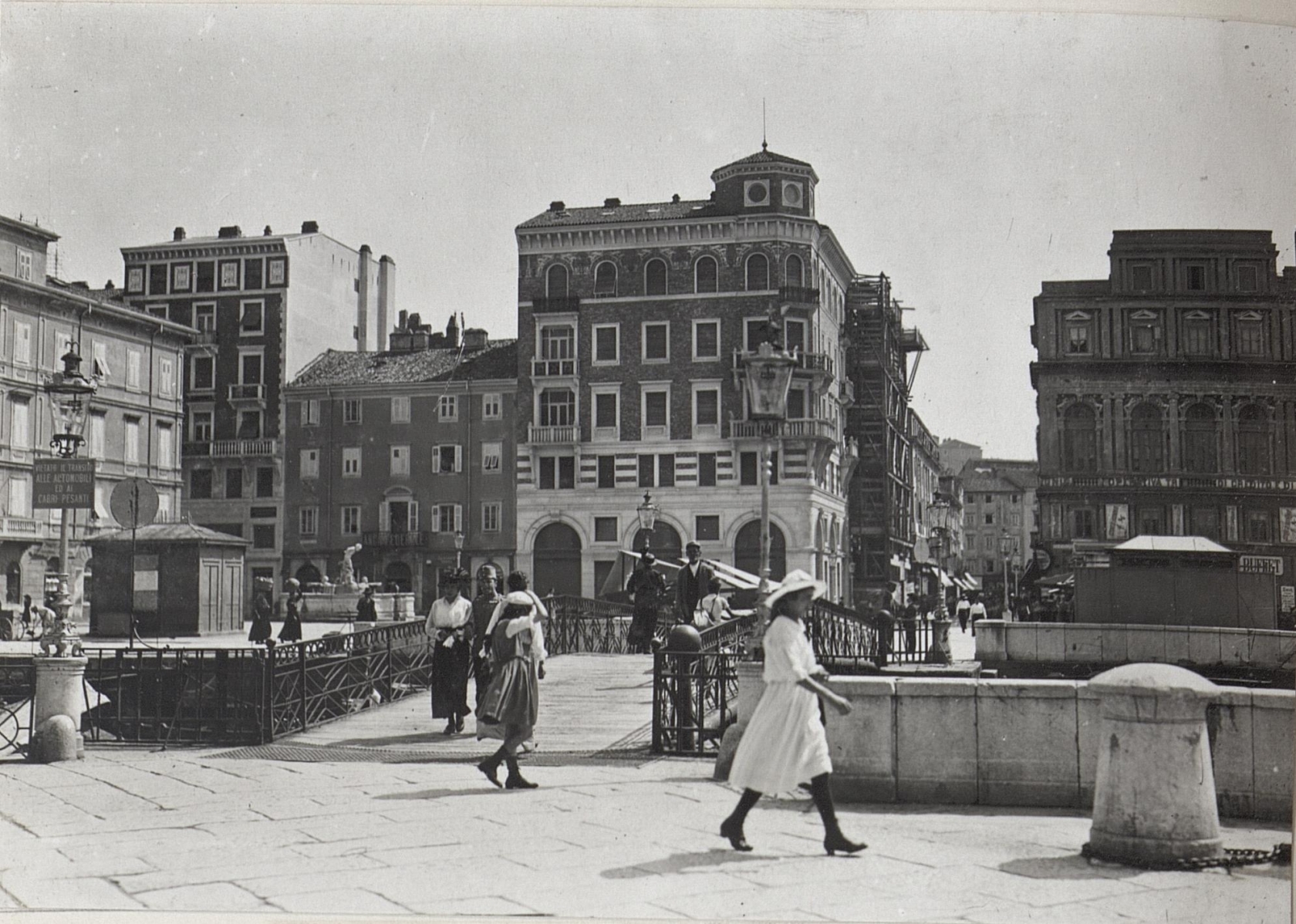
Ricarda Huch beklagte vor 1900 den
ungeistigen Lebensstil der Stadt fast noch
mehr als den Scirocco. Bis dann mit einem
Male Apoll und Merkur sich verbünden: Scipio
Slapater, Giovanni Stuparich, Umberto Saba
treten auf und vor allem Italo Svevo, der
Triests berühmtester Dichter werden sollte,
obwohl es doch gerade das spröde Triestiner
Idiom war, das Italo Svevos Wirkung, vor
allem in Italien, erschwert hat..
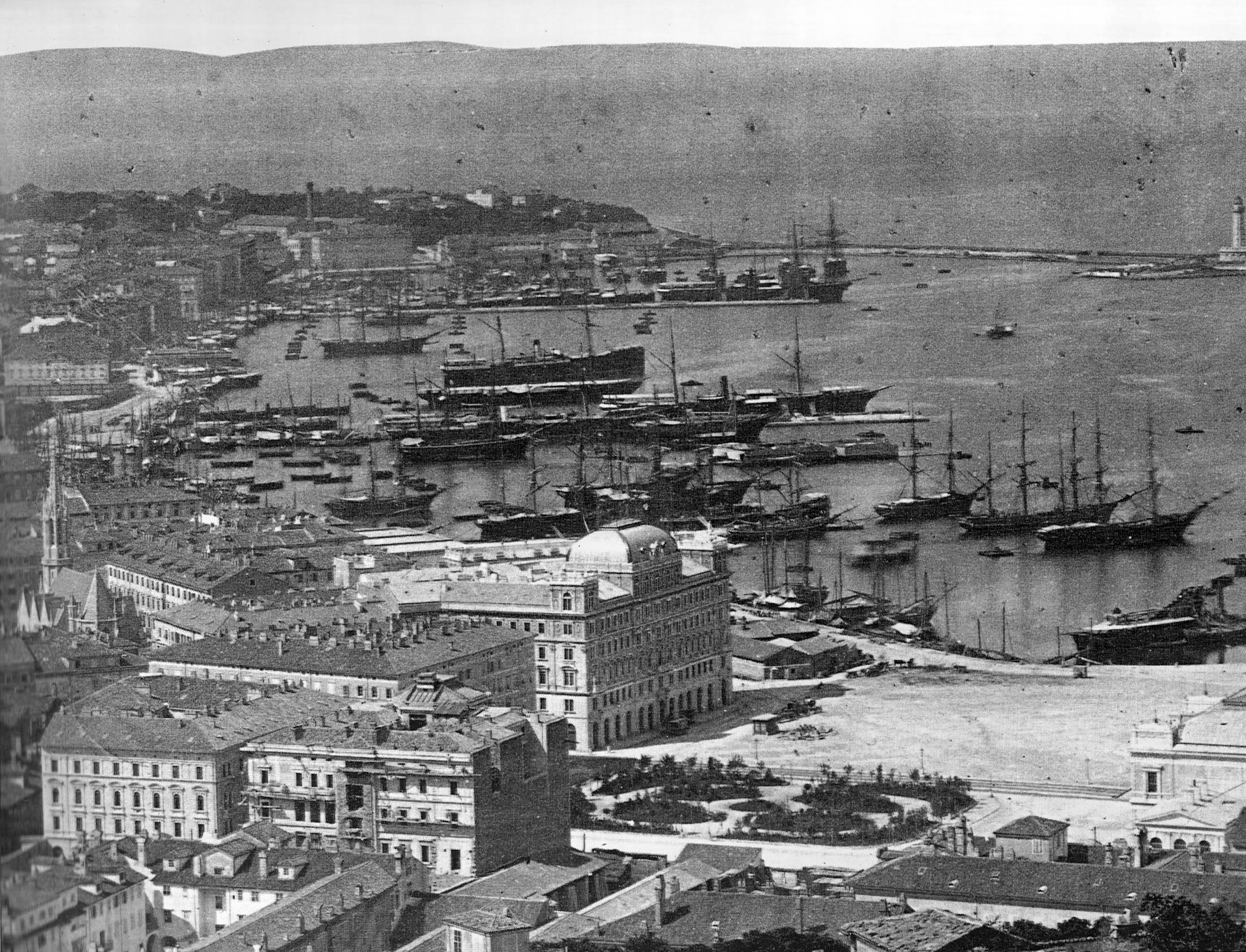
"Es ist eine große Vermessenheit, Städte
beschreiben zu wollen", hat Joseph Roth
gelegentlich formuliert.. Man sieht ihnen
nur an, was man weiß, aber wen sollten diese
Gehäuse der Kultur nicht faszinieren? Sie
sind zumeist älter als Staaten, gehen
seltener in Krisen gänzlich zugrunde.
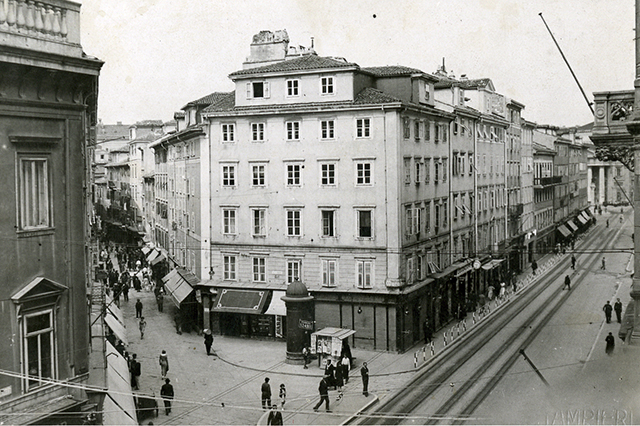
Ihr
Daseinsrecht ist erprobt. In Svevos Romanen
ist Triest wie selbstverständlich
gegenwärtig. Zwischen dem Autor und der
(Stadt-) Kultur, aus der er hervorgegangen
ist, hat dem wechselseitiger Prozeß der An
Verwandlung stattgefunden. Irgendwann aber
wird eine solche Stadt nicht mehr als
Realität erfahren, sondern als em aus der
Literatur geborener Mythos: davon spricht
das letzte Kapitel des bemerkenswerten
Buches von Angelo Ara und Claudio Magris.
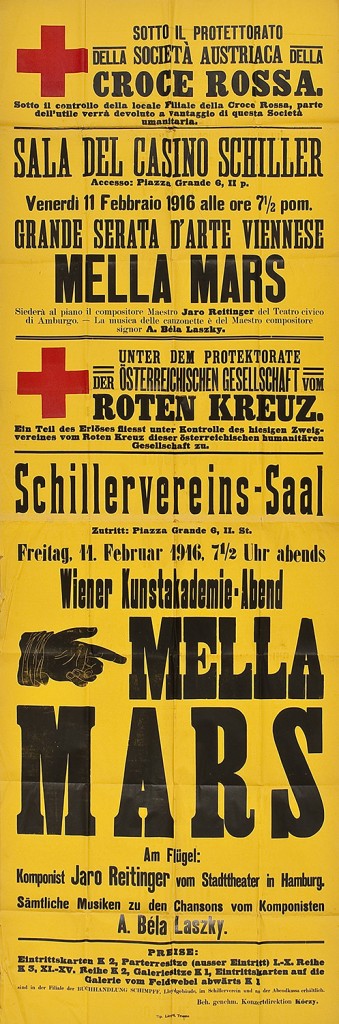
Kurz vor Ausbruch des Ersten
Weltkrieges sind die wichtigsten
städtischen Theater und mehr als 20
Kinosäle in Triest weiterhin
geöffnet. Der jeweilige Spielplan
ist umfangreich und vielseitig, die
Vorführungen werden von einem großen
und unterschiedlich
zusammengesetzten Publikum besucht.
|
|
Ganz schön &
spektakulär: die Triestiner Küstenstraße
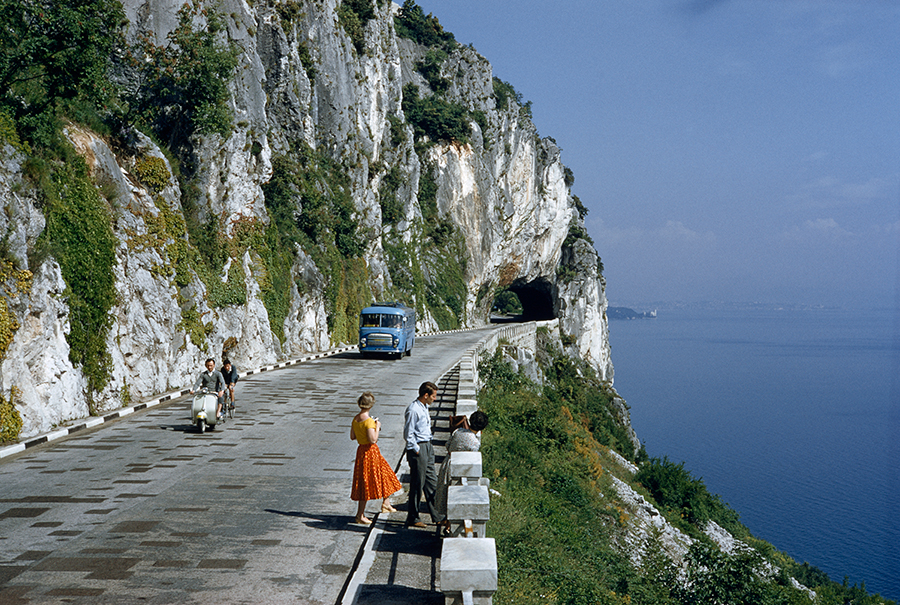
Was für die Bewohner von Los Angeles der
Highway Number One und für die Menschen, die
in Nizza leben, die Corniche, ist den
Triestinern ihre Strada Costiera – die
Küstenstraße zwischen der Adria-Hafenstadt
und dem Seebad Sistiana. „Die“ Traumstraße
der Adria wurde 1928 eröffnet.
Laut der WTO World Tourism Organisation es
ist eine der 20 schönsten Straßen der Welt.
Die Küstenstraße von Sistiana
nach Triest zählt sicher zu den
landschaftlich schönsten Routen der gesamten
Mittelmeerküste.In zahllosen Kurven und
Kehren geht es hoch über dem Meer durch
grüne Macchia.
Von Norden nach Süden die Buchten, die
von der Küstenstraße aus zugänglich sind,
sei es, weil sie an einer solchen
Urbanisation liegen, weil eine Schotterpiste
hinab angelegt wurde oder weil es einen
Fußweg gibt..In den Buchten, die mit dem
Auto angefahren werden können, sind
Parkplätze rar und häufig gebührenpflichtig.
Eine Tankstelle existiert auf der gesamten,
12 Kilometer langen Strecke nicht.
Nachdem man Miramare verlassen hat, führt
die Strasse über Grignano auf halber Höhe an
der Küste entlang kurvenreich weiter. Dieser
Teil der Riviera ermöglicht einen weiten
Blick über den Golf; die ausgedehnte Fläche
des Meers verbindet ideell die sich
gegenüberliegenden Küsten: auf der einen
Seite die Mündung des Isonzo, auf der
anderen die Küsten Istriens.
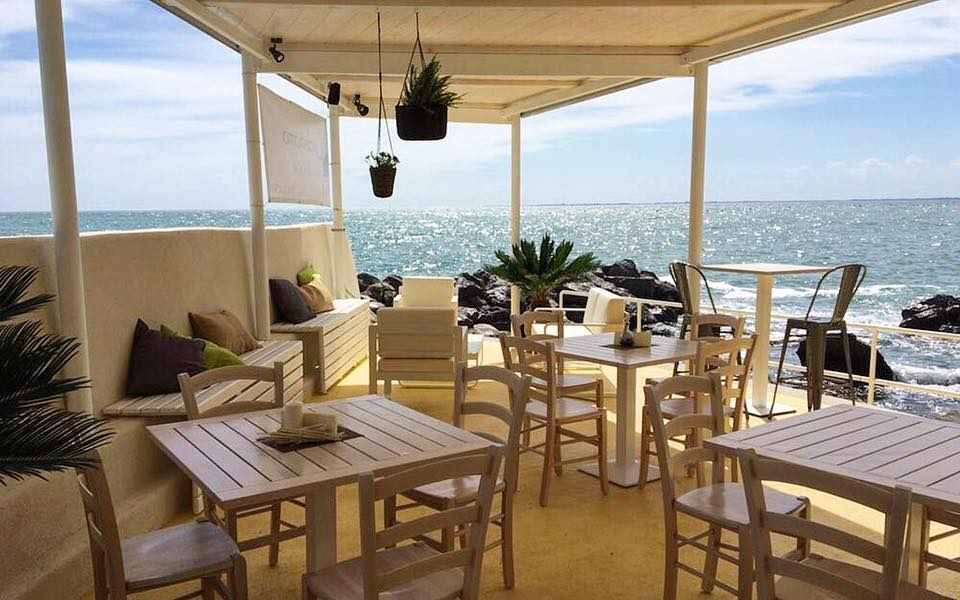
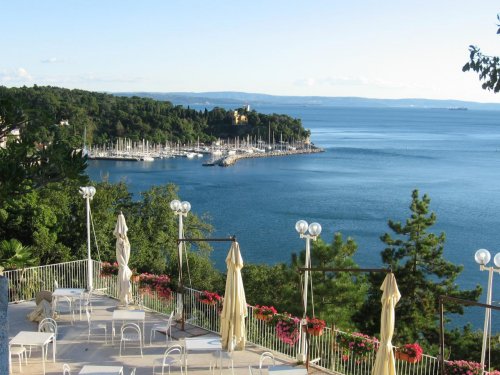
Lässt man Monfalcone hinter sich, führt die
Küstenstraße nach Sistiana, dem antiken
Sextilianum. Dieser Ort stellt die
natürliche Wasserscheide zwischen dem
Hafengebiet mit seiner herrlichen Bucht und
dem Beginn des Karsthinterlandes dar.
Hier, in Sistiana, beginnt der die
Felsklippen säumende Rilke Spazierweg und
führt bis zum Schloss Tybein (Duino). Dieser
Fußweg ist ein eindruckvolles Beispiel für
das Zusammenstoßen zwischen der mediterranen
Lieblichkeit und der zauberhaften Rauheit
der Karsthochebene.
die TRIESTINER RIVIERA
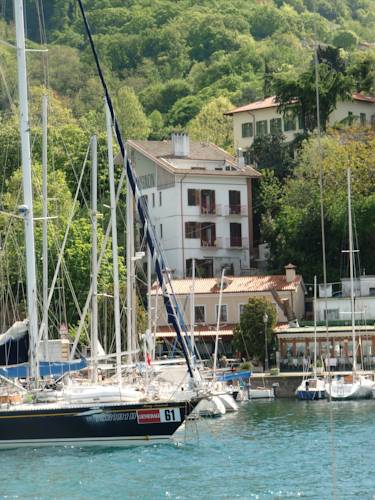
Die Triestiner
Riviera ist ein bezaubernder Platz an den
Vorbergen der südlichen Alpen, der sanft
durch das azurblaue Wasser des Mitteleeres
geschaukelt wird.
Hier die felsige
Küste und friedvollen Hügel haben die Kräfte
der Natur umfaßt, um Kieferwälder
herzustellen, freies Wasser, funkelnde
Strände und ein überfluß an der Wildnis.
Es ist ein
einzigartiger Platz, den immer die Besucher
und Siedlern von den anderen Teilen der Welt
begrüßt hat.
Das ist ein
Platz, in dem Einflüsse mischen und jeden
Tag eine einzigartige Erfahrung bilden.
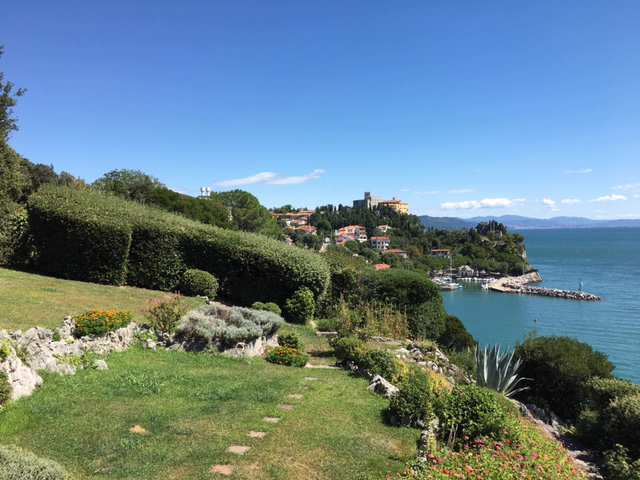
Der Duft von Ginster, Myrthen, Holunder und
Wildkräutern vermischt sich mit einer
sanften Meeresbrise. Weiß schimmern bizarre
Steinformationen im Sonnenlicht.
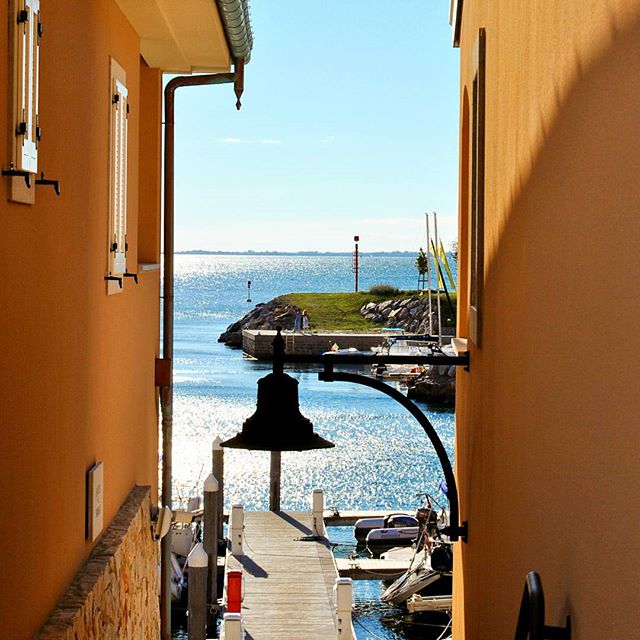
Kein Wunder,
dass die Schönheit der karstigen Steilküste,
die man über die Küstenstraße von Triest
nach Sistiana erreicht, schon Komponisten
und Literaten begeistert und inspiriert
hat..
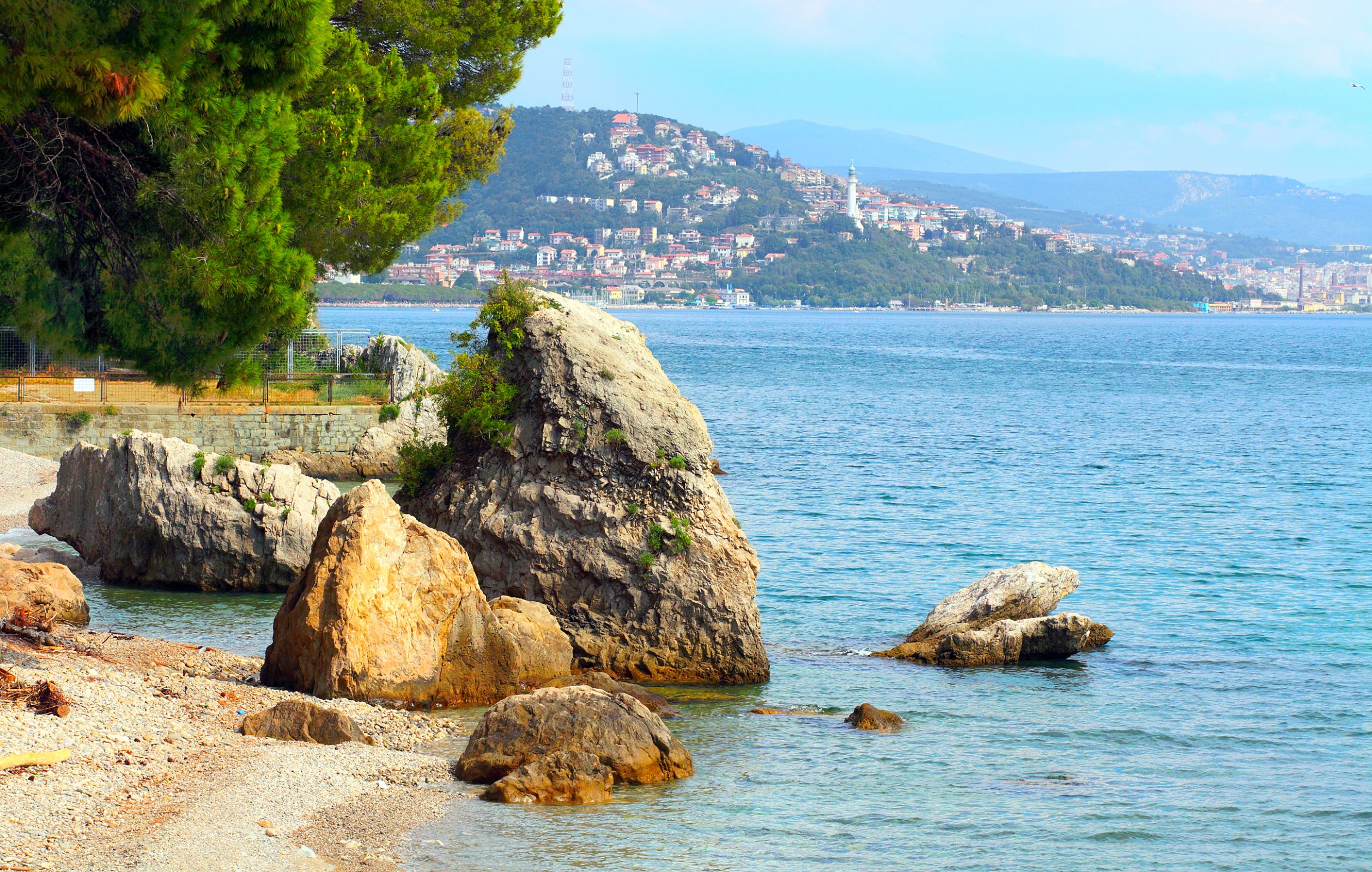
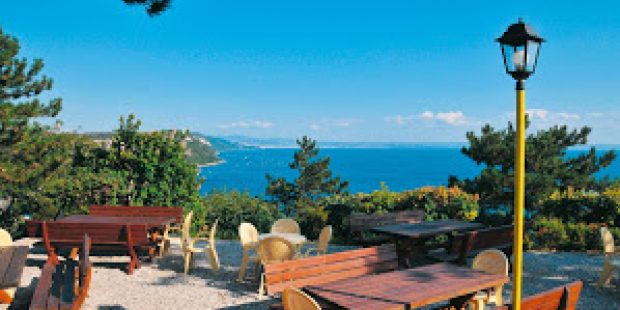
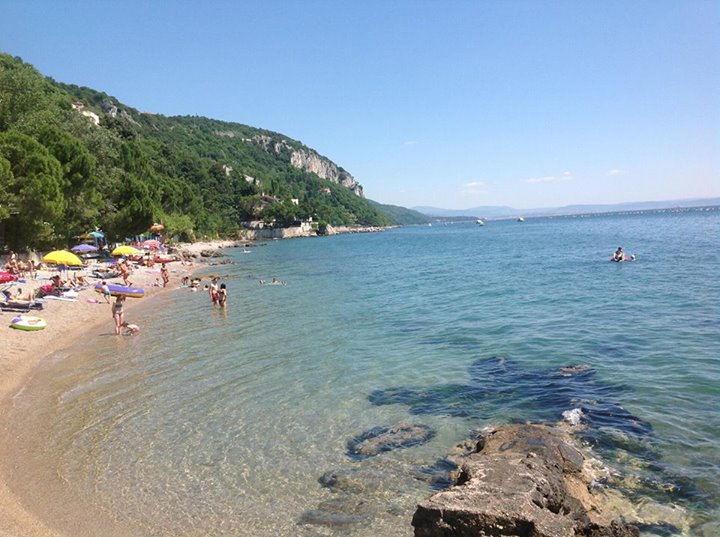
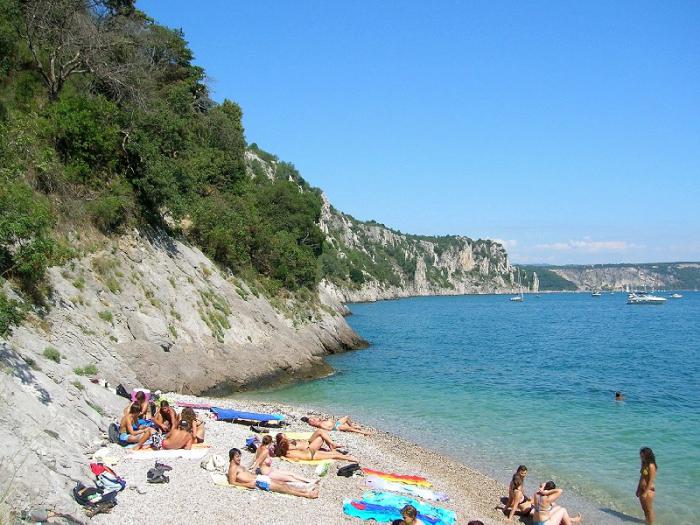
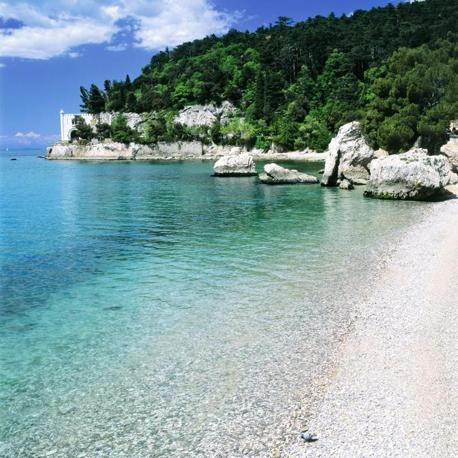
An der Riviera von Triest überwiegt die
Steilküste; kleine Strände mit besonders
jodhaltigem Wasser, eingerahmt von Felsen,
bieten eine ursprüngliche Kulisse und viele
kleine Buchten mit Strand.
Über den Buchten thronen die Felsen der
Steilküste. Im Wasser selbst befinden sich
einige kleine Felseninseln, die man
schwimmend erreichen und besteigen kann.
Dadurch ist das Wasser der Riviera von
Triest auch kristallklar..
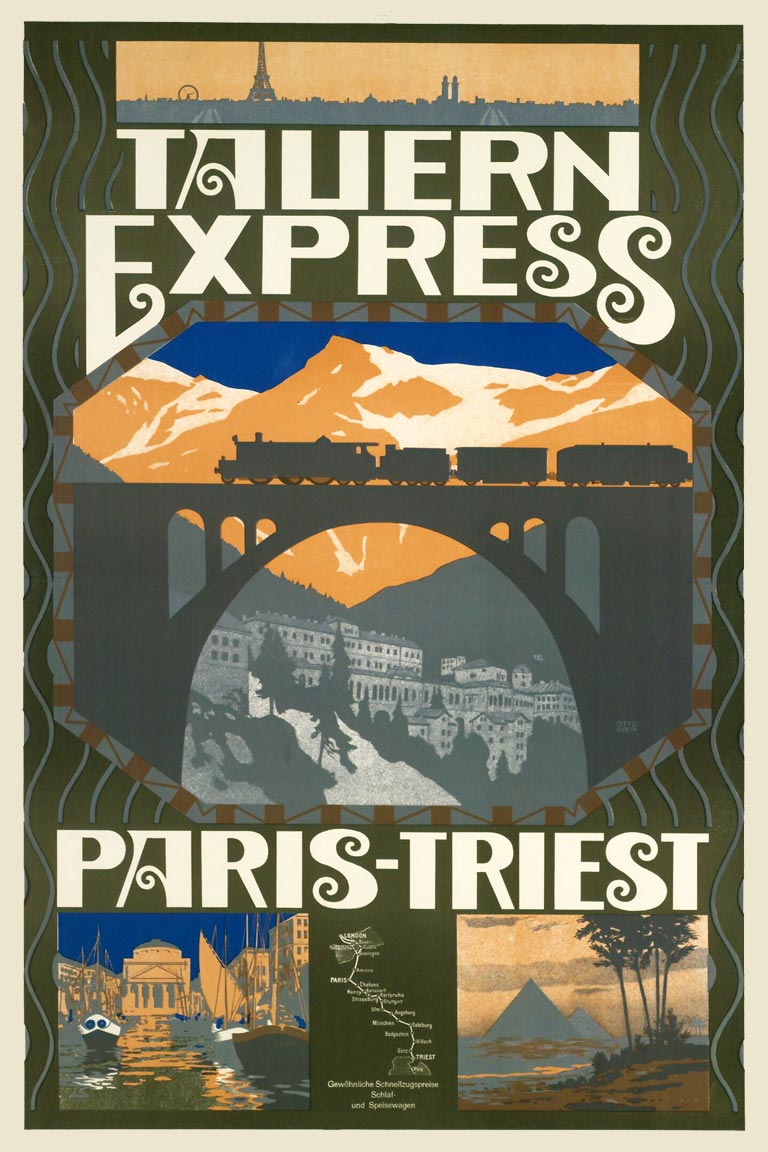
Mit Volldampf an
die k.u.k. Riviera
Bereits
gegen Ende des 19. Jahrhunderts reisten Adel
und wohlhabendes Bürgertum an die
Österreichische Riviera, um ihr
Feriendomizil in den mondänen Seebädern der
Donaumonarchie aufzuschlagen.
In luxuriösen
Eisenbahncoupes strömte das noble
Reisepublikum ans Meer und gab sich in
idyllisch gelegenen Seebädern seinen
gesellschaftlichen Vergnügungen hin. Mit dem
einsetzenden Siegeszug der Eisenbahn um die
Mitte des 19. Jahrhunderts erhielt das
Reisen eine neue Qualität. Auf dem Weg zur
Adria mussten die schroffen Gebirgszüge der
Alpen entweder überwunden oder weiträumig
umfahren werden. Mit der Eröffnung der
Südbahnstrecke von Wien nach Triest am 12.
Juli 1857 stand erstmals eine durchgehende
Verbindung zwischen den Kronländern im
Norden und dem wichtigsten Hafen der
Monarchie mit dem umliegenden Küstenland zur
Verfügung.
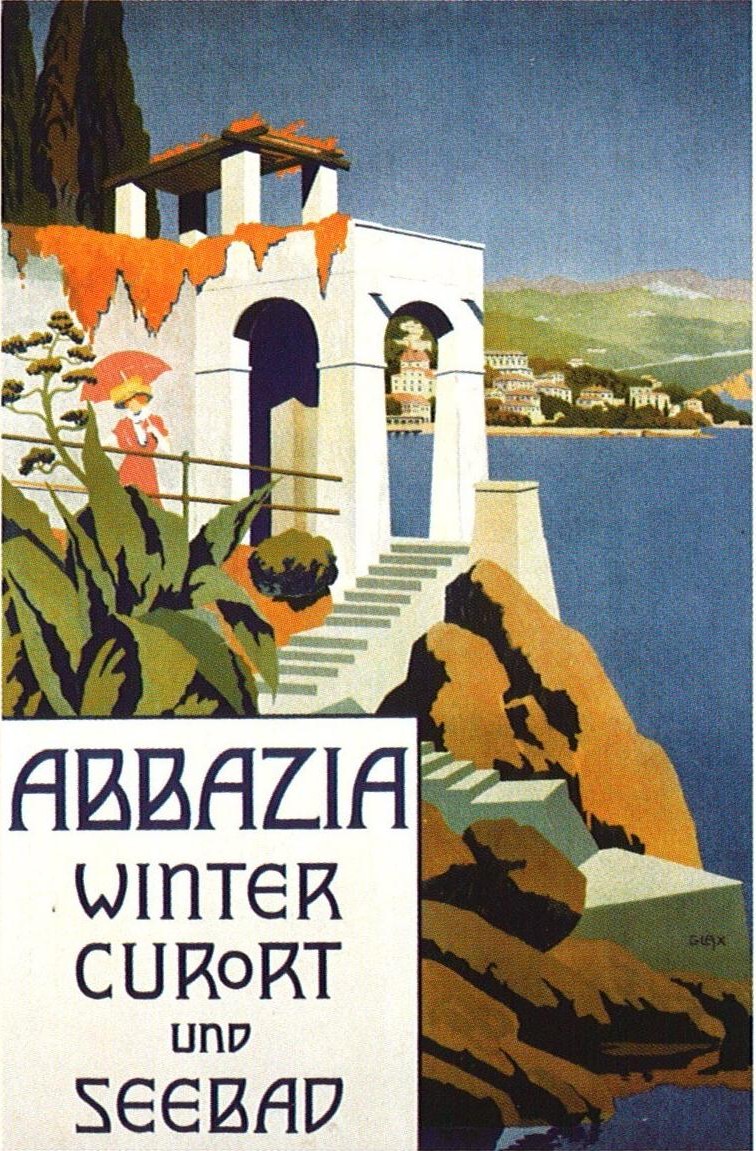
Abbazia.
K.u.K Sehnsuchtort an der blauen
Adria
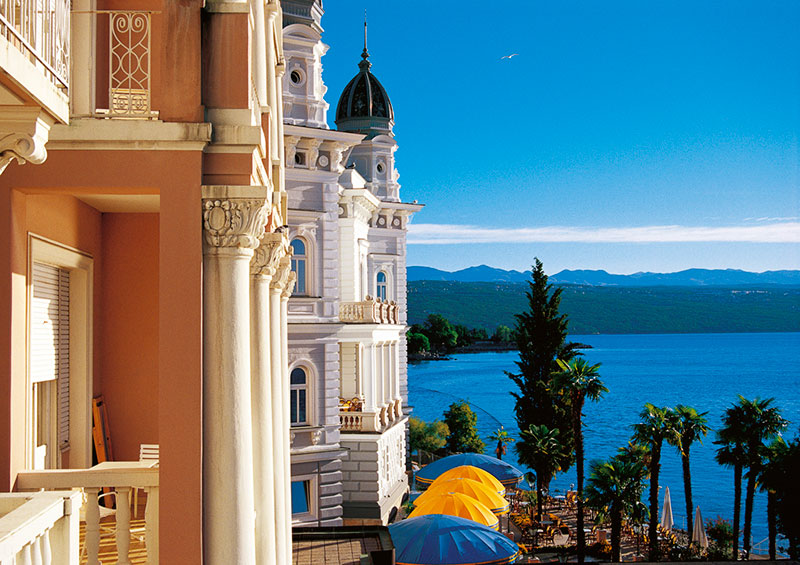
Der mondäne Kurort Opatija/Abbazia,
wo man längst wieder stolz auf die
österreichische Vergangenheit ist.
In zahlreichen Hotels wie dem
Miramar oder dem früheren
Südbahnhotel Quarnero genießen die
Gäste moderne Wellnessangebote
gepaart mit altösterreichischem
Flair.
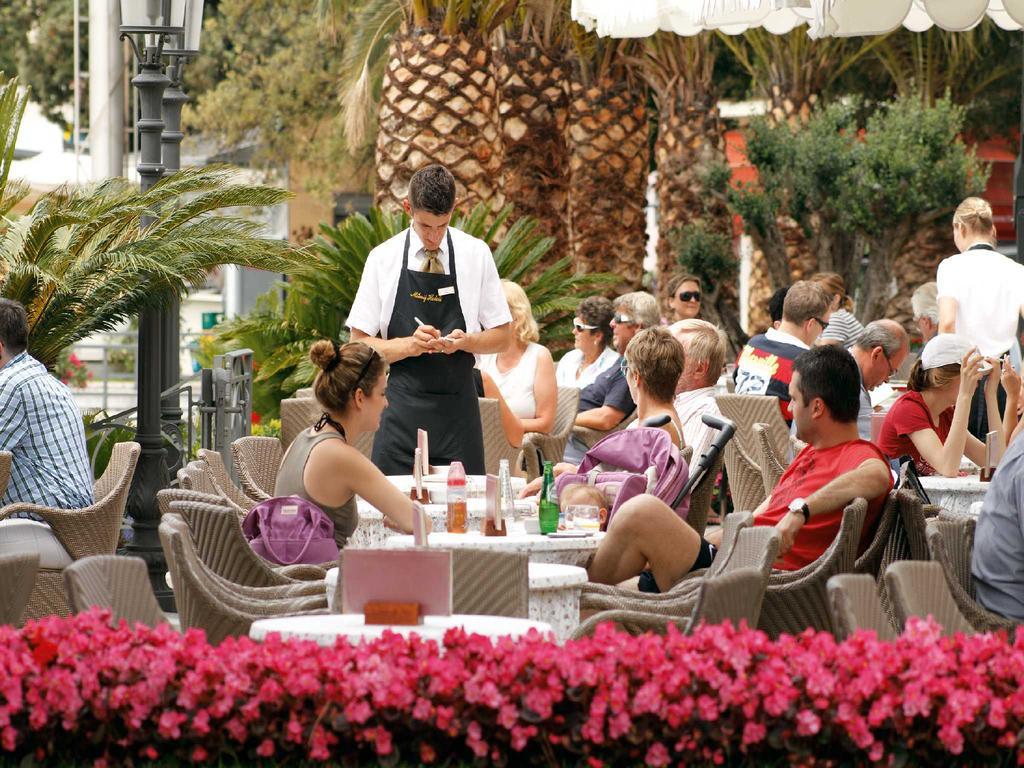
Zahlreiche historische
Gebäude erstrahlen in neuem Glanz
und der Lungomare, der legendäre
Spazierweg direkt am Meer, trägt den
Namen von Österreichs längst
dienendem Kaiser, Franz Joseph.
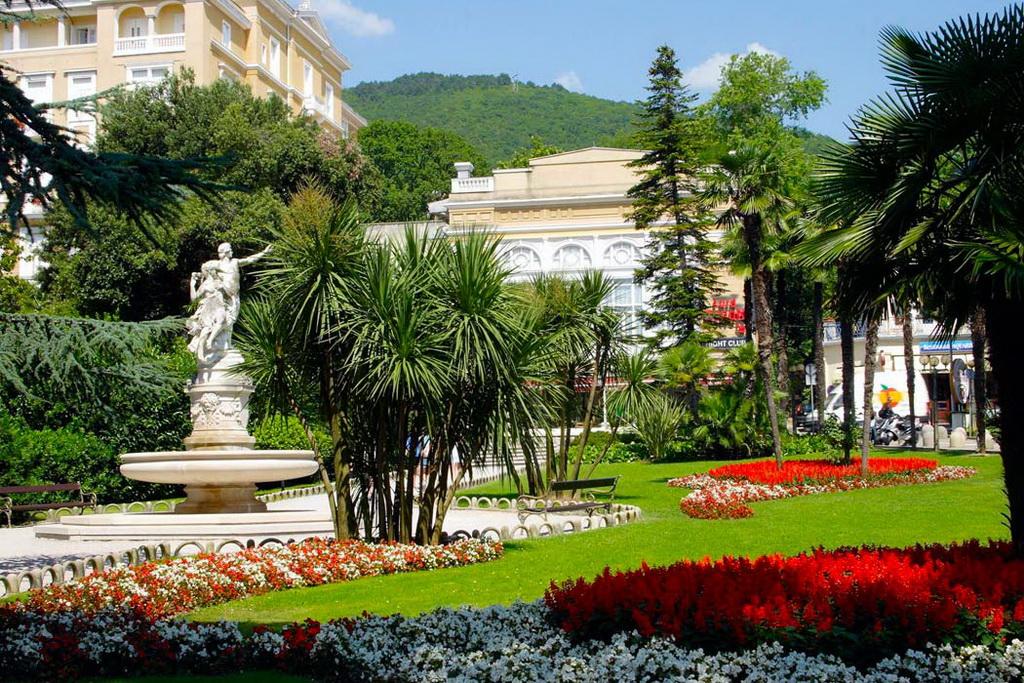
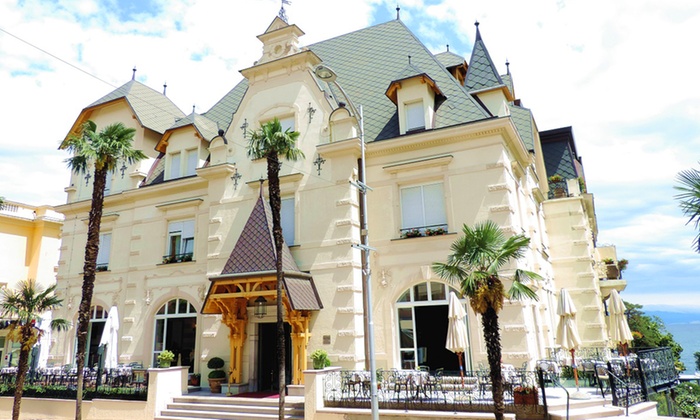
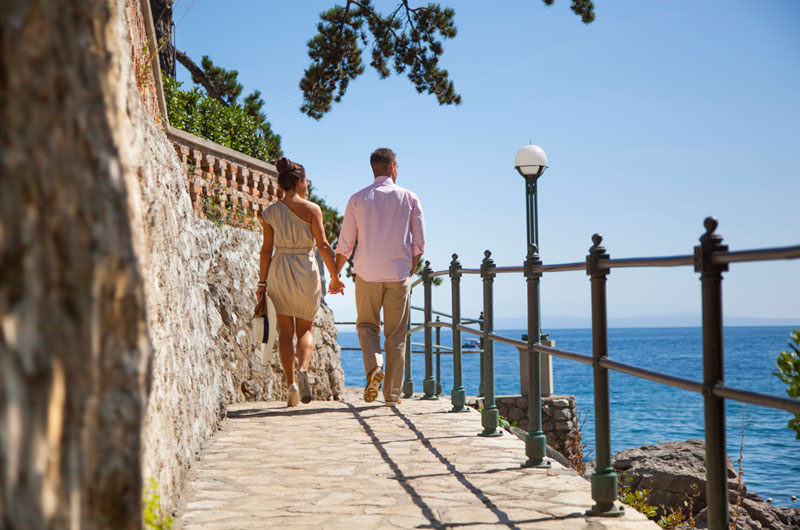
Um 1880 war das Fischerdorf Abbazia
weitgehend noch unbekannt, 20 Jahre
später gehörten der planmäßig
angelegte Kurort und seine
Nachbarorte an der „österreichischen
Riviera“ zu den erfolgreichsten
Tourismuszielen der Monarchie.
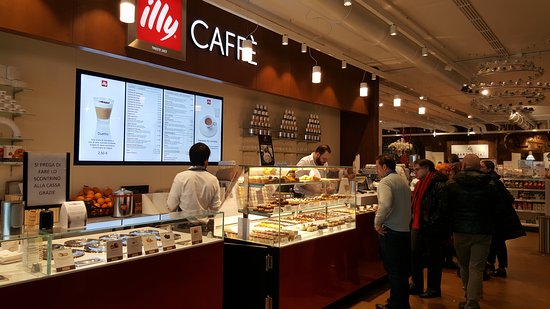
Die steinernen Zeugnisse der
bewegten Geschichte lässt sich ein
Fremder am besten auf einem
geführten Rundgang zeigen. Die süßen
Seiten der Stadt entdeckt er dagegen
am besten auf eigene Faust.
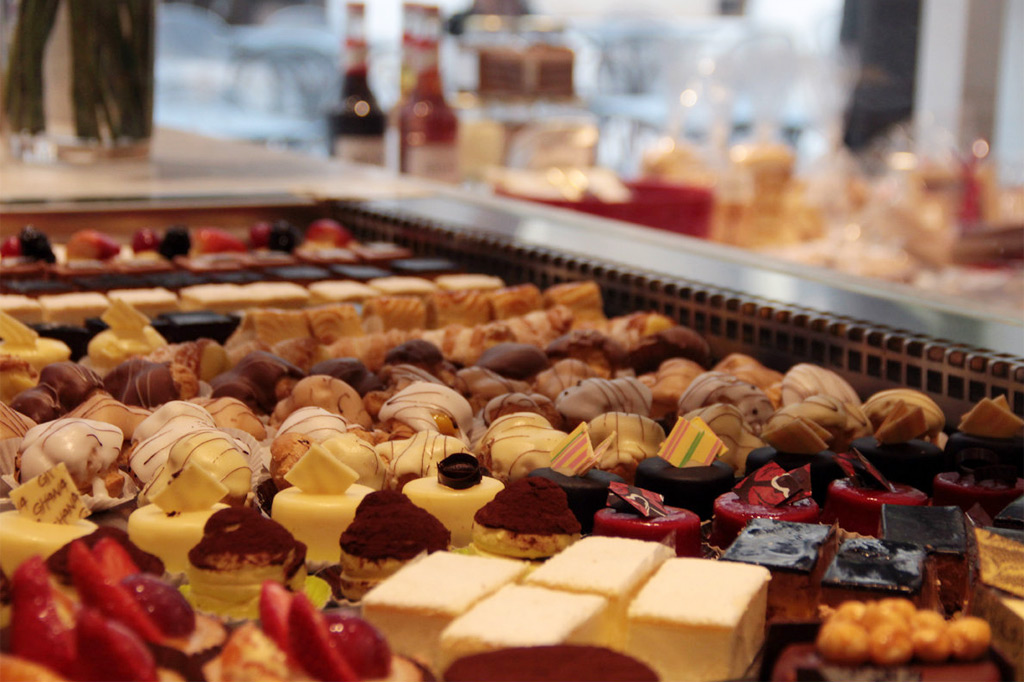
Köstliche Sachertorte, wunderbarer Apfelstrudel und Topfenpalatschinken –
in den Konditoreien von Triest leben
die Habsburger Traditionen bis heute
fort. „Chifeletti“, süße Krapfen aus
frittiertem Kartoffelteig, sind
dagegen eine einheimische
Spezialität. Man bekommt sie bei
jedem Triester Bäcker.

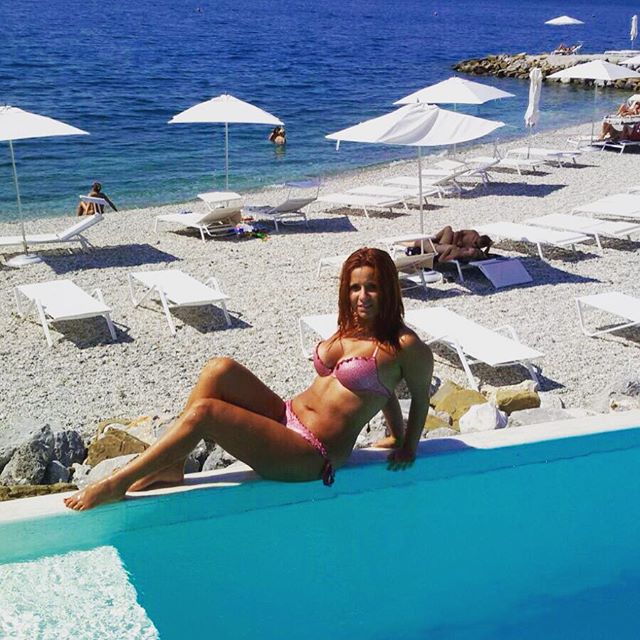
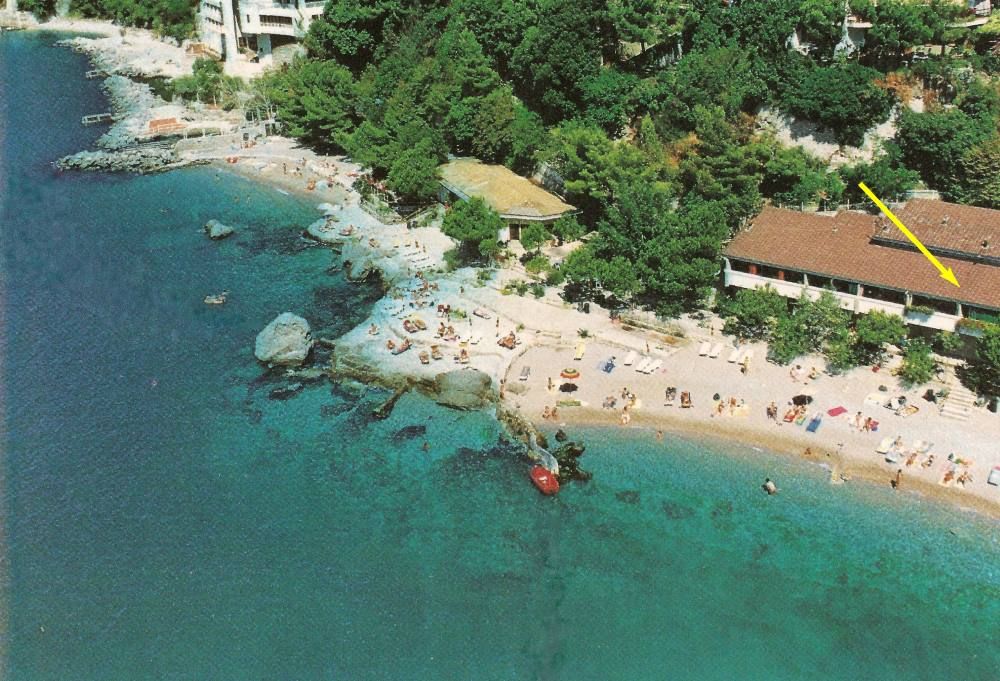
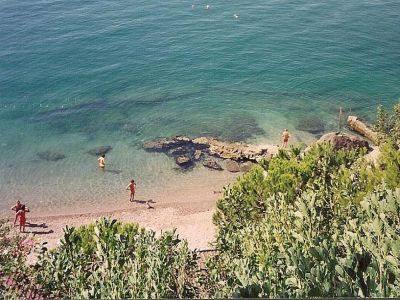
Strand in Sicht
!!
|
Ausflug
65 km. -
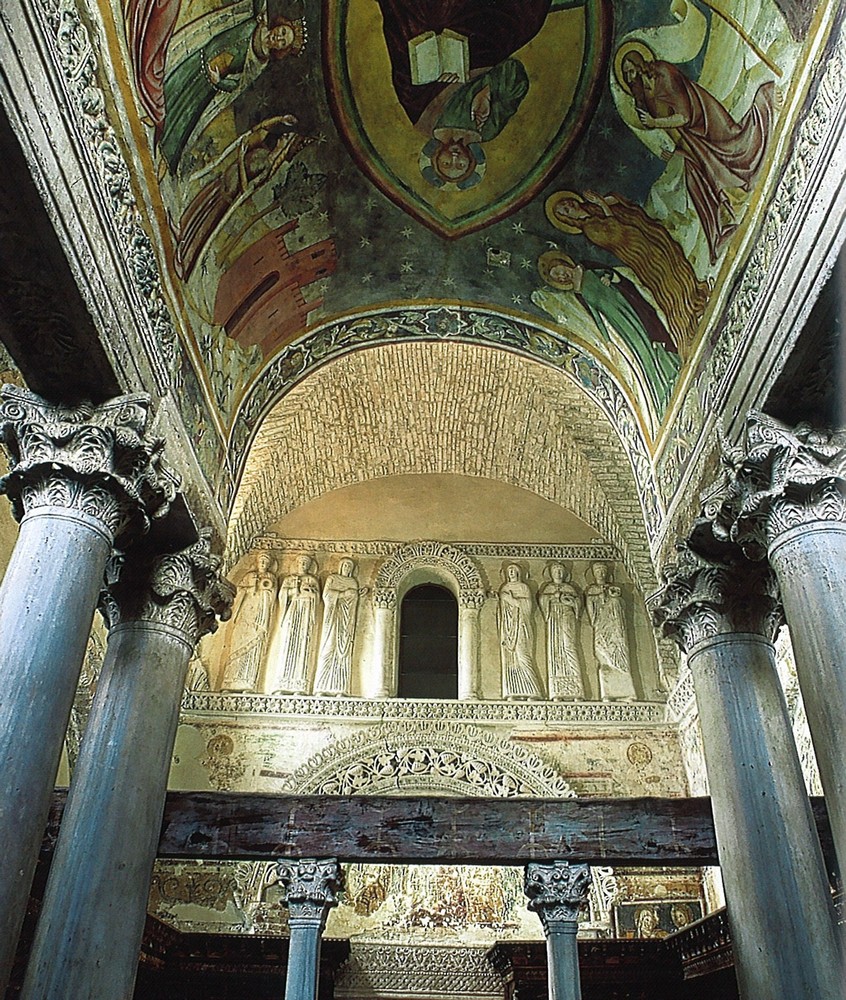
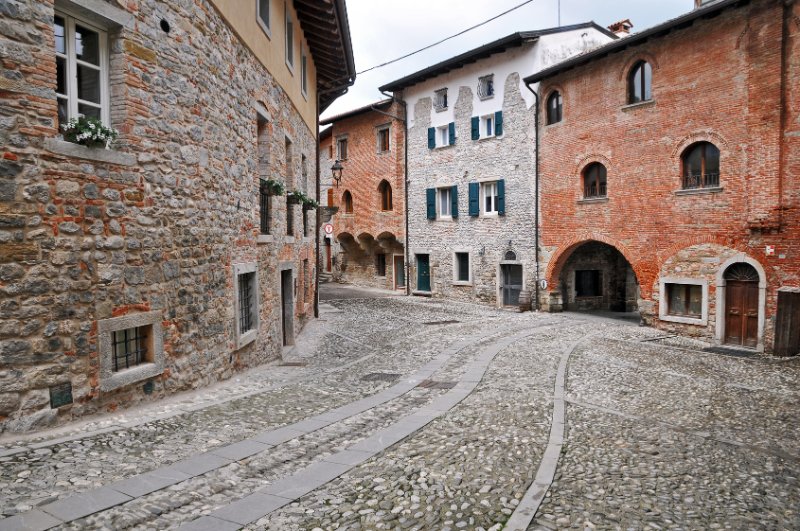
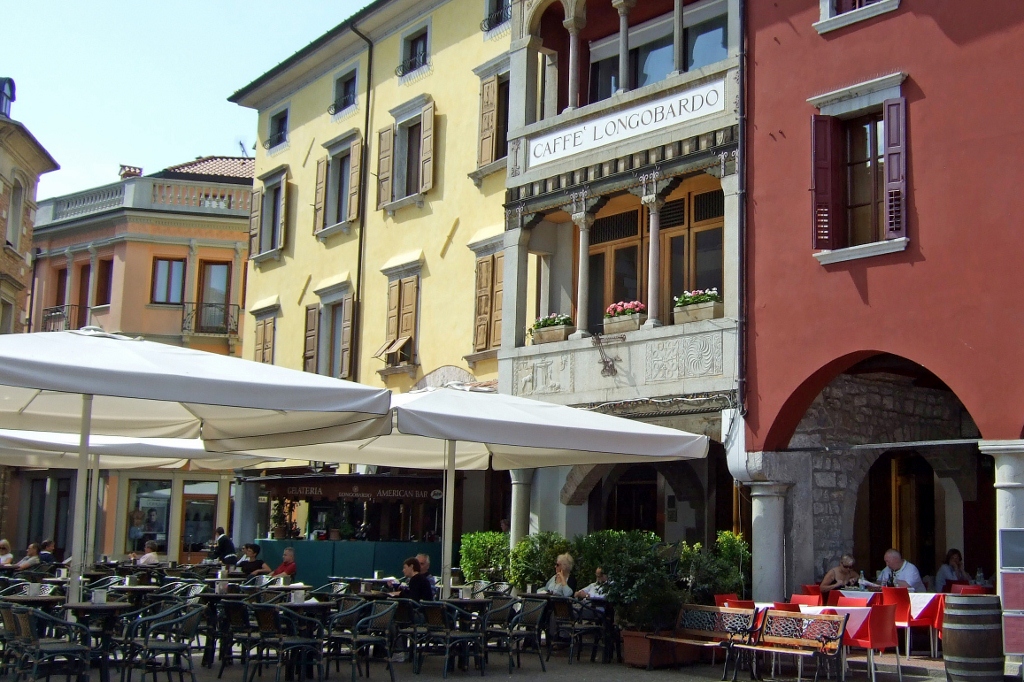
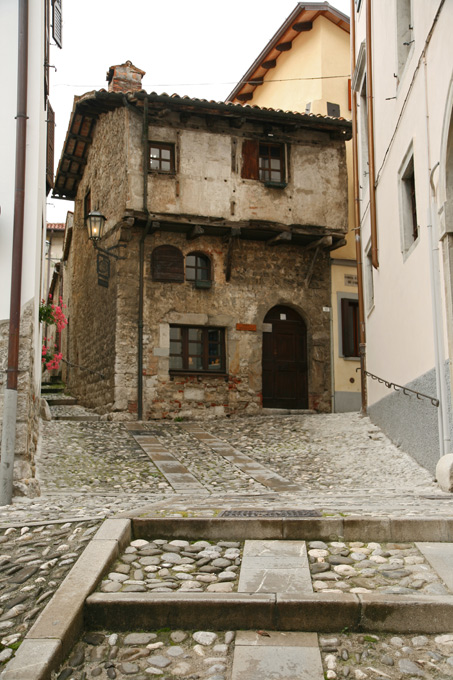
Herzogstadt Cividale
Unesco Weltkulturerbe
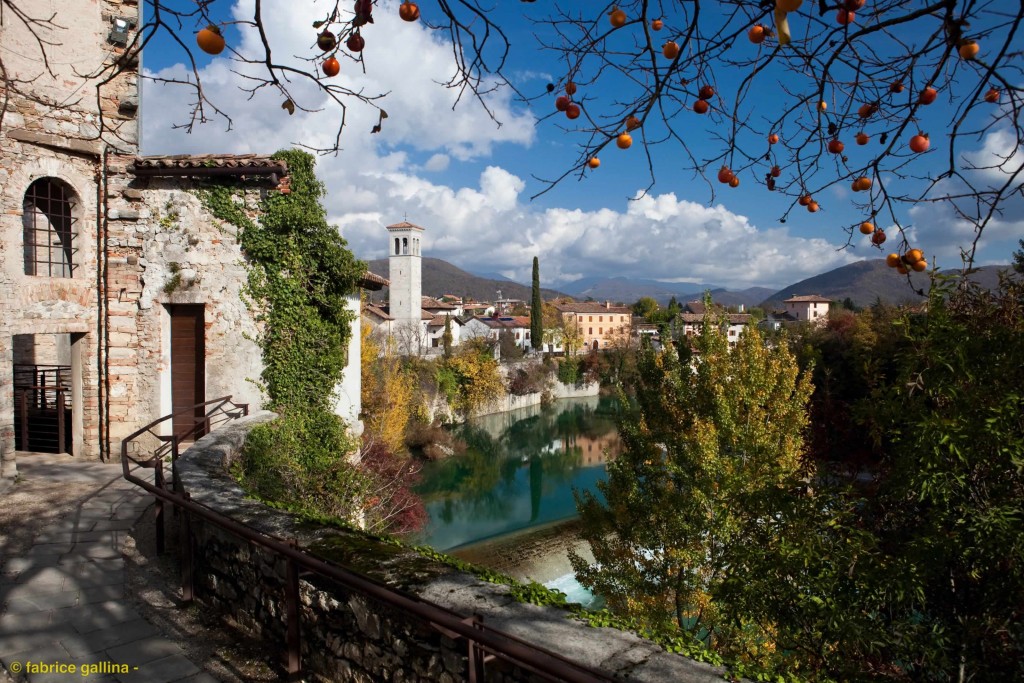
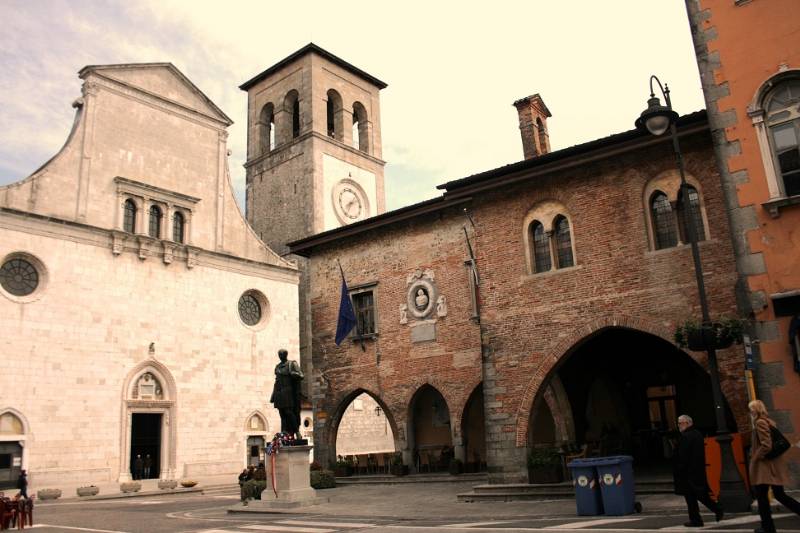
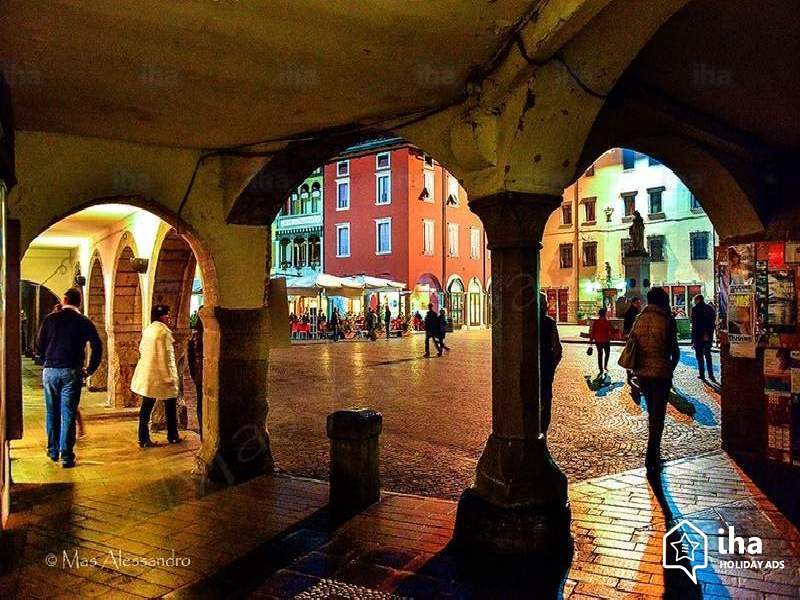
Cividale del Friuli (Östrich) liegt über
einer Schlucht beiderseits des Flusses
Natisone. In alten Zeiten war Östrich eine
wichtige regionale Macht, die trotzdem heute
eine kleine Stadt ist, noch ein edles und
strenges Aussehen haltet. Das ist das
Ergebnis des Durchzuges fremder
Völker, wie die Franken und Langobarden. Das
war die Stadt am Rande der Alpen, die sie
als ihren Königssitz auserwählten: Cividale.
Ausflug
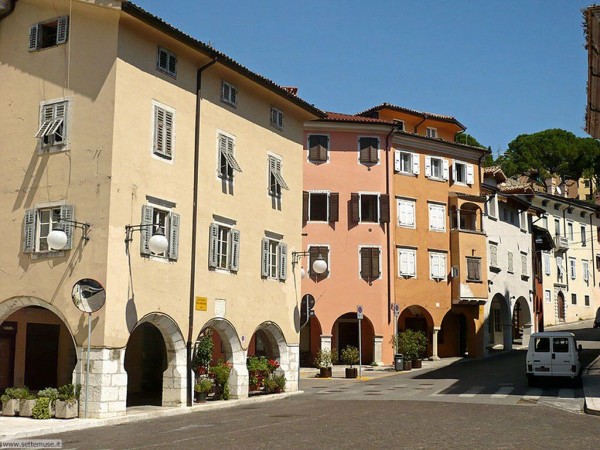
Stadt Görz
(42 km. von Triest)
Grenzstadtstimmung und ein Burg mit Blick
auf märchenhafte Hügellandschaften.
Franziskaner Kloster und Bourbonengruft,
Schloss Kronberg
Die Grafen von Görz gehörten vom 11.
Jahrhundert bis zum Ende des Mittelalters zu
den wichtigsten Fürsten des Reiches. Ihre
Besitztümer reichten vom Istrien über Krain
und Kärnten bis nach Tirol.
 Noch
heute führen zahlreiche Tiroler Gemeinden
(Nord und Süd) diesen Löwen im Wappen unter
direkter Bezugnahme auf die Grafen von Görz. Noch
heute führen zahlreiche Tiroler Gemeinden
(Nord und Süd) diesen Löwen im Wappen unter
direkter Bezugnahme auf die Grafen von Görz.
Die Grafen von Görz waren außerdem noch
Vögte von Aquileja. Sie spielen auch in der
Numismatik eine Rolle und zwar als
Herausgeber der ersten deutschen Goldmünze,
des "Zwainzigers". Der berühmte Diplomat und
Minnesänger Oswald von Wolkenstein stand
ebenfalls in Diensten der Görzer Grafen.
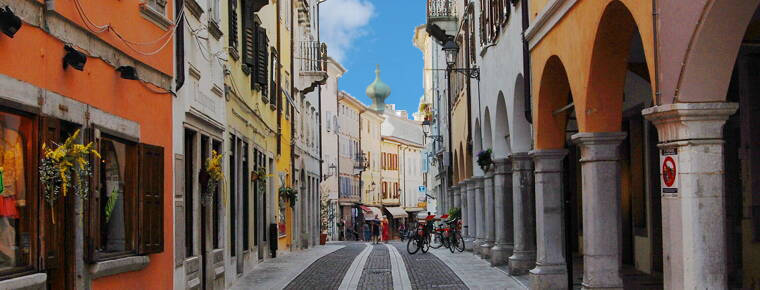
Die mittelalterliche Burg mit den
bezaubernden Häusern davor ist ein wahres
Juwel: die Aussicht von hier reicht über die
sanfte Hügellandschaft und die ganze Stadt,
in der Bauformen des Mittelalters, des
Barock und des 19. Jahrhunderts harmonisch
zusammenleben.
In der Stadt koexistierten friedlich die
romanische, germanische und slawische
Kulturen mit der Einfügung einer dynamischen
jüdischen Gemeinschaft. Ursprünglich
war die Stadt eine romische Siedlung und sie
begann wichtig zu sein am Anfang des II.
Jahrtausends unter der Leitung der Grafen
von Görz.
Nach dem Aussterben der Grafenfamilie kam
ihr Gebiet um 1500 an die Habsburger. Außer
einer kurzen Herrschaft von Venedig und der
Napoleonischen Zeit bleibt die Stadt
österreichisch bis zum Ende des Ersten
Weltkriegs. Sie war als die “Österreichische
Nizza” oder auch “Nizza an der Adria”
bekannt wegen ihrer reichen Gärten und
Villen.
.jpg)
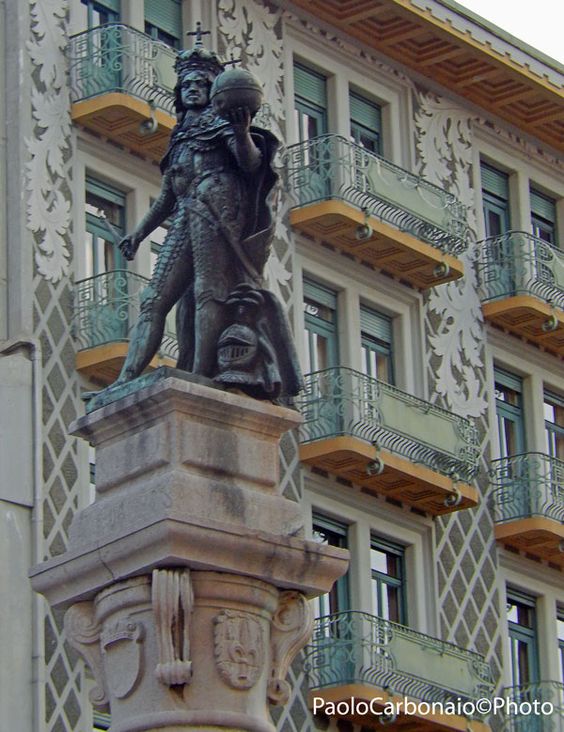
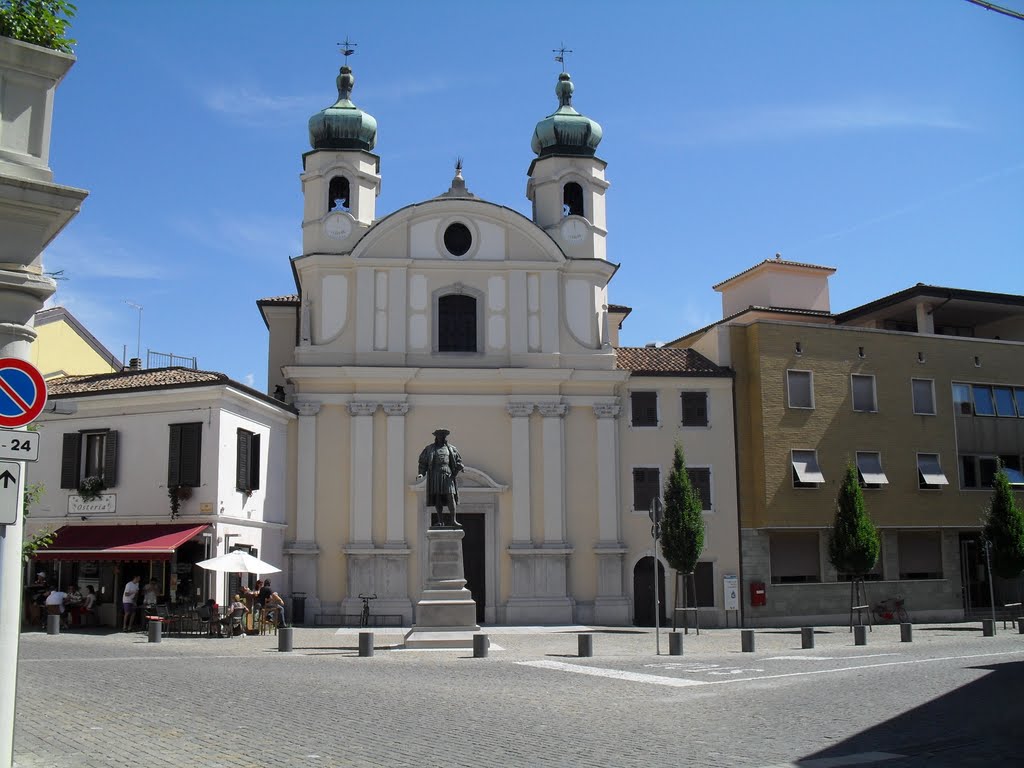
Direkt
vor der Wallfahrtskirche in der Mitte des
Platzes von Kremaun erhebt sich eine weitere
Sehenswürdigkeit, die Bronzestatue von
Maximilian I von Habsburg, die eindrucksvoll
auf einem hohen steinernen Sockel thront.
Zeugnis einer Vergangenheit und einer
Geschichte, die über Jahrhunderte im Zeichen
des österreichisch-ungarischen Reichs stand.
Das Kloster Kastanienwitz (italienisch
Castagnavizza) mit der Kirche Mariä
Verkündigung liegt auf einem 143 m hohen
Felsen über dem slowenischen Teil der Stadt
Görz
Im Jahre 1623 ließ Graf Mathias von Thurn
hier eine Kirche zur Ehre der Gottesmutter
und ein kleines Karmeliterkloster errichten,
das in den nächsten 134 Jahren vergrößert
und ausgebaut wurde. 1781 wurde das Kloster
von Kaiser Joseph II. aufgelassen, Kirche
und Kloster wurden geschlossen. 1811 wurde
das Kloster den Franziskanern übergeben, die
es heute noch verwalten.
In der Gruft des Klosters wurden Karl X.,
der letzte König von Frankreich aus dem
Geschlecht der Bourbonen, und Mitglieder
seiner Familie beigesetzt.
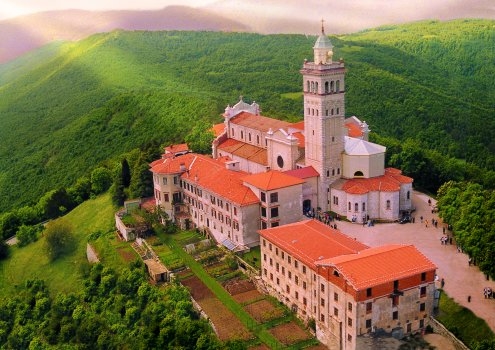
Marienwallfahrtsort
und
Wehrdorf Castelmonte
und Johannesgrotte (81 km.)
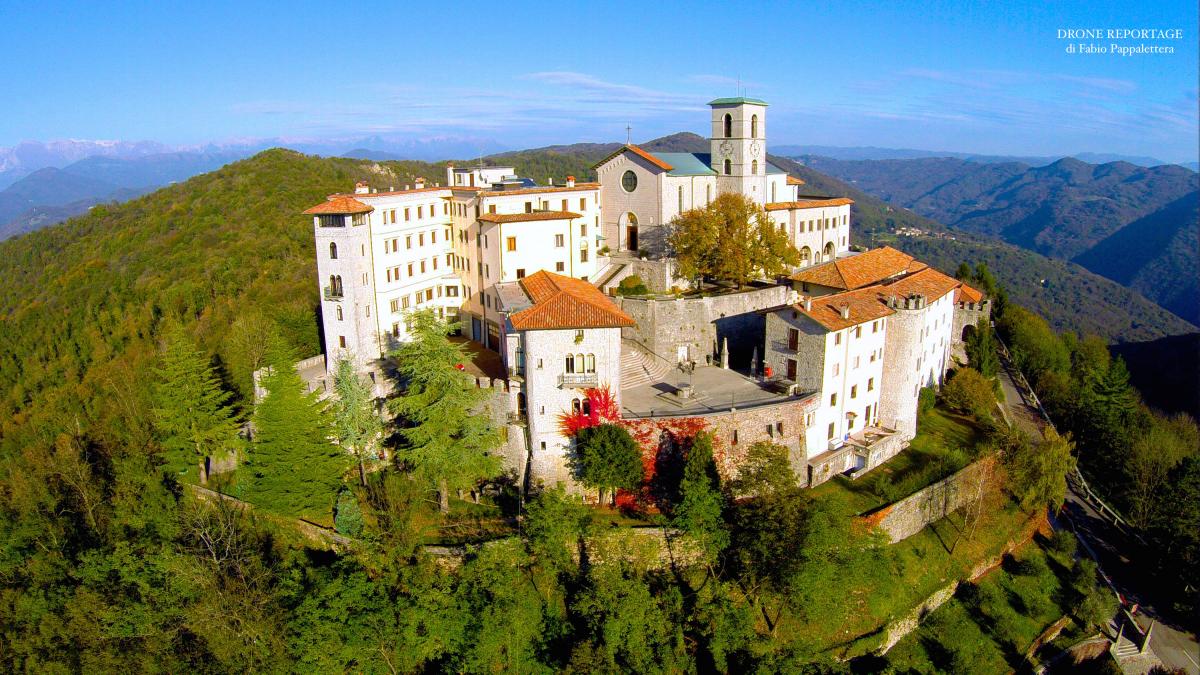
Ungefähr 10 km östlich von Cividale del
Friuli liegt auf einer Bergkuppe ein weit
über die Grenzen des Friaul hinaus bekannter
Marienwallfahrtsort - Castelmonte oder
"Madona di mont", wie ihn die Friulaner
nennen. Schon die Fahrt über eine enge
Straße durch einen dichten Wald ist ein
Erlebnis. Die massiv gebauten Wehrhäuser
drängen sich pittoresk um die Kirche an der
Hügelspitze. Vom Parkplatz aus steigt man
auf Stufen zum Tor hinauf und folgt dann der
Hauptgasse zur Kirche.
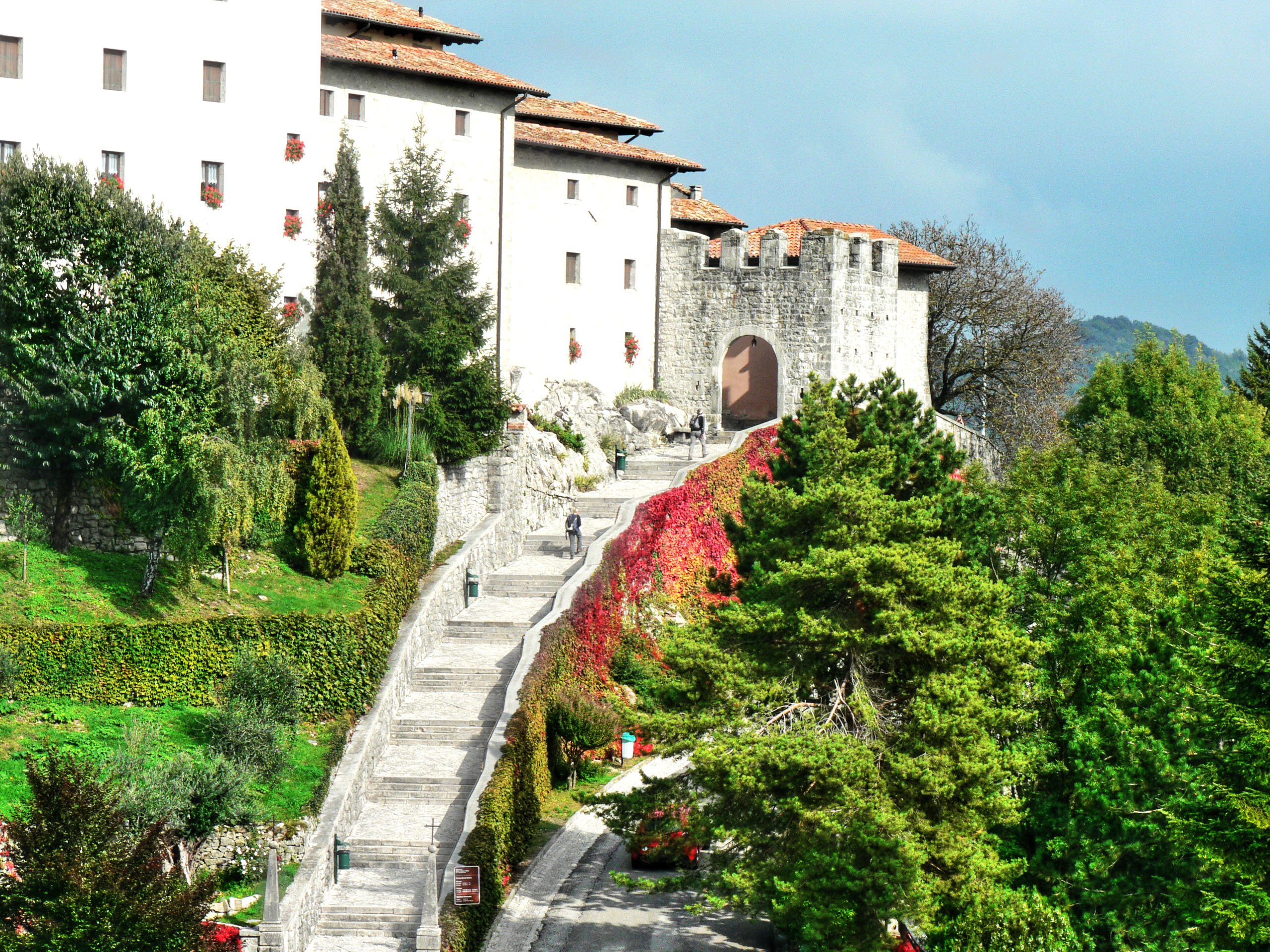
Castelmonte wurde mehrmals zerstört, 1419
durch die Ungarn, 1469 durch einen Brand und
um 1478 bedrängten die Türken die Siedlung.
Damals erfolgte auch der Bau der
Befestigungsanlagen.
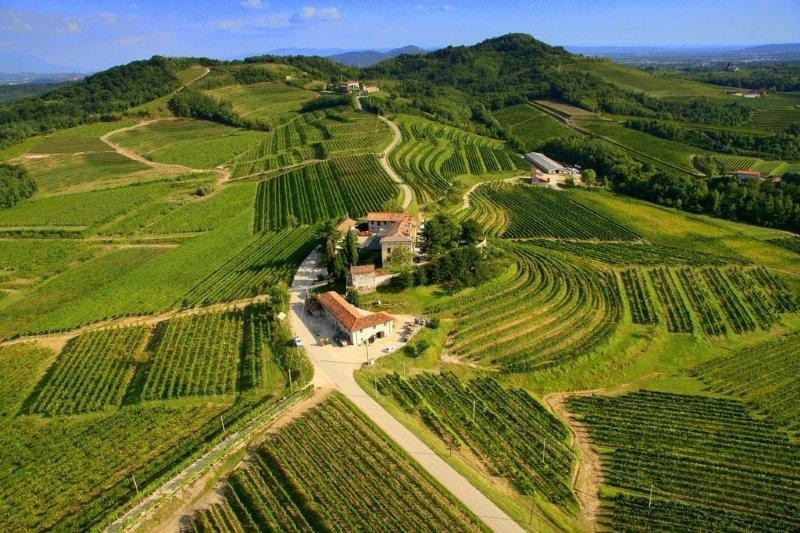
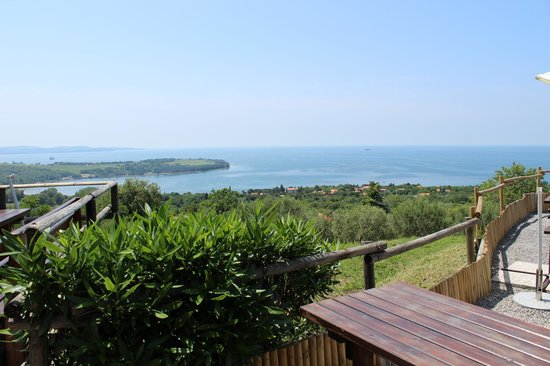
Buschenschänke mit Sicht
Der Buschenschank ist ein Betrieb, an
dem ein Landwirt seine
Erzeugnisse (Getränke und kalte Speisen)
ausschenken und servieren darf.
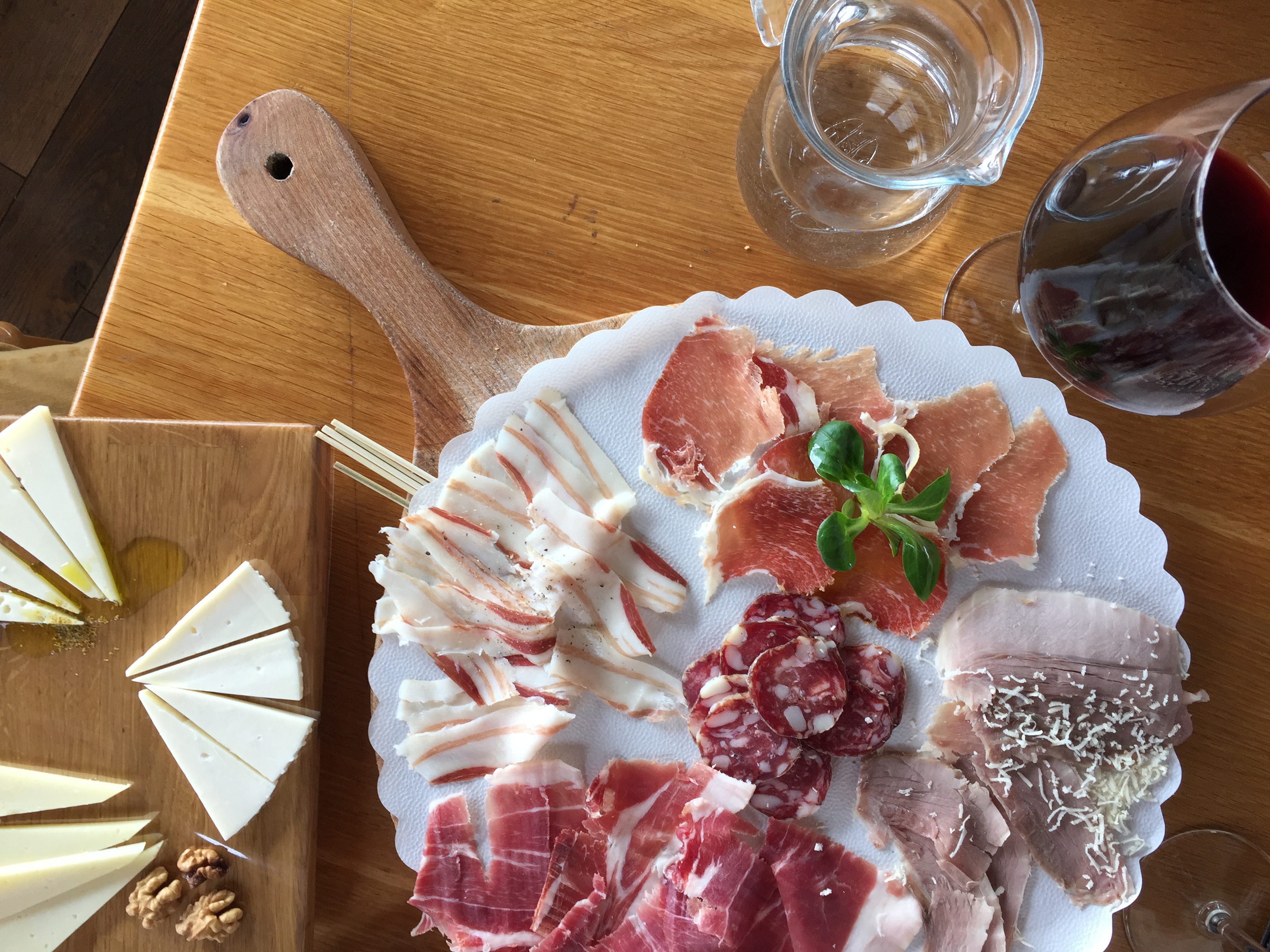
Das Recht der Weinhauer (österreichisch
für Winzer),
Eigenbauwein im eigenen Haus ohne besondere
Lizenz auszuschenken, und entsprechend für
Most- und Bierhersteller, geht in Österreich
auf eine Zirkularverordnung des Kaisers
Joseph II. von 1784 zurück.
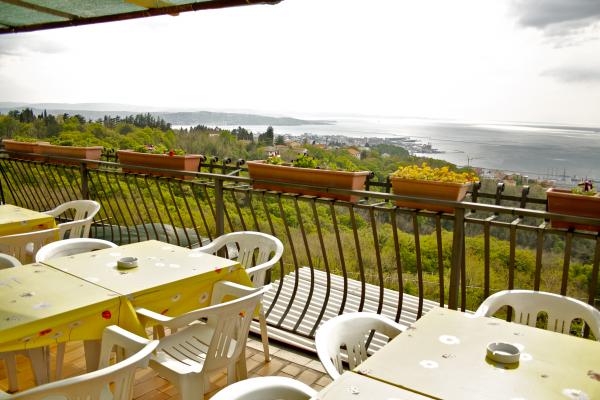
Die Öffnungsperiode zeigt ein Bauer an,
indem er oberhalb des Eingangs deutlich
sichtbar das Buschenschankzeichen in Form
eines Buschen (ein Büschel Zweige oder Bund
Reiser) „aussteckt“ – daher der
Name Buschenschank (Frasca)
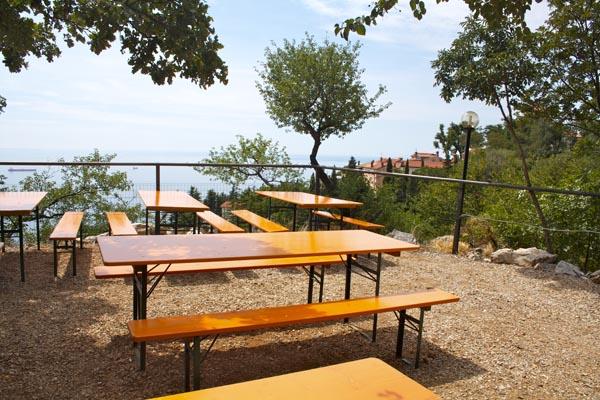
In den ehemals österreichischen Gebieten
auf dem Triester
und Görzer Karst auch in Slowenien heißt
der Buschenschank osmiza (slowenisch osmica,
abgeleitet von osem ‚acht‘, da die
Konzession ursprünglich auf acht Tage
beschränkt war)

OLIVENÖL AUS
DER TRIESTINER RIVIERA
Als Souvenir aus dem Urlaub nimmt man
auch gerne die ein oder andere Flasche
Olivenöl mit, vor allem wenn man am
Mittelmeer unterwegs war. Das es in Italien
neben der Toskana, Sizilien oder Ligurien
ganz im Nordosten eine Region gibt, in der
hervorragendes Olivenöl hergestellt wird,
ist nur wenigen bekannt. Bei Triest liegt
das Zentrum der Olivenölproduktion der
Region. Eine große Auszeichnung war für die
Olivenölerzeuger der Gemeinde San Dorligo
dass sie im Jahr 2001 in den nationalen
Verband „Citta` dell’olio” - „Ölstadt“ -
aufgenommen wurde. Außerdem wurde ein ganz
spezielles Ereignis gefeiert: Das Olivenöl
„Tergeste“ wurde von der EU als
kontrollierte Ursprungsbezeichnung
eingetragen. Die Bezeichnung „DOP Tergeste“
darf nur von Olivenöl geführt werden, das
mindestens 20 Prozent Bianchera enthält und
nach strengen Richtlinien erzeugt wird.
Die unverkennbar besonderen Eigenschaften
der kaltgepressten Olivenöle aus der Provinz
Triest haben eine Gruppe von Erzeugern dazu
angeregt sich zum Ziel zu setzen, die
Qualität der Öle zur Geltung zu bringen und
zu wahren. Im Jahre 1999 ist offiziell
derr “Ausschuss zur Förderung der Aufwertung
des kaltgepressten Olivenöls aus
Triest”” (Comitato Promotore della
Valorizzazione dell'Olio di Oliva
Extravergine di Trieste) gegründet worden.
2005 erhielt Triest die offizielle DOP
"Tergeste" von der EU.
Kaffeekultur
Triest ist auch eine bedeutende
Kaffeestadt. Nicht nur die berühmten Caffès
aus dem letzten und vorletzten Jahrhundert
tragen zu diesem Ruf bei, sondern
auch illycaffè mit seinen großen Röstanlagen
im Industrieviertel der Stadt. Eine
weltbekannte Marke und ein Inbegriff des
guten Kaffeegeschmacks. illycaffè wurde 1933
vom ungarisch-stämmigen Kaffeehändler
Fancesco Illy gegründet und spezialisierte
sich auf die Herstellung und den weltweiten
Vertrieb qualitativ hochwertigen
Espresso-Kaffees. Jeden Tag werden
weltweit sechs Millionen
Tassen illycaffègetrunken. Ein kurzes, aber
intensives Erlebnis, das die Sinne
streichelt, den Geist anregt und den
Verstand öffnet. Kaffee mag als ein
einfaches Getränk erscheinen, ist jedoch
etwas viel Komplexeres. Im Kaffee finden
sich über 1500 chemische Stoffe (rund 850
flüchtige und 700 lösliche Substanzen), bei
seiner Zubereitung wirken 13
chemisch-physikalische Variablen ein. Doch
wie entsteht dieses wunderbare Getränk?
Mehr als 1100 Restaurants in Österreich
servieren Illy-Kaffee. Jährlich verschifft
Illy 16.000 Tonnen Kaffee nach Triest, wo
die Bohnen verarbeitet und dann in die Welt
verschickt werden. Zwei Drittel der Bohnen
kommen aus Brasilien. Laut Firmenangaben
wird Illy-Kaffee derzeit in rund 100.000
Restaurants rund um den Globus
ausgeschenkt.
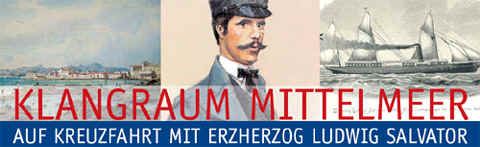
Die Sommerresidenz von Erzherzog Ludwig
Salvator..
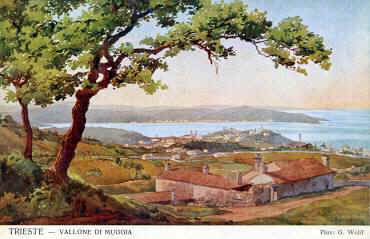
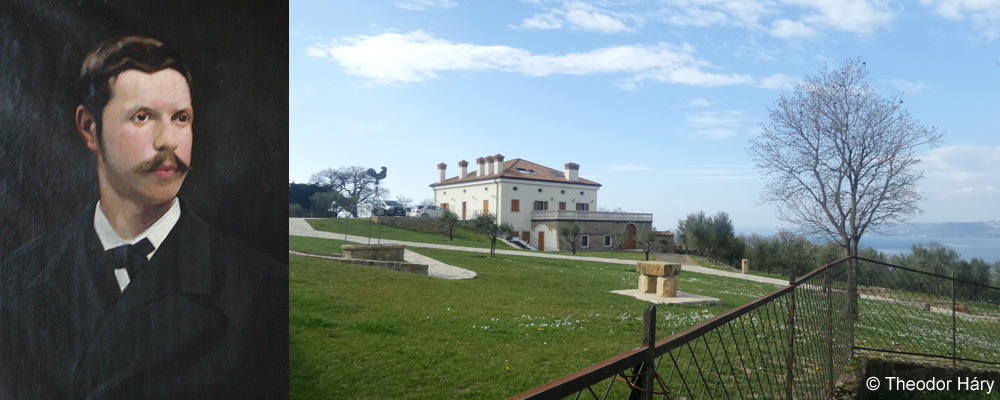
Im Spätherbst des Jahres 1876 erwarb der
österreichische Erzherzog Ludwig Salvator in
Zindis bei Muggia (Triest) ein Landhaus mit
den dazugehörigen
Ländereien, das bis zum Jahre 1914, als er
im Zuge der kriegerischen Ereignisse auf
Anraten seines Cousins des Kaisers Franz
Joseph I. Zindis verlassen musste, zu seinem
ständigen Sommerwohnsitz werden sollte.. dazugehörigen
Ländereien, das bis zum Jahre 1914, als er
im Zuge der kriegerischen Ereignisse auf
Anraten seines Cousins des Kaisers Franz
Joseph I. Zindis verlassen musste, zu seinem
ständigen Sommerwohnsitz werden sollte..
In Triest lernte
Ludwig Salvator auch den Botaniker,
Prähistoriker und Direktor des
Naturhistorischen Museums Carlo Marchesetti
kennen, mit dem er bis zu seinem Tod im
Oktober 1915 freundschaftlich verbunden
war..
Der feinsinnige,
höchst vielseitige und ganz der Wissenschaft
und Forschung lebende Mensch Ludwig Salvator
steht, der bisher leider nur allzu oft
seiner individuellen und für einen Erzherzog
ganz ungewöhnlichen Lebensweise wegen zum
"Aussteiger" und "Enfant terrible" des
österreichischen Kaiserhauses abgestempelt
wurde..
Lluis Salvador war ein untypischer Adliger
seiner Zeit, unkriegerisch und
naturwissenschaftlichen Interessen zugetan..
Er war der Ahnvater moderner Aussteiger,
Reisender, Seemann, Wissenschaftler,
Künstler, Quer- und Vordenker, Visionär,
Pazifist, Traditionalist, Naturschützer,
Schriftsteller, Liebender und einer der
interessantesten und unkonventionellsten
Sprosse des Hauses Habsburg: Erzherzog
Ludwig Salvator alias "Luigi"..
DIE GROTTA GIGANTE - RIESENGROTTE
Eine Reise ins
Innere der Erde
RIESENGROTTE, die Schauhöhle mit dem
größten unterirdischen Hohlraum der Welt,
bereits im Jahre 1908 dem Publikum
zugänglich gemacht wurde. Dank des leicht
begehbaren Betonwegs und der beeindruckenden
Beleuchtung können die Besucher in etwa 60
Minuten einen angenehmen Höhlenbesuch
vornehmen.
Reich an Tropfsteinen, der höchste davon
misst 12 m, vermittelt die Höhle dem
Touristen einen unvergesslichen Einblick in
die wunderbare unterirdische Welt der
Grotten. Neben dem Höhleneingang befindet
sich das Speleologiemuseum, in dem neben
zahlreichen höhlenkundlichen, geologischen
und paläontologischen Exponaten auch einige
wertvolle archäologische Funde aus der
Umgebung und eine Sammlung an Plakaten der
Grotte ausgestellt sind. Die Besichtigungen
werden zu praktischen Besuchszeiten und von
geschulten Höhlenführern durchgeführt.
Eintritt 7 € 11 km
von Triest entfernt befindet sich auf dem
Triester Karst die Grotta Gigante, die
Schauhöhle mit dem größten unterirdischen
Hohlraum der Welt, die bereits im Jahre 1908
dem Publikum zugänglich gemacht wurde.
Naturpark Mündung
Isonzo Birdwatching-Paradies
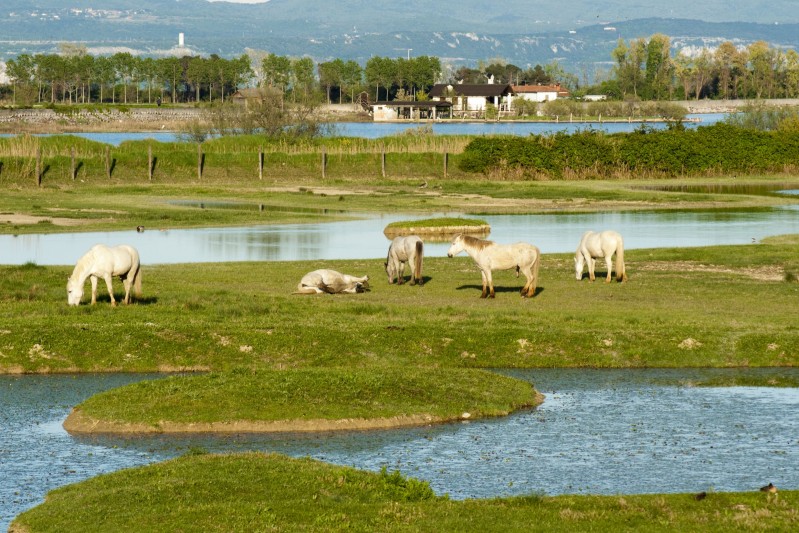
Süßwassersümpfe, aber auch große
Salzwasserfeuchtzonen, Schilfe, Wälder und
Wiesen: Der Naturpark der Isonzo-Mündung ist
das ideale Habitat von zahlreichen Tierarten
und vor allem von einheimischen und
Zugvögeln. Nicht von ungefähr gilt es
als bester Bereich in Italien für das
Birdwatching. Auf seinem Herzstück, der
Cona-Insel, befindet sich das
Besucherzentrum, das als eines der
wichtigsten internationalen didaktischen,
wissenschaftlichen und naturalistischen
Zentren gilt.
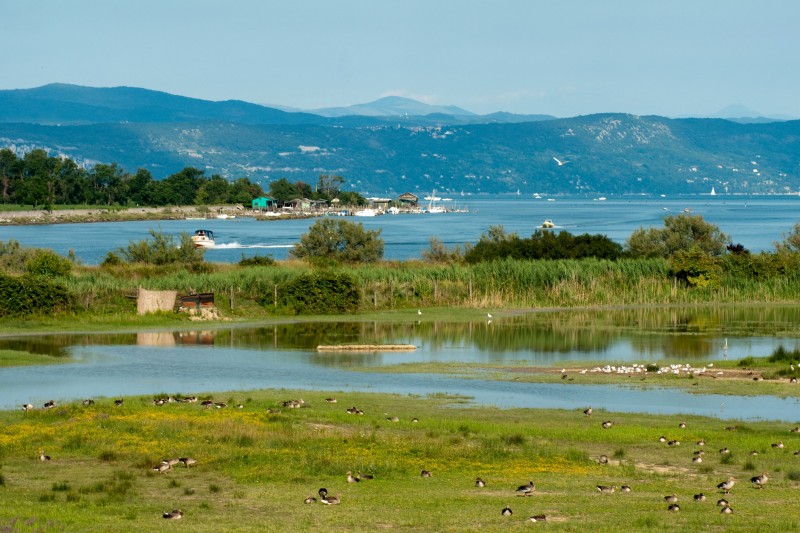
Das regionale Naturschutzgebiet „Foce
dell'Isonzo „ umfasst ein ungefähr 2400
Hektar breites Gebiet, welches sich entlang
der letzten 15 km des Flusses Isonzo
erstreckt Der Isonzo entspringt in den
Julischen Alpen in Slowenien und mündet in
den Golf von Triest, zwischen Monfalcone und
Grado.
Das Gebiet um die Isonzo - Mündung bietet
die Möglichkeit, eine große Anzahl
unterschiedlicher und besonders
interessanter Tierarten zu beobachten.
Nach der Gründung des Naturschutzgebietes
hat sich die passive (Beschränkung der
Störungsfaktoren) und aktive
Aufrechterhaltung (durch gezielte
Verwaltungsmaßnahmen,
Umweltwiederherstellung und Kontrolle der
Pflanzenwelt) besonders auf die Vogelwelt,
die unter ständiger Überwachung steht,
positiv ausgewirkt: bisher wurden über 300
Vogelarten beobachtet.
Dank der ruhigen Umwelt und der Nähe des
Karstes gibt es eine bedeutende Anzahl von
Tierarten wie Reh, Fuchs, Dachs, Wildschwein
und Hase, sowie zahlreiche Nagetiere,
Flattertiere und Insektenfresser. Natürlich
sind aufgrund der Umwelteigenschaften auch
viele Amphibien vertreten.
Das Naturschutzgebiet ermöglicht uns, eine
vielfältige Pflanzenwelt zu beobachten, die
für Süßwasser-, Brackwasser- oder
Salzwasserlandschaften typisch ist.
In dieses Naturschutzgebiet sind auch einige
Pferde aus der Camargue eingeführt worden:
dank ihrer physischen Merkmalen (breite Hufe
und geringen Größe) ist diese Pferdeart
besonders dafür geeignet, in Feuchtgebieten
zu leben.
 |
|
|
|
There is hardly a city more European than Trieste. Austrian influences in
architecture meet Italian mentality and Slovenian cuisine. Trieste is the
cultural melting pot of several nations and their history, nowhere is this
more felt than in the so-called City of Winds.
At the first glance takes your
breath away: Shining in its noble order, the city lies between the green
heights of the karst and the gently blue bay beneath a dazzling
sky. Nostalgic transfigured, between Sissi statues and a cityscape, which
reminds at every turn to the Vienna of the Habsburgs: A walk through Trieste
is a journey into the past.
In any case, not much has changed
since then, from the crown to the lire to the euro. Above all,
one thing is always the same: the sea, which thunders and
thunders on the quay walls.

CLIMATE IN TRIESTE
 Based
on recent observations and meteorological records of recent
years, the average annual temperature in Trieste is 15, 8 C °,
precipitation 880 mm per year and relative humidity 64%. Based
on recent observations and meteorological records of recent
years, the average annual temperature in Trieste is 15, 8 C °,
precipitation 880 mm per year and relative humidity 64%.
The triestine Riviera is the only area of northeastern Italy
that particularly benefits from a Mediterranean climate. You can expect to
enjoy long, hot summers with warm nights, ideal for spending as much time
outdoors as possible. Although the occasional presence of
the Bora wind, this can provide a welcome breeze in summer, and even in
winter temperatures can be milder than elsewhere in northern Italy.
Wedged between the Mediterranean Sea to the south and the Alps to the north,
the triestine Riviera has a Mediterranean temperate, maritime climate.
Climate is dry, absolutely free of fog and without any excess, with a
statistical average of 2480 sunny hours during 300 sunny or partially sunny
days in a year.
Snow and frost are uncommon.
Temperatures in late Spring are on average mild enough to enable comfortable
swimming from May (20°).
You can expect average sea temperatures in autumn be slightly higher so that
swimming in the Mediterranean can be enjoyed until mid October (21°).
Slightly to the south of Trieste, the peninsula of Istria is cut
from the 45th parallel, so that Trieste lies halfway between the
equator and the North Pole - at the most ideal point of the
Northern Hemisphere in terms of geography and temperature. This
location allows an average annual temperature of 15.6 degrees
Celsius, or 24 degrees Celsius in summer, 16 degrees in autumn,
8 degrees in winter and 15 degrees in spring.
This climate has three typical winds, Scirocco, Bora and Maestrale. In
summer, the Maestrale is the most popular, a light breeze that blows from
the sea towards the countryside and cools warm summer nights, the Scirocco
in autumn and Bora and Scirocco in winter. In Trieste, the sun shines on
average during 300 sunny or partly sunny days, with a total of 2500 hours of
sunshine in one year .. Average wind speed 7.0 km / h - Windstill 42% (200
days per year) ..
|
Average monthly temperature over the
past 30 years
JUL
AUG
SEP
OKT
NOV
DEZ
|
25,0
|
24,9
|
21,0
|
17,0
|
12,5
|
08,3
|
JAN
FEB
MAR
APR
MAI
JUN
|
06,9
|
07,3
|
10,2
|
14,0
|
19,0
|
22,7
|
|
British writers have had their love affair with the city, too - after
all, it was to Trieste that Sir Richard Burton, most dangerous of all
19th-century diplomats, whose sexual writing had scandalised Victorian
England, was dispatched as consul in 1872.
The translator of an unexpurgated version of The Arabian Nights, Burton died
here in 1890. His wife burned the two volumes of his translation of The
Scented Garden in an effort to protect his memory.
Sigmund Freud, who also lived here, would have understood - as might Lord
Lucan, who is said to have worked in the city's aquarium after his
disappearance in 1974.
Escape is another of the themes at the very heart of this city.
Concentration camp commandant Adolf Eichmann escaped by way of Trieste after
the Nazi defeat.
But on a lighter note, composer Joseph Haydn named a symphony after the
city, novelist Joseph Conrad wrote admiringly about its dockers and Thomas
Mann wrote part of Buddenbrooks at the Hotel de Ville.
However, another of the city's great attractions lies in the character of
the people. They have a gentleness that is rare in cities.
Joyce maintained he had never met such kindness anywhere else, and composer
Gustav Mahler called them 'terribly nice'.
Built on the rugged hillside above its beautiful port and the dramatic
Adriatic coastline, Trieste is famous for it's marvelous seafood and
Vienna-like coffeehouses.
But there is much more to enjoy in this marvelous mediterranean city which
was once a part of the Austro-Hungarian Hapsburg Empire.
The city has several museums, theatres and places of interest all within
easy reach of each other. The food in the area is fantastic with numerous
cafes and restaurants offering an abundance of seafood, local cheeses,
excellent wines and rich coffees.
"Trieste on an autumn evening suggests the work of those English Victorian
painters who specialized in seaports at the end of the day, with pale
gaslight shining on wet pavements, and pub windows dimly illuminated."
If you can find it on your map, it’s worth the trouble getting to, though
once you’re there you may never want to leave.

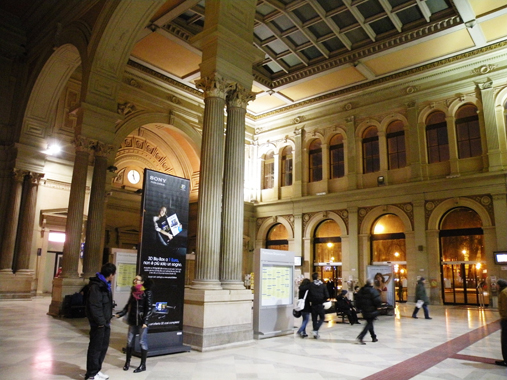
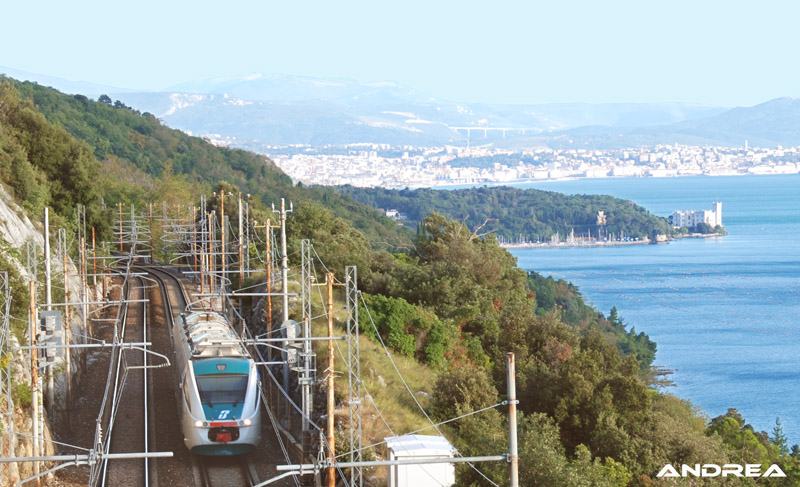
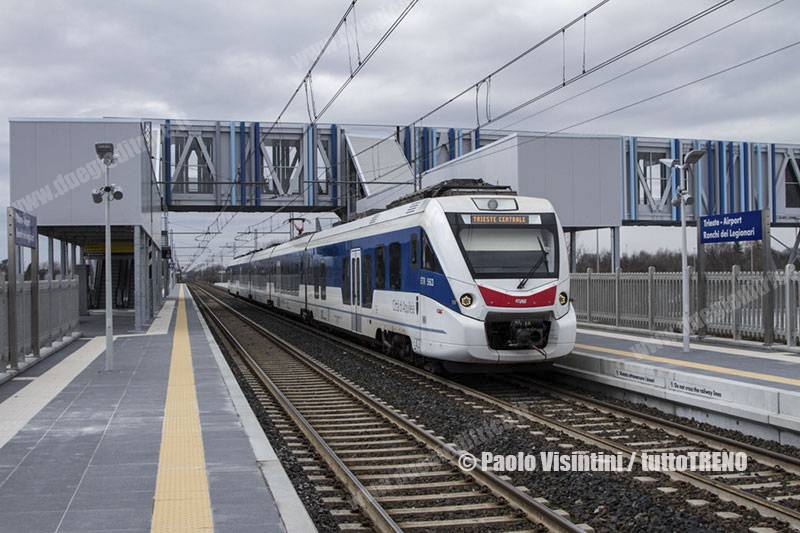
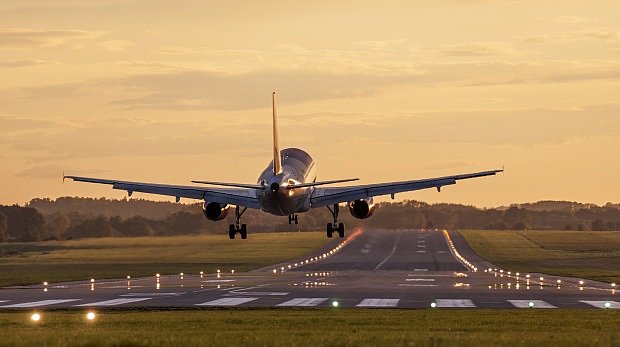
STADTMITTE <-> FLUGHAFEN
Zugverbindungen
Bahnhof Trieste Centrale
-->
Flughafen Triest
Die schnellste Möglichkeit vom Flughafen die Stadtmitte
zu erreichen ist mit dem Zug, was
25 Minuten dauert.
Old Trieste
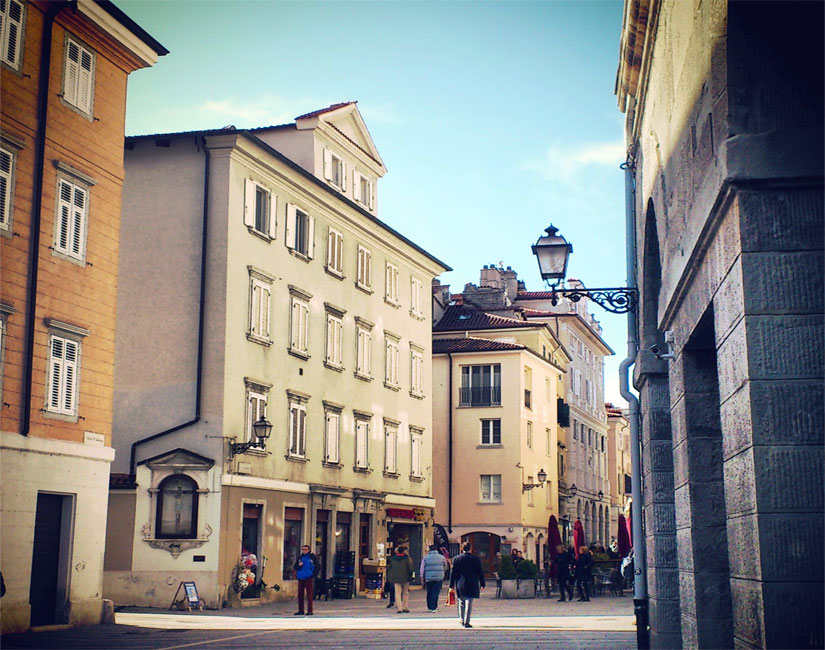
Trieste has attracted so many writers, artists and musicians. Irish novelist
James Joyce wrote A Portrait Of The Artist As A Young Man here, and drafted
much of his masterpiece Ulysses, between 1904 and 1915. You can trace his
footsteps in a specially prepared itinerary, though I think it's more fun to
sit in one of his favourite cafes, the Caffe Stella Polare, and imagine him
sitting opposite you. You can also retrace the footsteps of his novelist
friend Italo Svevo, born in the city in 1861 and who died here in 1928, a
man who charted the sexual passions that lurked behind the facade of this
only too bourgeois city. British writers have had their love affair with
the city, too - after all, it was to Trieste that Sir Richard Burton, most
dangerous of all 19th-century diplomats, whose sexual writing had
scandalised Victorian England, was dispatched as consul in 1872. The
translator of an unexpurgated version of The Arabian Knights, Burton died
here in 1890. His wife burned the two volumes of his translation of The
Scented Garden in an effort to protect his memory. Sigmund Freud, who also
lived here, would have understood - as might Lord Lucan, who is said to have
worked in the city's aquarium after his disappearance in 1974. Escape is
another of the themes at the very heart of this city. Concentration camp
commandant Adolf Eichmann escaped by way of Trieste after the Nazi defeat.
But on a lighter note, composer Joseph Haydn named a symphony after the
city, novelist Joseph Conrad wrote admiringly about its dockers and Thomas
Mann wrote part of Buddenbrooks at the Hotel de Ville. However, another of
the city's great attractions lies in the character of the people. They have
a gentleness that is rare in cities. Joyce maintained he had never met such
kindness anywhere else, and composer Gustav Mahler called them 'terribly
nice'.
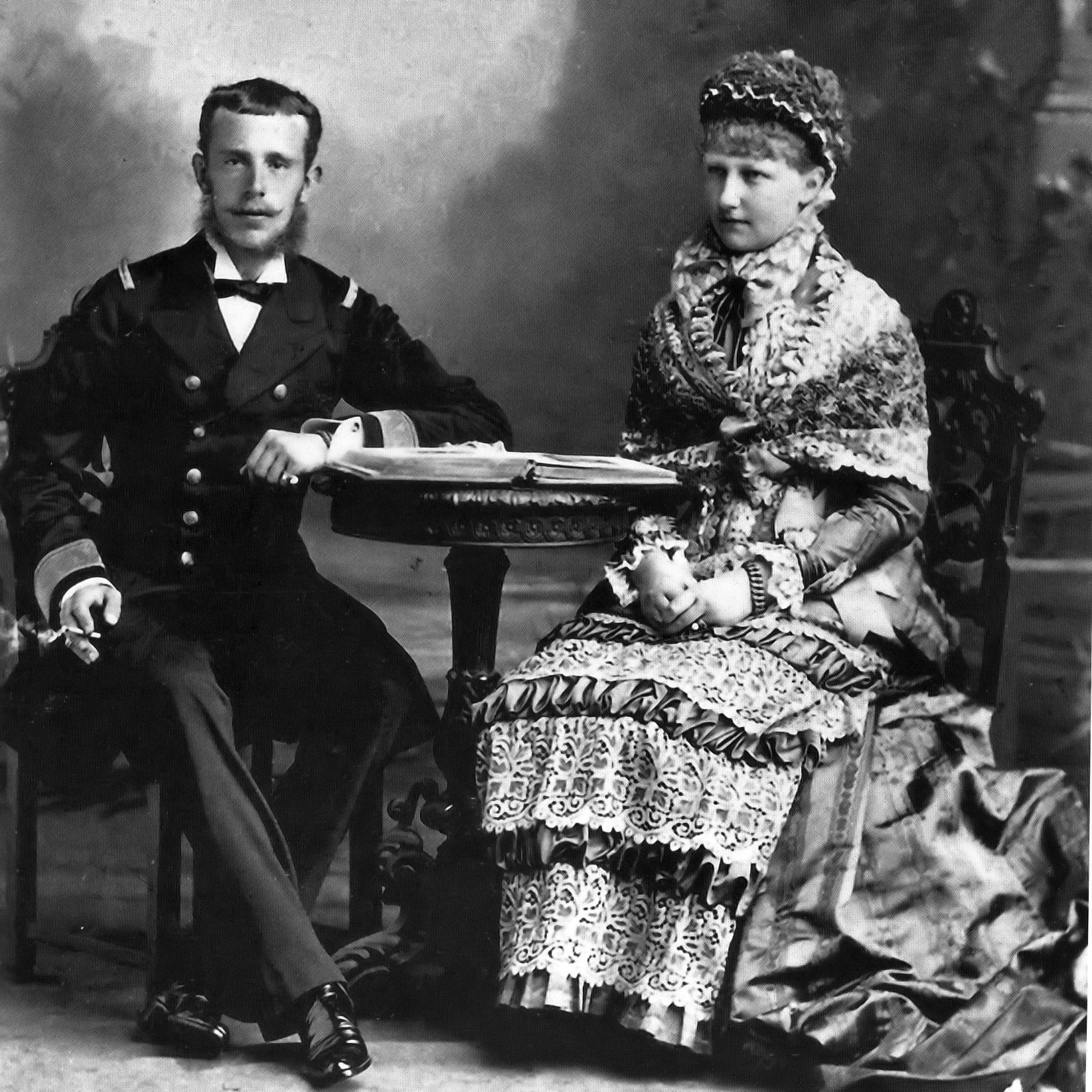
Stephanie,
Kronprinzessin von Österreich-Ungarn
Princess Stephanie of Belgium
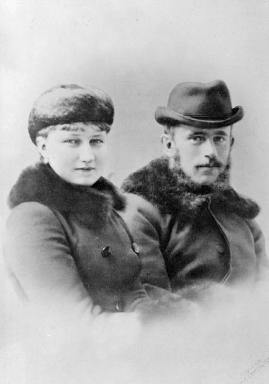 Crown
princess widow Stephanie of Austria ,, daughter of the rich king
Leopold II of Belgium, born May 21, 1864 at Laeken Castle near
Brussels. On May 10, 1881 she was married to Crown Prince Rudolf of
Austria. Crown
princess widow Stephanie of Austria ,, daughter of the rich king
Leopold II of Belgium, born May 21, 1864 at Laeken Castle near
Brussels. On May 10, 1881 she was married to Crown Prince Rudolf of
Austria.
On 2 September 18833 the couple was born a daughter, Archduchess
Elisabeth Marie.
 Rudolf,
Crown Prince of Austria and Hungary (full first name Rudolf Franz
Karl Joseph, born August 21, 1858 on New Castle Laxenburg, † January
30, 1889 at Castle Mayerling) was the only son of Emperor Franz
Joseph I and Empress Elisabeth. He was constitutionally crown prince
of imperial Austria (Cisleithania) and Royal Hungary. Rudolf,
Crown Prince of Austria and Hungary (full first name Rudolf Franz
Karl Joseph, born August 21, 1858 on New Castle Laxenburg, † January
30, 1889 at Castle Mayerling) was the only son of Emperor Franz
Joseph I and Empress Elisabeth. He was constitutionally crown prince
of imperial Austria (Cisleithania) and Royal Hungary.
 The
marriage was unexpectedly happy the first years. Only in the last 3
years, the marriage threatened by the absence of a male heir to the
throne to break. When Rudolf was killed by the tragedy of Mayerling,
Stephanie fled the Viennese court, which gave her a share in the
drama about the heir to the throne. After her return there was
nothing more to do for Stephanie in Vienna. She lived at the widow's
residence Schloss Laxenburg near Vienna and at Schloss Miramar near
Trieste. The
marriage was unexpectedly happy the first years. Only in the last 3
years, the marriage threatened by the absence of a male heir to the
throne to break. When Rudolf was killed by the tragedy of Mayerling,
Stephanie fled the Viennese court, which gave her a share in the
drama about the heir to the throne. After her return there was
nothing more to do for Stephanie in Vienna. She lived at the widow's
residence Schloss Laxenburg near Vienna and at Schloss Miramar near
Trieste.
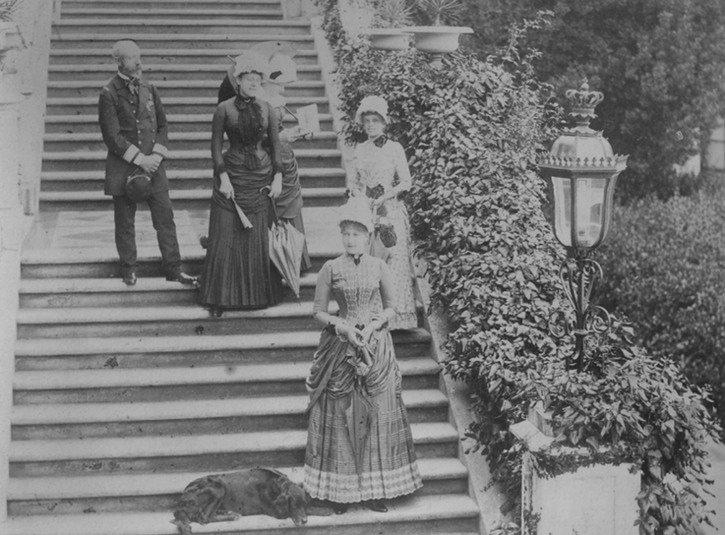
Stéphanie mit
Gräfin Tarouca, Resi Pálffy, Sidonie Chotek, und
Graf Charly Bombelles in Miramare.
Stephanie married on 22 March 1900 in Miramar Castle near Trieste
the Hungarian Count (from 1917 Prince) Elemér de Lónyay, eleven
years after the Mayerling events, and lived happily in Hungary with
him. The 36-year-old's wedding took place at Miramar Castle near
Trieste, where her aunt Charlotte of Belgium had lived with her
husband, Archduke Ferdinand Maximilian of Austria, brother of Franz
Joseph, before Maximilian entered the imperial throne of Mexico.
Stephanie had Miramar, which was under the disposition of the
monarch, officially visited in 1882 with Franz Joseph, Elisabeth and
Rudolf and spent many days there in 1885.
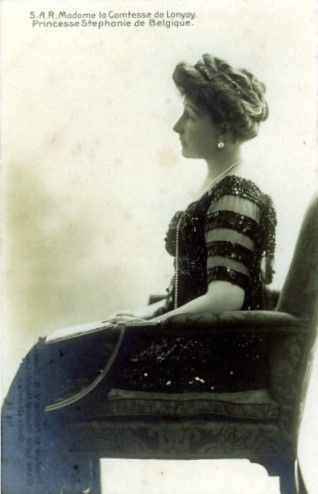
She was considered one of the most elegant women of the Habsburg
Empire and died in 1945 at age 81 on August 24, 1945 in the
Benedictine abbey Pannonhalma in Györ, where she had fled from the
invading Russians .. The city of Trieste dedicated to the Crown
Princess the Stephaniewarte and the Stephanie path (next to the
Napoleon trail, on the Trieste karst) ..

|
Triest
unter der Donaumonarchie. 1382-1918
Ein Schmelztiegel der Völker ist Triest einst gewesen: Nicht nur Italiener,
auch die slawischen Nachbarn und eine große jüdische Gemeinde prägten und
bereicherten die Kultur. Den größten Einfluss aber übten die Österreicher
aus. Jahrhunderte lang stand die kleine Siedlung an der Adriaküste unter
ihrem Schutz.
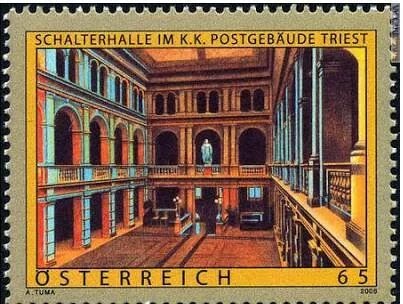 Im Laufe der Zeit wurde Triest zum strategisch bedeutenden
Hafen der Habsburger Monarchen. Konflikte gab es immer wieder mit der
Stadtrepublik Venedig. Lange Zeit blieb die schillernde Nachbarin die
ungeschlagene Nummer eins – der wichtigste Handelshafen der nördlichen
Adria. Ende des 18. Jahrhunderts aber, als Napoleon Venedig erobert, wendet
sich das Blatt. In einem Friedensabkommen wird die Lagunenstadt der
Doppelmonarchie Österreich-Ungarn zugesprochen. Damit beginnt Venedigs
Abstieg und der Aufstieg von Triest, weil Österreich natürlich die eigene
Hafenstadt vorzieht. Die einstige Nummer zwei übernimmt die führende Rolle
beim Handel mit dem Nahen und Fernen Osten. Kaffee, Zucker, Eisen,
Baumwolle, Öle und Holz – alles wird nun hier umgeschlagen. Im Laufe der Zeit wurde Triest zum strategisch bedeutenden
Hafen der Habsburger Monarchen. Konflikte gab es immer wieder mit der
Stadtrepublik Venedig. Lange Zeit blieb die schillernde Nachbarin die
ungeschlagene Nummer eins – der wichtigste Handelshafen der nördlichen
Adria. Ende des 18. Jahrhunderts aber, als Napoleon Venedig erobert, wendet
sich das Blatt. In einem Friedensabkommen wird die Lagunenstadt der
Doppelmonarchie Österreich-Ungarn zugesprochen. Damit beginnt Venedigs
Abstieg und der Aufstieg von Triest, weil Österreich natürlich die eigene
Hafenstadt vorzieht. Die einstige Nummer zwei übernimmt die führende Rolle
beim Handel mit dem Nahen und Fernen Osten. Kaffee, Zucker, Eisen,
Baumwolle, Öle und Holz – alles wird nun hier umgeschlagen.
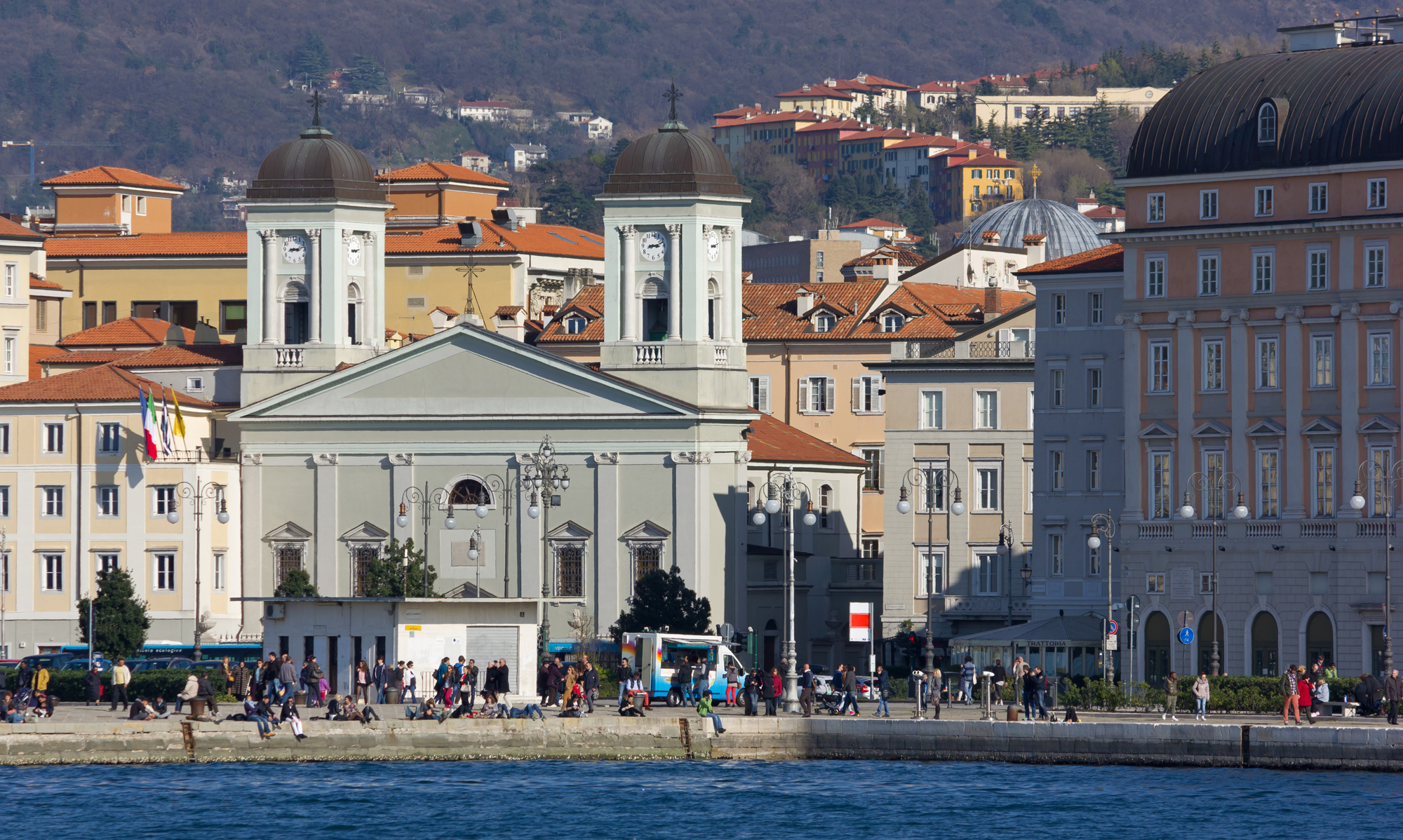
1719 schon einmal Freihafen Schon 1719 wurde der Freihafen Triest von Kaiser
Karl VI. erstmals ausgerufen. Er nahm in der österreichisch-ungarischen
Monarchie eine zentrale Rolle für den Warentransport ein. In Folge des
Pariser Friedensvertrages von 1947 und des Memorandums von London 1954
erhielt er wieder den Status Freihafen - wo keine Zölle und
Einfuhrumsatzsteuern eingehoben werden.
FREIHAFEN
von
TRIEST
Als 1719 Kaiser Karl VI Triest zum Zollfreien Hafen ernannte, begann
eine Wende für die Stadt. Von dem Moment an begann die Blütezeit
dieser Handelsstadt, die nun ein noch ernsthafterer Mitstreiter
Venedigs wurde. Die Stadt bekam das Patent für die Gründung einer
„Orientalischen Handelskompanie“.
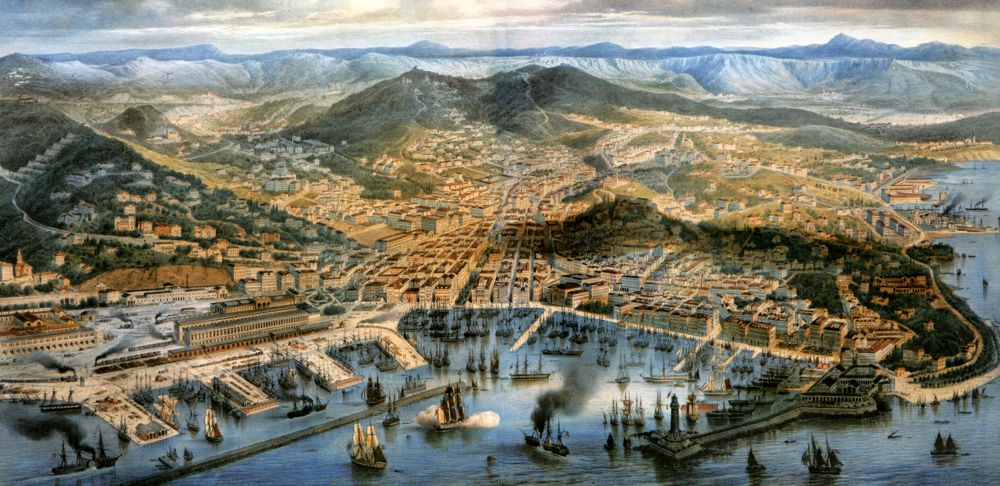
Damit begann der große wirtschaftliche Aufschwung. Die Stadt
verdiente Geld und bekam Kredite in Wien. Kauf- und Seeleute aus dem
ganzen Mittelmeerraum benutzen Triest als Drehscheibe ihrer
Wirtschaft..
Karls Nachfolger Maria Theresia und Joseph II.unterstützten Triests
wirtschaftlichen Aufschwung durch das Anlegen städtebaulich wichtiger
Viertel, der „Maria-Theresien-Stadt“ (Borgo Teresiano) und der
„Josephsstadt“ (Borgo Giuseppino) westlich bzw. östlich des heutigen
Hauptplatzes (Piazza Unita d'Italia). Als einziger großer Seehafen
Österreichs nahm Triest eine wichtige strategische Stellung in
der Habsburgermonarchie ein und war Ausgangspunkt
kurzlebiger Kolonialerwerbungen(Triestiner Handelskompanie). Der Druck
Venedigs hemmte jedoch lange Zeit die wirtschaftliche Entwicklung Triests.
Mit österreichischer Unterstützung löste Triest Venedig in seiner führenden
Rolle im Handel mit dem Nahen Osten ab und entwickelte sich zum
größten Handelszentrum der Adria.
Der Österreichische Lloyd (ital.: Lloyd Austriaco) war die
größte Schifffahrtsgesellschaft Österreich-Ungarns und des Mittelmeeres. Sie
wurde auf Initiative von sieben Triester Versicherungsgesellschaften: der
Banco Adriatico di Assicurazioni, Azienda Assicuratrice, Banco Illirico
d’Assicurazioni, Banco Adriatico di Assicurazione Generali, Banco di
Marittime Assicurazioni, Compagnia degli Amici di Assicuratori und der
Società Orientale d’Assicurazioni, nach dem Vorbild des Londoner Lloyd’s ins
Leben gerufen. Ein Spezialkomitee, dem u. a. der österreichische Politiker
Karl Ludwig von Bruck angehörte, arbeitete die Statuten aus, die von der
Zentralstelle der Vereinigten Versicherungsgesellschaften und schließlich
der Regierung genehmigt wurden. So konnte 1833 von 19
Seetransportversicherungsgesellschaften, Banken und 127 Einzelaktionären die
Gesellschaft mit Sitz in dem mit einem Freihafen ausgestatteten Triest, im
österreichischen Teil der Monarchie, förmlich gegründet werden.
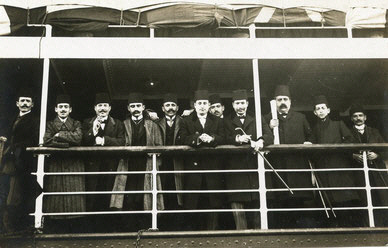
Ottomanische Delegation in Triest (1909)
1850 wurde Triest Sitz der kaiserlich-königlichen Zentralseebehörde. Seit
1857 verbindet die Österreichische Südbahn Triest über den Semmering mit Wien.
Die erste Gebirgsbahn Europas wurde nach den Plänen und unter der Leitung
des Venezianers Carl Ritter von Ghega erbaut. Die Hafenstadt zog in
der Monarchie unter anderem den Hauptnutzen aus dem 1869
eröffneten Suezkanal. Österreichische Industrieerzeugnisse wurden nun auch
in der Türkei, in Ägypten und in Syrien abgesetzt.
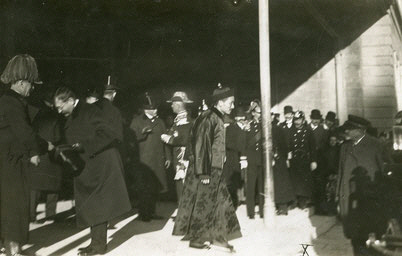
Chinesische delegation in Triest (1909)
Um 1900 stand die Stadt in ihrer vollen wirtschaftlichen Blüte und stellte
ihren Reichtum durch zahlreiche Prachtbauten zur Schau. In Triest wirkten
einige der Architekten, die in Wien für prächtige Ringstraßengebäude im Stil
des Historismus verantwortlich zeichneten, wie etwa Heinrich von Ferstel (z.
B. Lloydpalast), Wilhelm von Flattich (z. B. Südbahnhof), Friedrich
Schachner (diverse Palais).
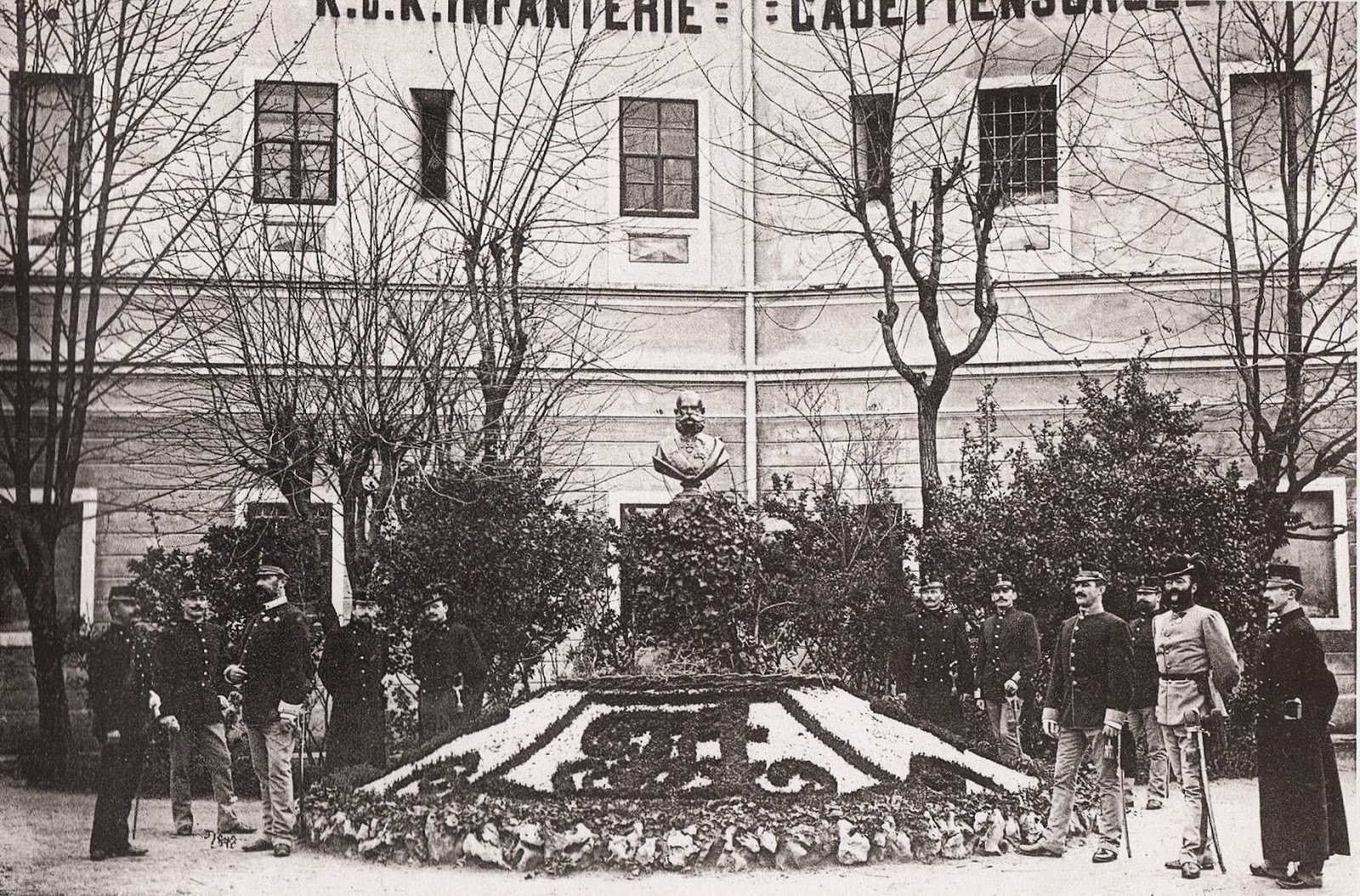
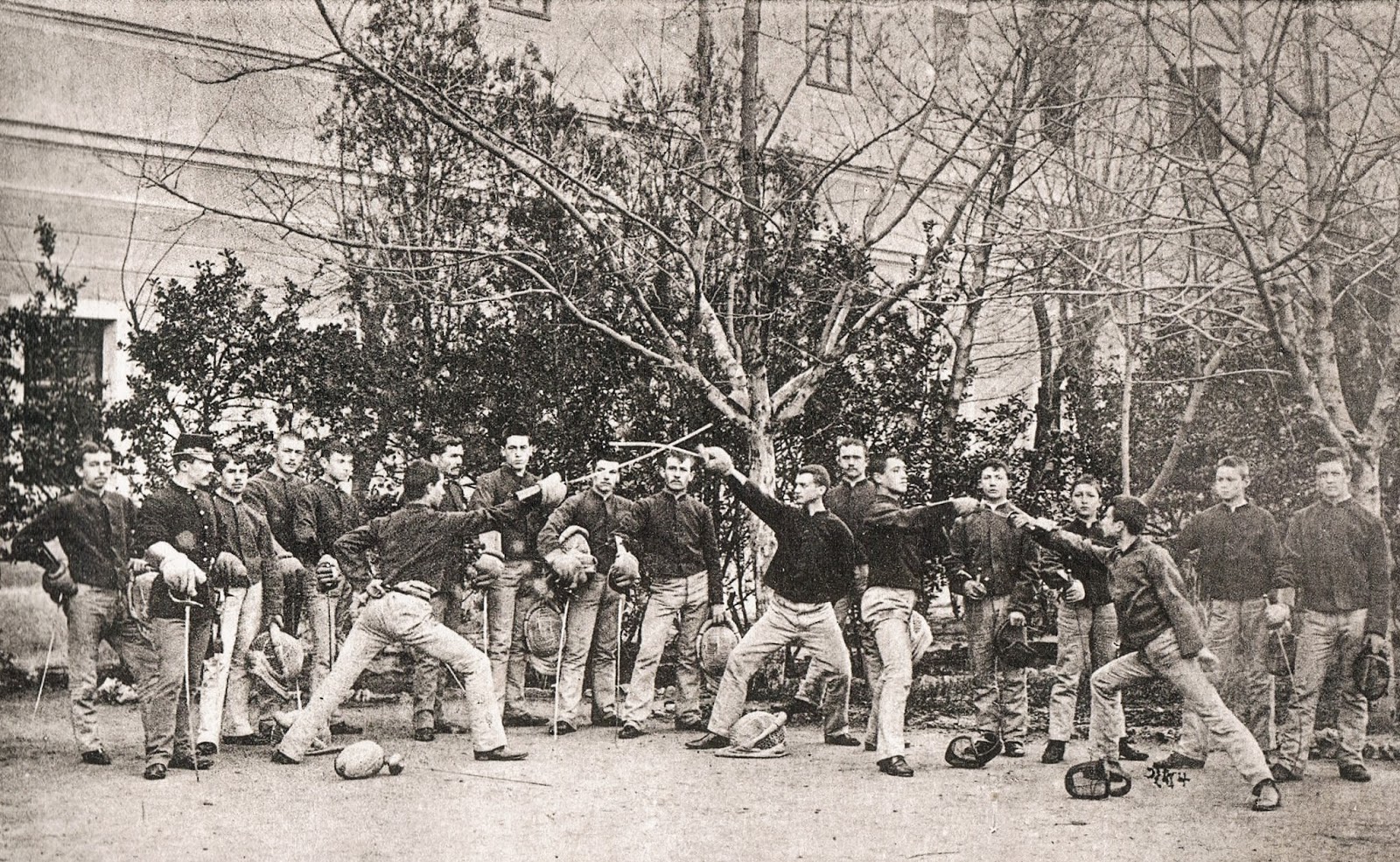
1914 ist TRIEST eine multikulturelle und
multikonfessionelle Stadt mit etwa 250.000 Einwohnern, zugleich die
zweitgrößte Stadt Österreichs und die drittgrößte des Habsburgerreiches. Als
wichtigster Adriahafen und Umschlagplatz für Waren und Passagiere erlebt die
Stadt eine bauliche und finanzielle Blütezeit, in der Werften und Fabriken
zehntausenden von Menschen Arbeit verschaffen. Der Großteil der Bevölkerung
spricht Triester Dialekt und Slowenisch, aber in der Stadt leben auch
Kroaten, Serben und 11.000 Deutsche. Viele fremde
Bewohner (Gastarbeiter) stammen aus dem nahen
Königreich Italien und werden als “Regnicoli” oder Reichsitaliener
bezeichnet
Mit dem Ausbruch des Ersten Weltkrieges im August 1914 stockte die
wirtschaftliche und künstlerisch-literarische Entwicklung
in Triest schlagartig.
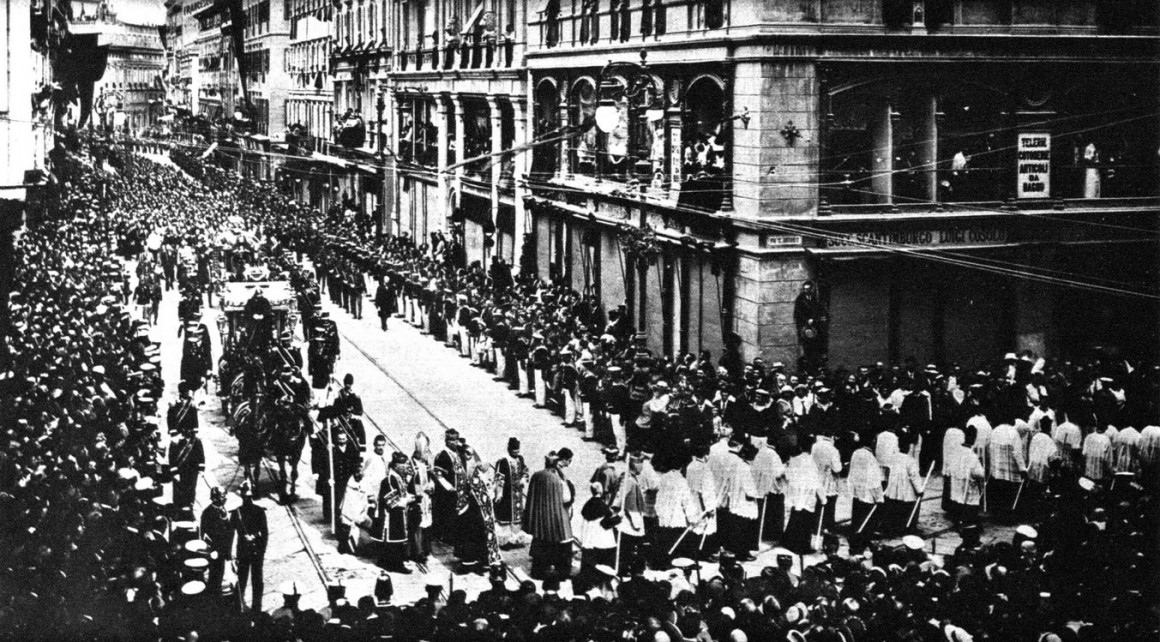
Auf die Ermordung in Sarajevo des Habsburger Thronfolgers Erzherzog Franz
Ferdinand und seiner Gemahlin Sophie (28. Juni) folgt die Kriegserklärung
Österreich-Ungarns an Serbien (28. Juli). Alle wehrtauglichen Männer ziehen
in den Krieg. Die öffentliche Hand und wohltätige Bürger leisten finanzielle
Unterstützung, gewähren Beihilfen und Renten für Kriegswitwen und die
Familien der einberufenen Soldaten.
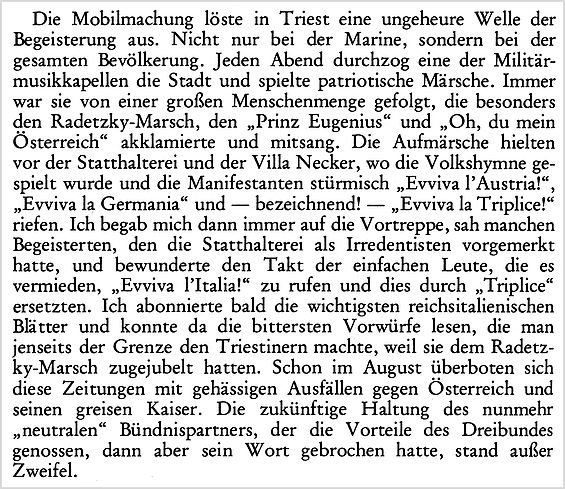
Der patriotische Lärm ...
Aus Triest zogen anfangs (August 1914) etwa 33.000 Männer zwischen
18 und 37 Jahren an die Front und im Laufe des Krieges wurden
ungefähr 50.000 Triestiner im Alter bis 50 Jahren
in der Habsbugischer Heer eingezogen.
Der Mangel an Lebensmitteln bringt den Schwarzmarkt zum Blühen. Im April
schreitet die Polizei bei Tumulten wegen ungerechtfertigter Verteuerung und
Knappheit von Brot ein.
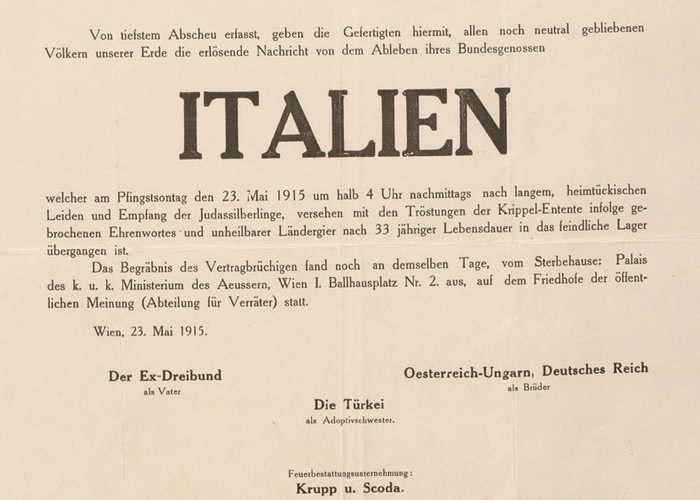
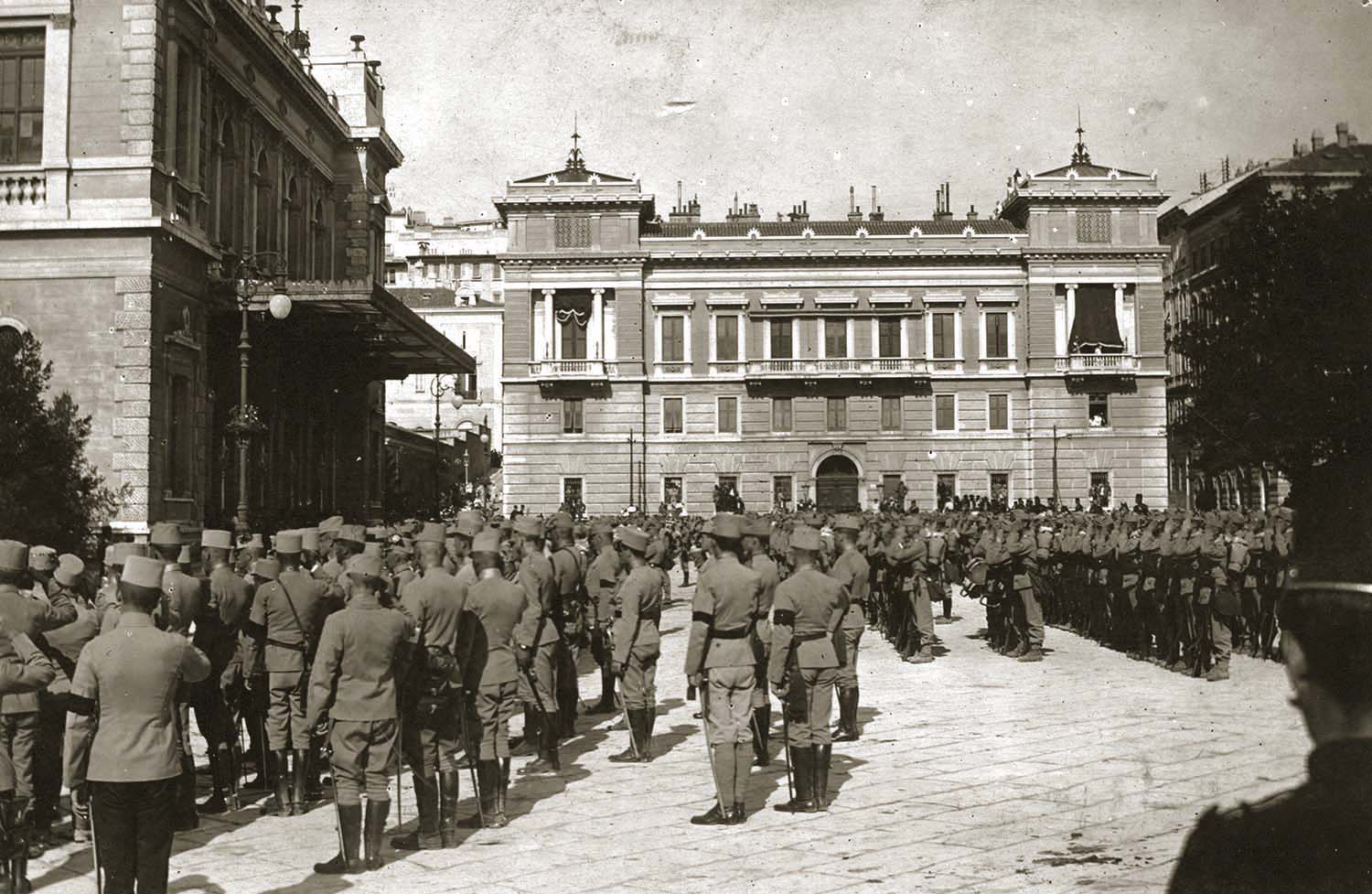
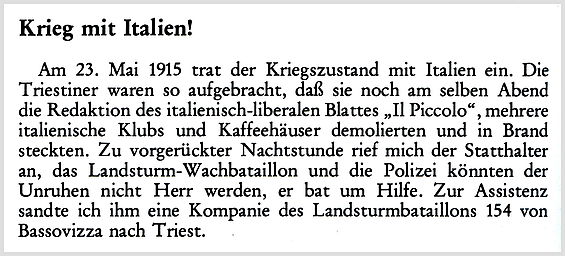
Italiens Kriegserklärung (23. Mai 1915) führt in Triest zu
Protestkundgebungen gegen Italiener: während die königlich-kaiserlichen
Behörden aus Angst vor einer italienischen Offensive die Stadt verlassen,
stürmt eine Menschenmenge die Redaktion der philoitaliener Zeitung “Il
Piccolo” und zündet sie an, weiterhin wird der Sitz der “Lega nazionale” und
der “Ginnastica triestina” zerstört, Kaffeehäuser und Geschäfte
italienischer Besitzer geplündert.
Die Stadt leert sich aufgrund der zweiten Massenmobilisierung und der
Abreise oder Internierung von etwa 35.000 bis dahin in der Stadt lebenden
italienischen Gastarbeitern.
Nur
881 Triestiner, mit
italienischer Gesinnung,
darunter zahlreiche
italienische Gastarbeiter, sogennante
“Regnicoli”. desertierten aus dem Habsburger Heer, passieren
illegal die Grenze und traten den italienischen Streitkräften bei.
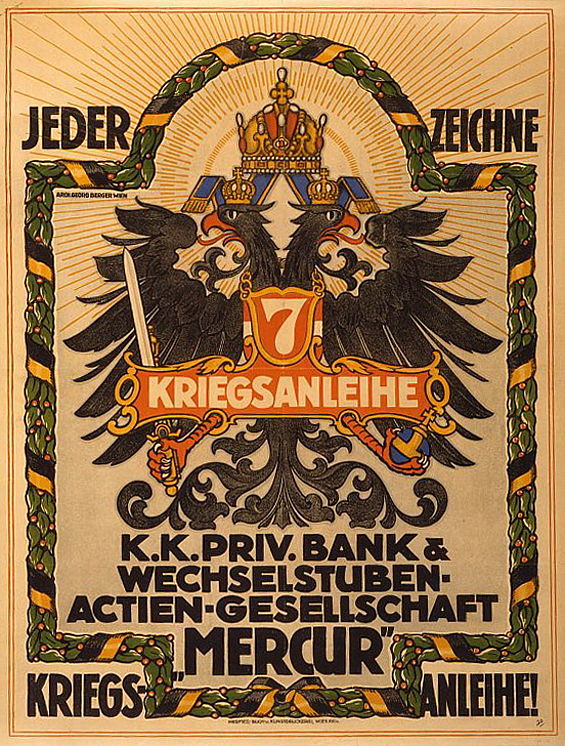
Das Hausregiment der Triestiner, das k.u.k. Infanterieregiment Nr. 97, wurde
am 11. August 1914 per Eisenbahn Richtung Lemberg in Galizien transportiert
und war dort in schwerste Abwehrkämpfe gegen die vordringende russische
Armee verwickelt.
Als das bis dahin neutrale Italien als neues Mitglied der Triple
Entente (Frankreich - Russland - Vereinigtes Königreich) Österreich-Ungarn
am 23. Mai 1915den Krieg erklärte und damit wenige Kilometer nordwestlich
der Stadt eine Front entstand, mussten viele Ausländer wie James
Joyce Triest verlassen.
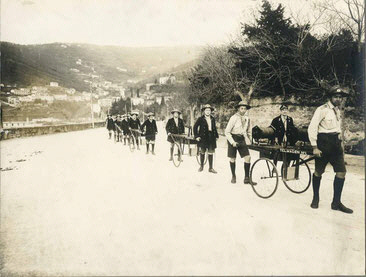
See Skaut Schule Triest (Wandervogeln)
1917 (Zweiter Pfadfinderkörper des Habsburgerreiches unmittelbar nach Wien )
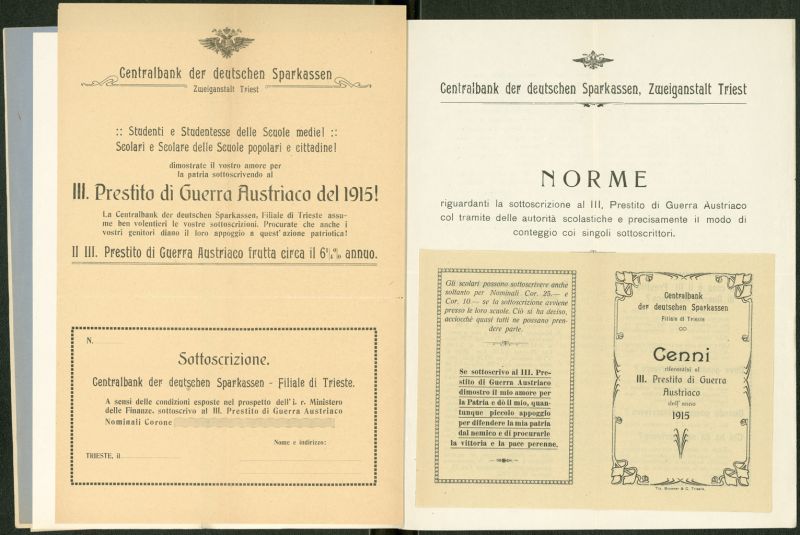
Der Krieg kostet Menschenleben, verschlingt Geld und verursacht
Leid. Die Kriegspropaganda appelliert an die Triestiner zwecks
Finanzierung des Konflikts, sie sollen Kriegsanleihen
unterzeichnen und zugunsten von Kriegsversehrten, Kriegerwitwen
und Waisen spenden. Kinos und Theater inszenieren patriotische
Vorstellungen. An der Piazza Grande ermutigt die Obrigkeit die
Menschen dazu, Nägel zu kaufen und sie in eine hölzerne
Matrosenstatue einzuschlagen, die dann im Volksmund “Omo de
fero” (Eisenmann) heißt. Ähnliches geschieht in vielen anderen
Städten des Kaiserreiches. Am 21. November stirbt Franz Joseph,
sein Nachfolger wird sein Großneffe Karl I.
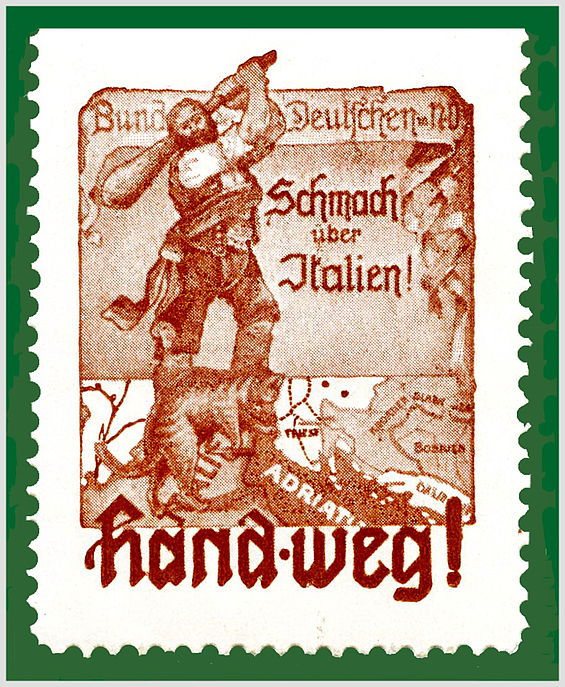
Für die im Krieg involvierte Stadt beginnt die schlimmste Zeit überhaupt, da
die italienische Luftwaffe und Artillerie aus der Luft und vom Wasser aus
angreifen. Die Spitäler sind voller Verwundeter, viele Verletzte werden in
öffentlichen Gebäuden, Schulen, Schiffslazaretten versorgt. Die
Lebensmittelknappheit führt zur höheren Sterblichkeit bei Kindern, aber auch
bei der Allgemeinbevölkerung; das Elend trifft vor allem die Mittelschicht,
die bis dahin keine Armut kannte, während die Menschen, die in der näheren
Umgebung auf dem Land leben, eine bessere Versorgung haben. Trotz allem, und
nicht zuletzt dank des Durchbruchs der Front am Isonzo zwischen Bovec und
Tolmin sowie der Invasion von Friaul und Teilen des Veneto
(Oktober-November), verherrlicht die Propaganda den bevorstehenden,
unausbleiblichen “Endsieg”.
An der Front am Piave führt das Vorrücken der italienischen Streitkräfte
(Oktober-November) nach anfänglichem Widerstand zu einem Zerfall des
österreichisch-ungarischen Heeres und viele Regimenter ziehen sich von der
Front zurück. Karl I. dankt ab und flüchtet ins Exil, am 3. November
(Waffenstillstand von Villa Giusti) erreichen italienische Truppen das
Trentino und Triest. Die Kontrolle über die Stadt, die einige Tage zuvor von
den österreichischen Behörden im Stich gelassen wurde und nun von einem
uneinheitlichen Komitee für das Öffentliche Wohl verwaltet wird, dem es
jedoch nicht gelungen ist, Plünderungen und Gewalttaten zu vermeiden, wird
General Carlo Petitti di Roreto anvertraut.
Ein Exodus der deutschen, serbokroatischen und zum Teil slowenischen
Bevölkerungsgruppen setzt ein, da eine massive Rückwanderung von
italienischen Arbeitern erfolgt, die zuvor in Triest gelebt hatten. Zudem
kommen viele andere Bewohner aus dem Königreich Italien in die Stadt.
Revolutionäre Vorstösse und die ersten faschistischen Anzeichen vermischen
sich in einem Klima, das allgemein von wirtschaftlicher Stagnation geprägt
ist und wo der Warenumschlag und -verkehr kaum anzukurbeln sind. 1921 werden
Triest und Julisch Venetien vom Königreich Italien annektiert.
Mit der Auflösung der Donaumonarchie in zahlreiche Nationalstaaten endet
auch die Rolle Triests als wirtschaftliche und finanzielle Drehscheibe für
die umliegenden Gebiete und Nachbarländer. Der Hafen büßt stark an Bedeutung
ein, die Industrie tut sich schwer mit einem Neustart. Die
Einwanderungswelle der Vorkriegszeit ist vorbei, Triest liegt nun
abgeschlagen am Rand des italienischen Wirtschaftsgefüges: eine schwere
Zeit bricht an.
https://www.pinterest.com/pin/497647827555852064/
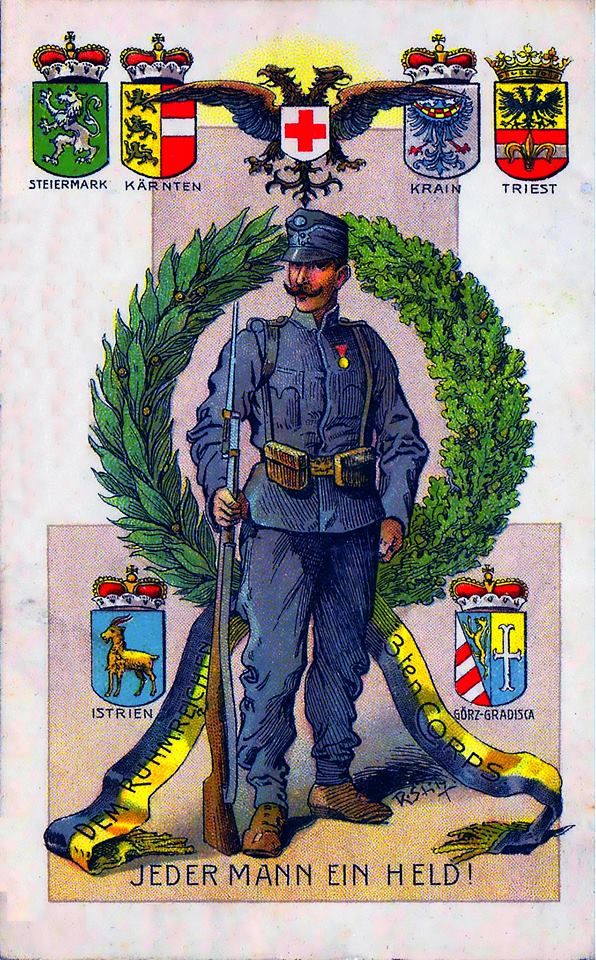
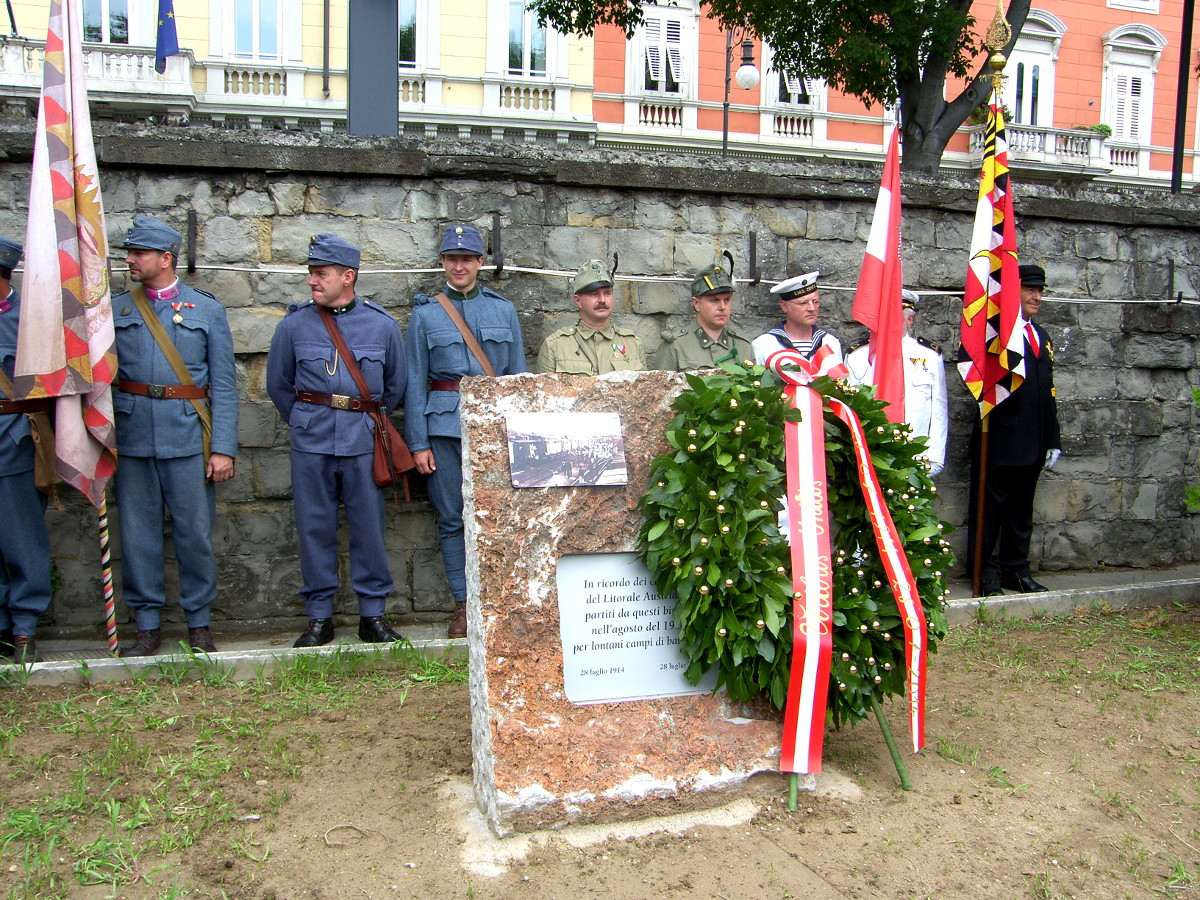
Auf Gleis 9 des triestiner Hauptbahnhof findet man
seit 2014 – einhundert Jahre ist der Ausbruch des
Großen Krieges und der Abmarsch der triestinischen Truppen her – eine Stätte
in Erinnerung an die treuen Soldaten des österreichischen Küstenlandes die
genau dort im dramatischen Sommer ihren Familien “Lebewohl“ sagen mussten
und auf die verschiedenen Kriegsschauplätze des 1. Weltkrieges verteilt
wurden.
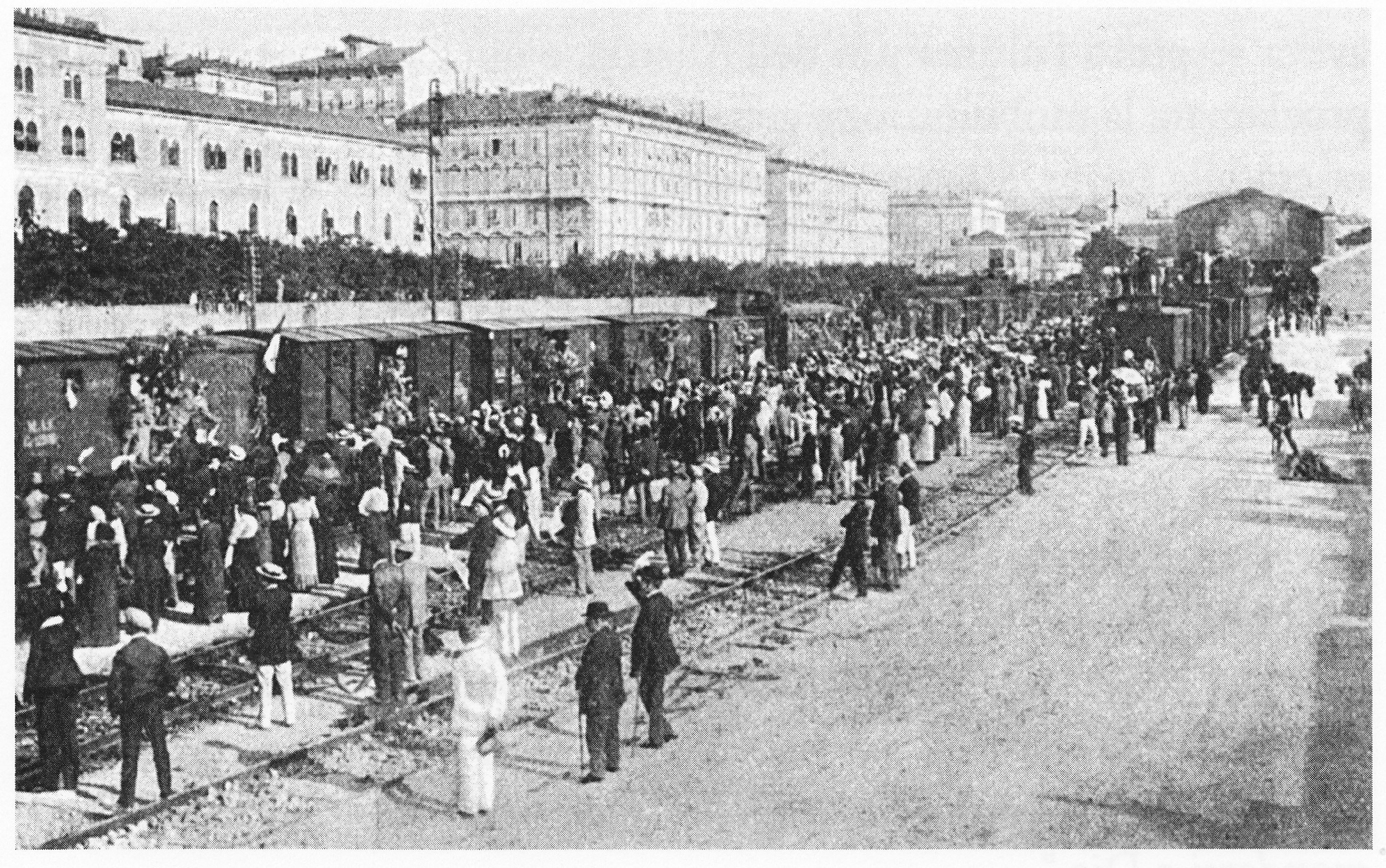
99% der Triestiner und der anderen Bevölkerung des Küstenlandes kämpfte für
die Verteidigung der österreichisch-ungarischen Monarchie, das heißt: „Für
die Verteidigung einer besseren Welt, die wie kein anderes Land Europas,
Respekt, Humanismus und das Zusammenleben der Völker, Sprachen, Kulturen und
Religionen, nicht nur in ihren Gesetzen verankerte sondern diese auch
lebte.“
der Adler von Triest
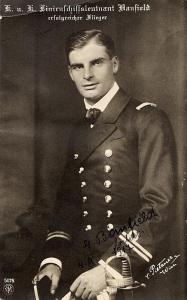 Gottfried
Banfield, war der erfolgreichste österreichisch-ungarische Marineflieger im Ersten
Weltkrieg. Er ging als „Adler von
Triest“ und letzter lebender Träger des Maria-Theresia-Ordens in
die Geschichte ein. Banfield ist mit 9 bestätigten und 11 unbestätigten Luftsiegen der
erfolgreichste österreichisch-ungarische Marineflieger und belegt den 6.
Platz der erfolgreichsten
Fliegerasse Österreich-Ungarns. Dass er die
meisten Einsätze über der nördlichen Adria flog
und deshalb viele seiner angegebenen Luftsiege nicht bestätigt werden
konnten, erklärt seine hohe Zahl an unbestätigten Luftsiegen.
Im Heeresgeschichtlichen
Museum in Wien, in welchem die Geschichte
der k.u.k.
Kriegsmarine im Detail dokumentiert ist,
befindet sich ein Gemälde von Karl
Sterrer aus dem Jahr 1918, welches den
Linienschiffsleutnant Gottfried von Banfield als Kommandanten der
Seeflugstation in Triest zeigt, flankiert von zwei bald darauf gefallenen
Flugzeugführern. Gestorben ist Gottfried von Banfield am 23.9.1986 in
Triest. Gottfried
Banfield, war der erfolgreichste österreichisch-ungarische Marineflieger im Ersten
Weltkrieg. Er ging als „Adler von
Triest“ und letzter lebender Träger des Maria-Theresia-Ordens in
die Geschichte ein. Banfield ist mit 9 bestätigten und 11 unbestätigten Luftsiegen der
erfolgreichste österreichisch-ungarische Marineflieger und belegt den 6.
Platz der erfolgreichsten
Fliegerasse Österreich-Ungarns. Dass er die
meisten Einsätze über der nördlichen Adria flog
und deshalb viele seiner angegebenen Luftsiege nicht bestätigt werden
konnten, erklärt seine hohe Zahl an unbestätigten Luftsiegen.
Im Heeresgeschichtlichen
Museum in Wien, in welchem die Geschichte
der k.u.k.
Kriegsmarine im Detail dokumentiert ist,
befindet sich ein Gemälde von Karl
Sterrer aus dem Jahr 1918, welches den
Linienschiffsleutnant Gottfried von Banfield als Kommandanten der
Seeflugstation in Triest zeigt, flankiert von zwei bald darauf gefallenen
Flugzeugführern. Gestorben ist Gottfried von Banfield am 23.9.1986 in
Triest.
DER TRIESTINER KARST
ein Weinbauland mit Blick aufs Meer
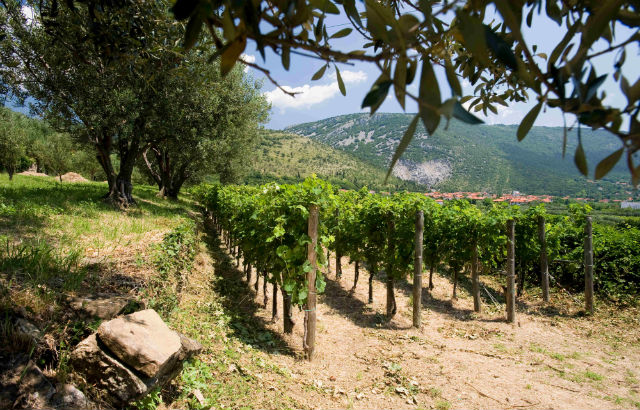
Lassen wir uns von der Faszination der Landschaft des Carso gefangen
nehmen und begeben wir uns auf die Hochebene, die auf die Adria geht, ein
Gebiet, das die römischen Legionen 178 v. Chr. auskundschafteten, sich hier
niederliessen und zahlreiche Zeugnisse ihrer Zivilisation hinterliessen.
Unter den strategischen Punkten war Bagnoli am Eingang zum Tal Rosandra, wo
der Aquädukt gebaut wurde, der das Wasser nach „Tergeste ” brachte. Wir
bleiben in dieser Gegend und besuchen das Tal Rosandra, das von der Natur
her sehr bedeutsam ist.
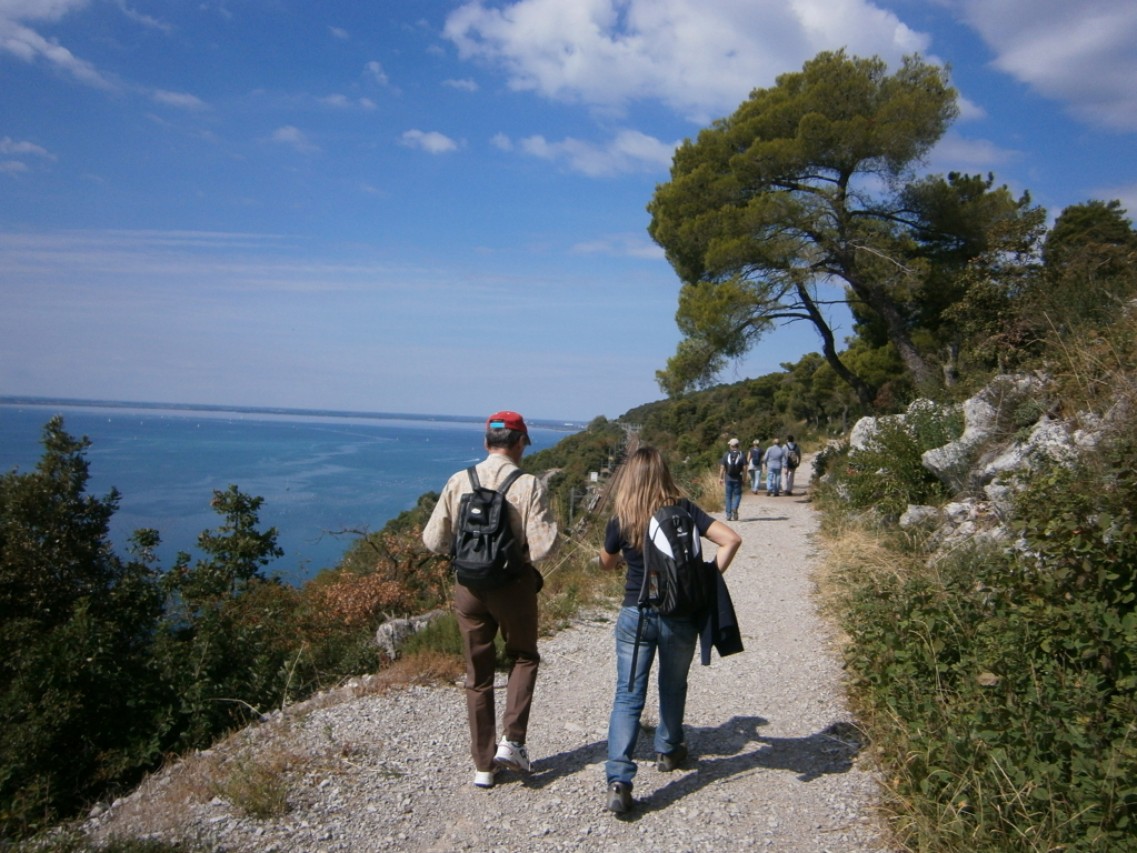
Das ganze Gebiet ist das Ergebnis eines wichtigen karstischen Phänomens,
und der Zersetzungsprozess des Kalks führte zu diesem breiten Tal, das von
dem Bach Rosandra durchflossen wird. Bäche, Wasserfälle und steile Pfade
machen dieses Gebiet für das Trekking ideal, wenn man bei der Hütte Premuda
startet. Man kann bis nach a San Dorligo della Valle am Hang des Monte Carso
vorstossen, um die Ruinen eine der grössten prähistorischen Siedlungen der
Gegend zu besichtigen. Dann kommen wir in das Dorf San Giuseppe della
Chiusa, um die Kirche aus dem 17. Jahrhundert zu bewundern, in der eine
Reliquie des Heiligen Kreuzes verwahrt wird.
STADTTOUR VON TRIEST

2:30 Std. Stadt Tour ( mit Schloss Miramare) 11.- € - jeden Tag um
9.00,12.00,15.00
inklusiv Audio-Führer

70. JUBILÄUM DES HEUTIGEN FREE TERRITORY OF
TRIEST
Triest ist de jure, wie den meisten unbekannt sein dürfte, keineswegs
ein Teil Italiens, sondern steht lediglich unter italienischer Verwaltung.
Am 10. Januar 1947 beschloss der Sicherheitsrat
der Vereinten Nationen in der Resolution
16 fast einstimmig die Gründung des Freien Territoriums Triest.
Der Termin der Staatsgründung stand noch offen. Am 10. Februar 1947 wurde
in Paris von
Vertretern der Alliierten
des Zweiten Weltkriegs ein Friedensvertrag mit der neuen italienischen
Republik unterzeichnet, der die Errichtung des Freien
Territoriums für den 15. September 1947 vorsah. Der Artikel 21 sanktioniert
das Ende der italienischen Souveränität über Triest gleichzeitig mit der
Inkraftsetzung des Vertrags: Auf Grund dieser Bestimmung, wird am 15.
September 1947 die Gründung eines neuen unabhängigen Staates erklärt,
nämlich des Freien Territoriums Triest – FTT, das mit einem internationalen
Freien Hafen ausgestattet ist und unter der vorgesehenen provisorischen
Regierung stehen soll (Anhang VI), bis der neue Gouverneur vom
Sicherheitsrat der UNO ernannt wird. Am 15. September 1947, dem Tag des
Inkrafttretens des italienisch-alliierten Friedensvertrags, wurde das Freie
Territorium Triest von Terence
Sydney Airey, dem britischen Gouverneur der Zone
A, mit der „Proklamation Nr. 1.“ proklamiert.
Es fand eine feierliche militärische Zeremonie zur Staatsgründung statt und
überall im neuen Staat kam es zu Feierlichkeiten, am gleichen Tag trat mit
dem Vorläufigen
Statut (offiziell „Urkunde über die Provisorische Regierung des
Freien Territoriums von Triest“) die provisorische Verfassung des Gebiets in
Kraft. Danach fand eine umfassende Konsolidierung des Staates statt, als
strukturelles Vorbild diente die Schweiz mit
ihrem Direktorialsystem,
das Territorium sollte als neutraler Staat unter Protektion der Vereinten
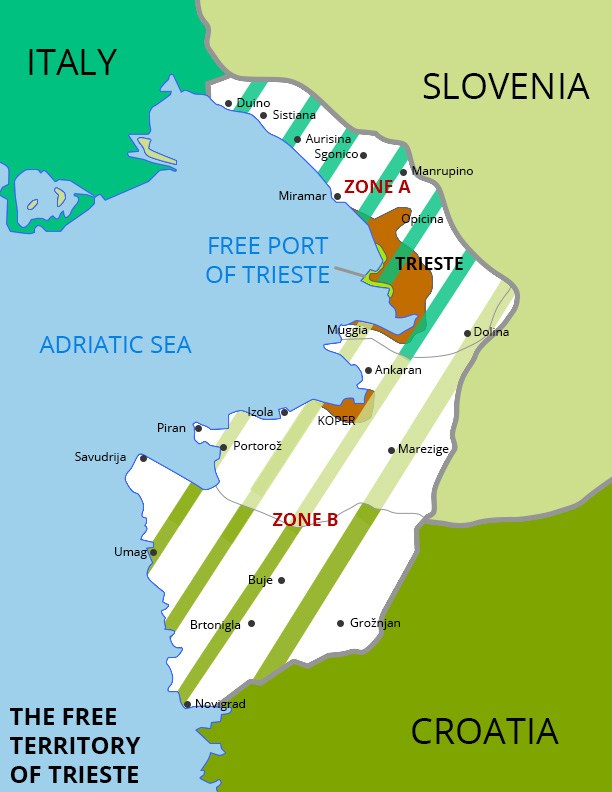
Nationen existieren undprovisorisch in zwei Zonen eingeteilt
werden. Diese Zonenteilung verhinderte das tatsächliche Entstehen eines
einheitlichen Staatsgebildes, das es formell darstellt. Zwischen 1947 und
1948 wurden ein eigenes Postwesen, Bankensystem, Briefmarkenreihe,
eigene Autokennzeicheneingeführt,
eine eigene staatliche Eisenbahngesellschaft gegründet, ein umfassender
Sicherheitsapparat ins Leben gerufen und ein eigenes Parlament geschaffen.
Der Aufbau des neuen Territoriums erhielt jedoch bald einen Dämpfer.
Zwischen Oktober 1947 und März 1948 lehnte die Sowjetunion die
Kandidatur von 12 Nominierungen für den Posten des Gouverneurs,
die die USA, das Vereinigte Königreich und Frankreich vorschlugen,
ab.
Da man sich danach immer noch nicht auf einen
Gouverneur einigen konnte, wurden die beiden Kommandanten der Zonen Terence
Sydney Airey (A) und Mirko
Lenac (B) in ihrer Eigenschaft als Militärgouverneure mit
der Errichtung einer „provisorischen Verwaltung“ für die Zeit bis zur
Bestellung eines Gouverneurs durch den UN-Sicherheitsrat beauftragt. Bis
1954 Engländer und Amerikaner hielten den Nordteil des betreffenden Gebiets
(die "Zone A") besetzt, die Jugoslawen den Südteil (die "Zone B"). 1954
wurde zunächst ein Kompromiß geschlossen: Das "Londoner Memorandum" übertrug
den Italienern die provisorische Verwaltung der "Zone A", den Jugoslawen die
der "Zone
B". Beide Zonen sind durch eine 24 Kilometer lange
Demarkartions-Linie getrennt (Quelle : DER SPIEGEL 15/1974)
Schloss Skt. Daniel und Ferrarigarten (25 km. von Triest)
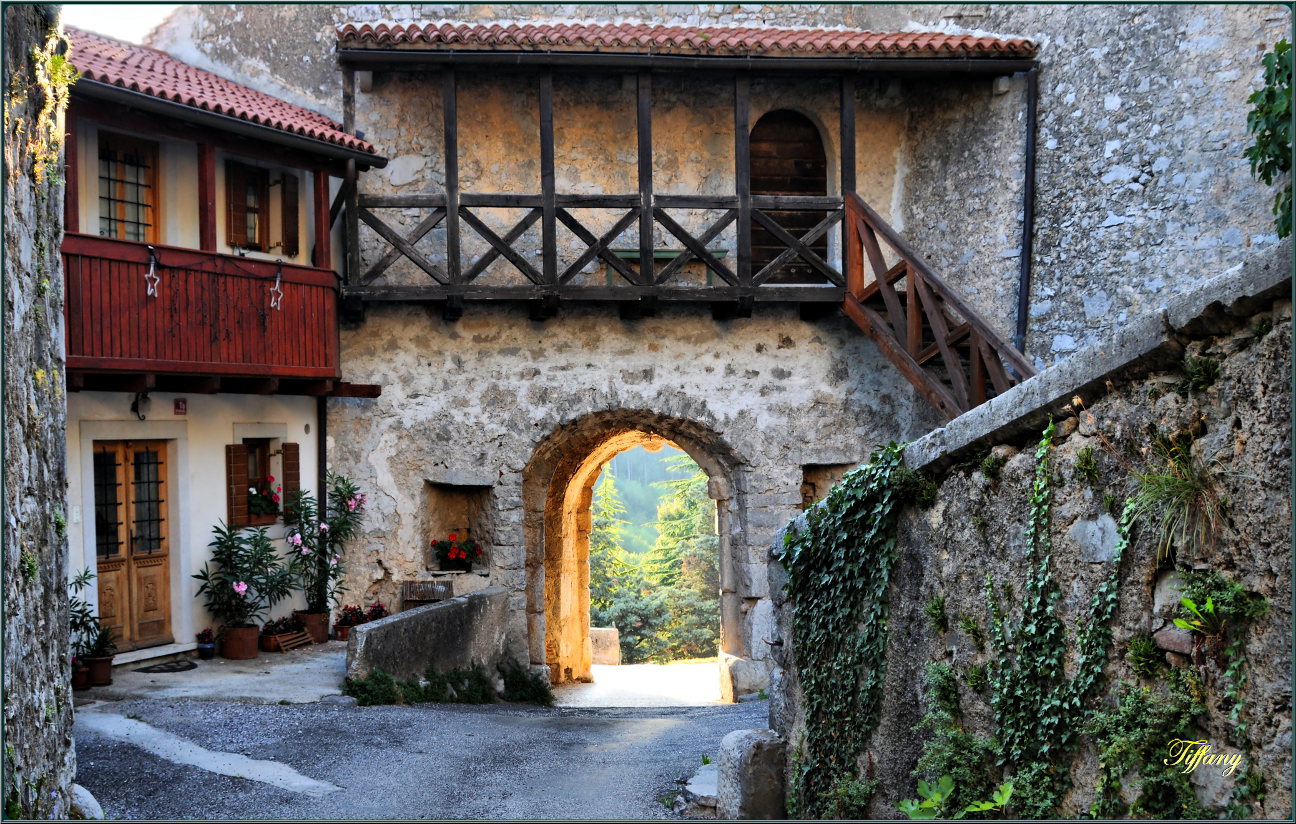
Skt. Daniel ist eine der ältesten Siedlungen im Karst. Sein Name stammt vom
Schutzheiligen der Kirche,
dem heiligen Daniel.
Aufgrund seiner strategischen Hügellage war Štanjel schon seit
prähistorischen Zeiten besiedelt und bereits während der Antike befestigt.
Die typische Festungsmauer stammt aus dem 15. Jahrhundert, es schützte die
Bewohner in der Zeit der Türkeneinfälle. Seinen kulturellen Höhepunkt
erlebte Štanjel im 16. und 17. Jahrhundert. In der Zeit zwischen den beiden
Weltkriegen prägte der Architekt und damalige Bürgermeister, Max
Fabiani,
das Ortsbild.
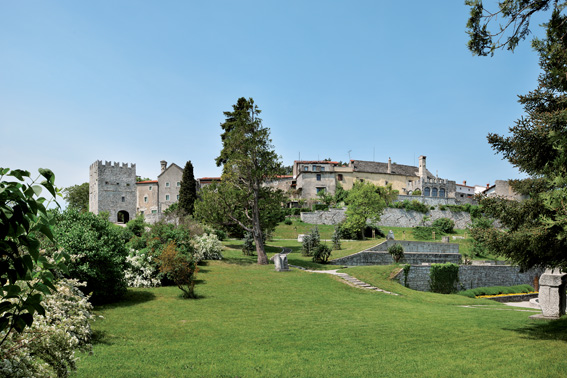
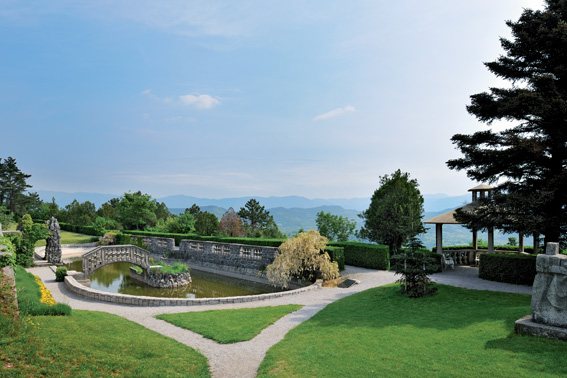
Die Gartenanlage besteht aus
mehreren Teilen, die sich in Terrassen unterhalb der Villa aneinander reihen
und eine Kombination von Gebrauchs-, Zier- und Repräsentationselementen
darstellen.
Spas, Saunen und
Bäder
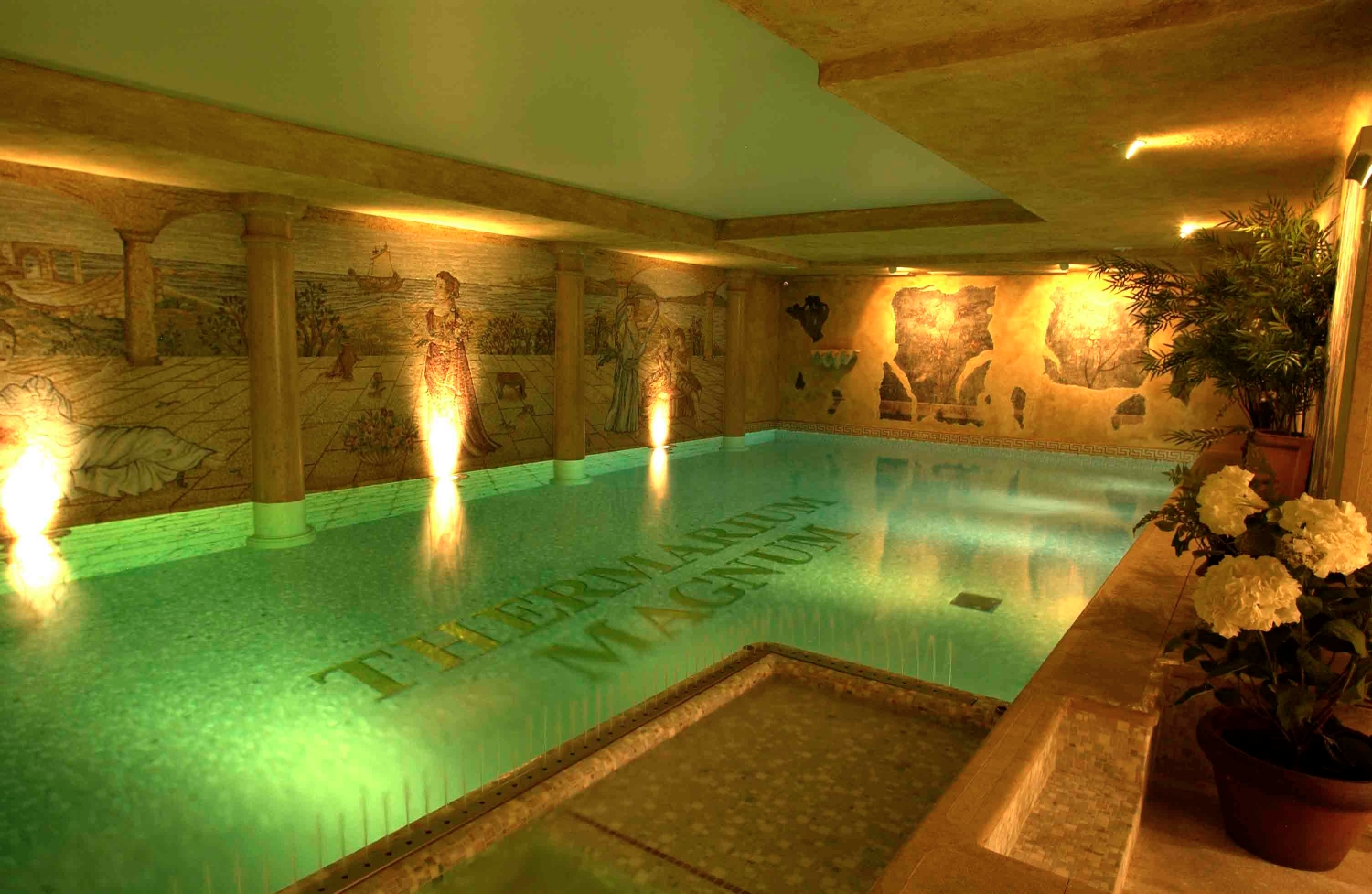
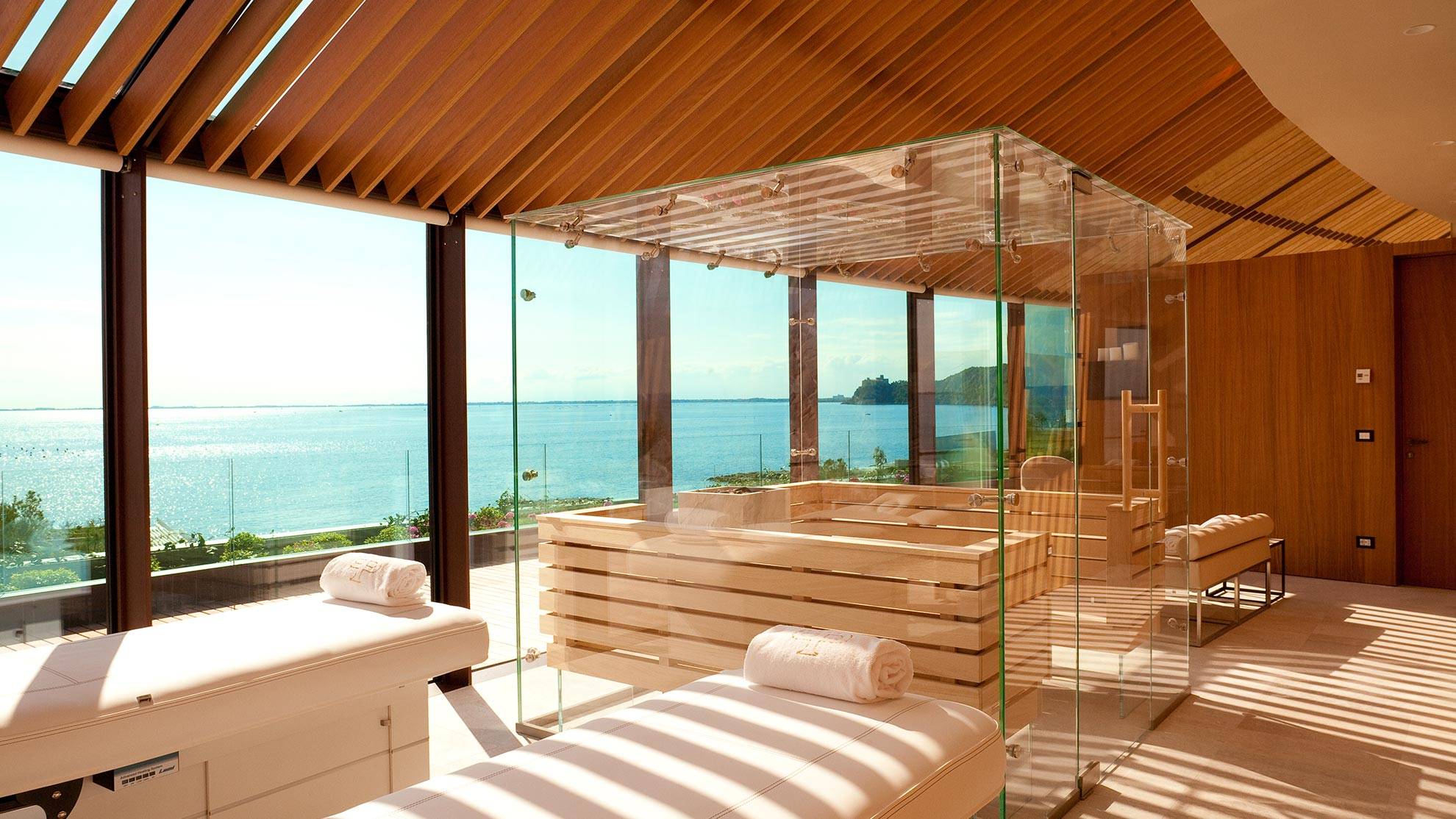
Saunieren – zu jeder Jahreszeit empfehlenswert Im Frühling ist endlich
Schluss mit langen, dunklen Winterabenden. Besonders können die Jahreszeit
diejenigen genießen, die sich durchs Saunieren fit machen: Da hat die
Frühjahrsmüdigkeit keine Chance! Saunieren im Sommer trainiert den
Wärmehaushalt. So kann der Körper seine Wärmeabgabe üben – ein Mechanismus,
der vor allem im Sommer gefordert ist. Die verbesserte Hautdurchblutung
erleichtert das Schwitzen. Das verbessert die Abstrahlung und Ableitung der
Wärme. Durch regelmäßige Saunagänge lernt der Organismus, sparsamer und
ökonomischer zu schwitzen, so dass man Hitzeperioden einfacher verkraftet.
Auch gegen die Sommergrippe wirkt sich Saunabaden positiv aus. Zur kalten
Jahreszeit im Herbst und Winter ist es einfach gut, wenn man es so richtig
warm hat. Denn durch das regelmäßige Schwitzen in der Sauna werden die
Abwehrkräfte gestärkt. Das beugt Erkältungen vor.
INTERNATIONALER FREIHAFEN VON TRIEST
Dank seinem besonderem Status, der von den Habsburger im Jahre 1719
bewilligt wurde, befindet sich der Großteil des Hafengelände außerhalb des
Zollgebietes der Europäischen Union. Diese Sondererklärung ist bis heute
gewahrt, anerkannt und garantiert dank internationaler Verträge.
.JPG)
Sicherheitsrat der Vereinten Nationen – Resolution S/RES/16 (1947) /
Friedensvertrag Paris (1947) Artikel von 1 bis 20 des Anhangs VIII /
Memorandum of Understanding von London (1954)
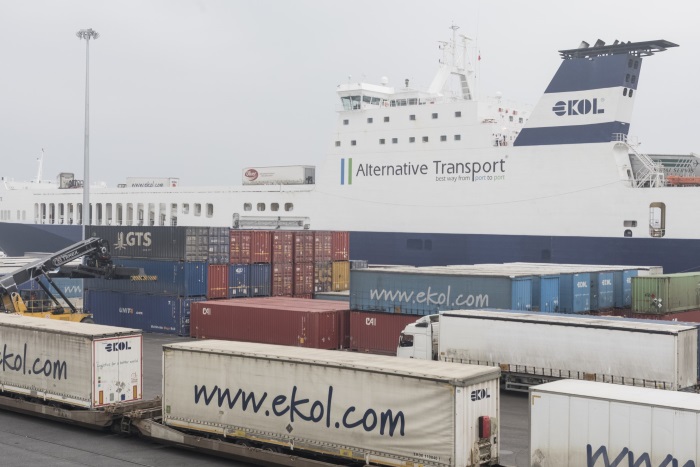
Seit 1954 sind Freistaat (Free Territory - Freies Territorium) und
Freihafen Triest unter provisorischer Verwaltung (Treuhandschaft) der
italienischen Regierung. Der Friedensvertrag von 1947 (insb. der Anhang.
VIII) räumt jedoch besondere Rechte für die Schweiz, Österreich, Ungarn,
Tschechien und die Slowakei ein, diese Staaten dürften bspw. Handelsschiffe
in Triest registrieren und könnten einer intern. Freihafen-Kommission
beitreten, der auch die USA, Frankreich, Großbritannien, Polen, Italien, die
Nachfolgestaaten der Sowjetunion und Jugoslawien, angehören würden.
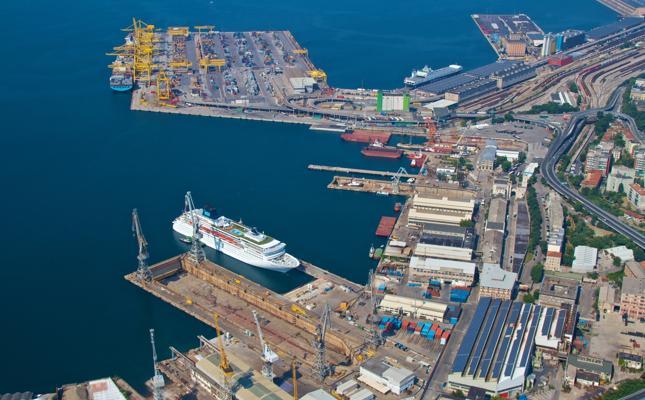
Das gesamte Hafengelände hat eine Fläche von 2.304.000 Quadratmeter, von
denen 1.765.000 Quadratmeter zur Freihafenzone bestimmt sind. 925.000
Quadratmeter Lagerfläche stehen zur Verfügung, wovon 500.000 Quadratmeter
geschlossen und überdacht sind. Die Freihafenzone ist Zollausland der Europäischen
Union.
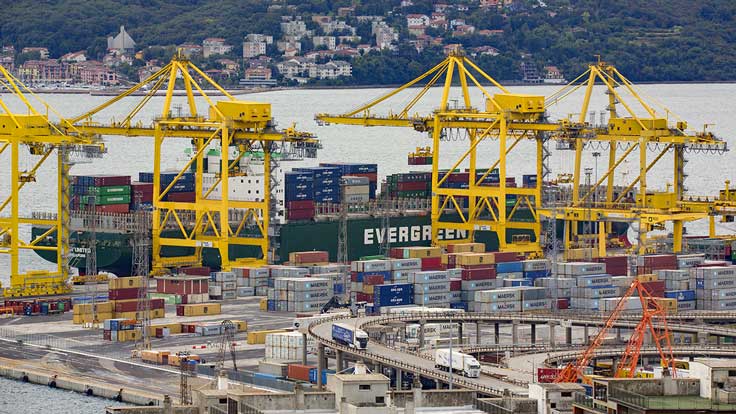
Der freie Hafen Triest ist aufgrund seiner geographischen
Lage an der Kreuzung der Seerouten und dem Korridor 5 (Lisabon-Kiev)
ein internationales Hub für die zentralen und osteuropäischen
Märktegeworden. Die hohe natürliche Wassertiefe (bis 18 m – ohne
Baggerarbeiten) erlaubt eine perfekte Zugänglichkeit. Ausgezeichnete
Schienen- und Straßenanbindungen sowie die Nähe zu den Zielmärkte machen den
freien Hafen Triest einen effizienten und konkurrenzfähigen Tiefwasserhafen.
Aufgrund des zunehmenden Handels- und Schiffsverkehrs zwischen dem Fernost
und Europa ist die nordadriatische Küste von noch größer Bedeutung geworden
und in diesem Zusammenhang spielt Triest im Bereich der interkontinentalen
und mediterranen Schiffsverbindungen eine zentrale Rolle. Der freie
Hafen Triest ist der Ausgangspunkt und Zielort regelmäßiger und direkter
Linien mit China, Indien und Fernost weltführender Reedereien. Um die
Zielmärkte zentraler und östlicher Europa betreuen zu können wurden
hochspezialisierte intermodale Dienstleistungen
entwickelt: direkte Zugverbindungen mit
den norditalienischen
Industriegebieten, der Schweiz, Deutschland,Seehafen
Kiel, Österreich, Ungarn, Tschechien und der Slowakei, Luxemburg, Belgien,
Schweden.
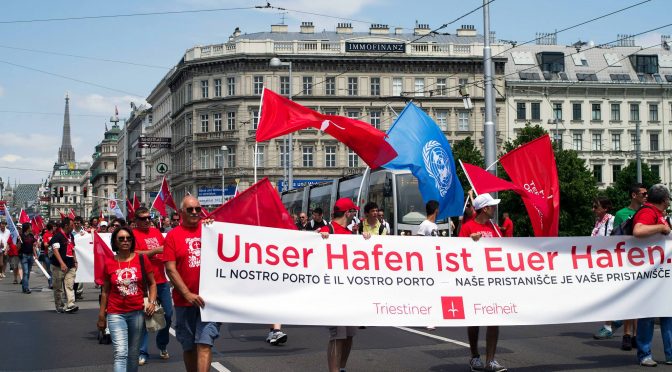
Die Waren, die auf dem Seeweg aus nicht EU-Ländern ankommen, dürfen
direkt in den Freihafen gebracht werden, unabhängig von ihrer Herkunft oder
ihrem Bestimmungsort und ohne jegliche Zollabwicklung im Hafengebiet; Die
o.a. Waren können zeitlich unbegrenzt im Hafengebiet gelagert werden und
danach ohne Abfertigung der EU-Zollerklärung in Drittländer verschifft
werden; Es stehen zur Verfügung Lagern für Auslandswaren wo solche Güter den
s.g. üblichen Verarbeitungsschritten (Verpackung, Umverpackung,
Kennzeichnung, Musterproben usw.) also Schritten zum Zweck der
Haltbarmachung und/oder Qualitäts-/Präsentationsverbesserung, frei
unterzogen werden dürfen; Für die Auslandswaren ist (unter der Voraussetzung
einer Bewilligung) sogar eine industrielle Verarbeitung möglich; Für die
über den Freihafen aus der EU exportierten bzw. in der EU importierten Güter
können die anfallenden Zollgebühren und Steuern bis zu sechs Monate später
zu einem günstigeren Jahreszinssatz bezahlt werden; Die aus EU-Ländern durch
den Landverkehr ankommenden Waren gelten als „ in jeder Hinsicht aus der
Europäischen Union ausgeführt „ als sie das Freihafengebiet betreten,
während die Waren aus Drittländern als Transitwaren eingestuft werden; Für
den Straßengüterverkehr aus dem Freihafen und in Richtung Ausland über die
internationalen Grenzübergänge Österreichs und Slowenien (und umgekehrt)
gilt eine vergünstigte direkte Transitregelung; Der Schienentransport
profitiert von einer vereinfachten Zollregelung. Ein weiterer Vorteil des
Freihafens besteht aus der Möglichkeit, die Zoll und MwSt., anläßlich der
Importierung, nach dem Einführungstag mit einem passiven Zinssatz von 50%
des Euribors bei 6 Monaten zu zahlen. Dieser Vorteil kann auch von
europäischen Importeuren, die ein Interesse haben, die Ware über Triest,
statt über den Zoll des eigenen Landes, zu importieren. Die Spediteure des
Triester Hafens stehen zur Verfügung für diese Importangelegenheiten, im
Namen der einschlägigen Firmen der Europäischen Union.
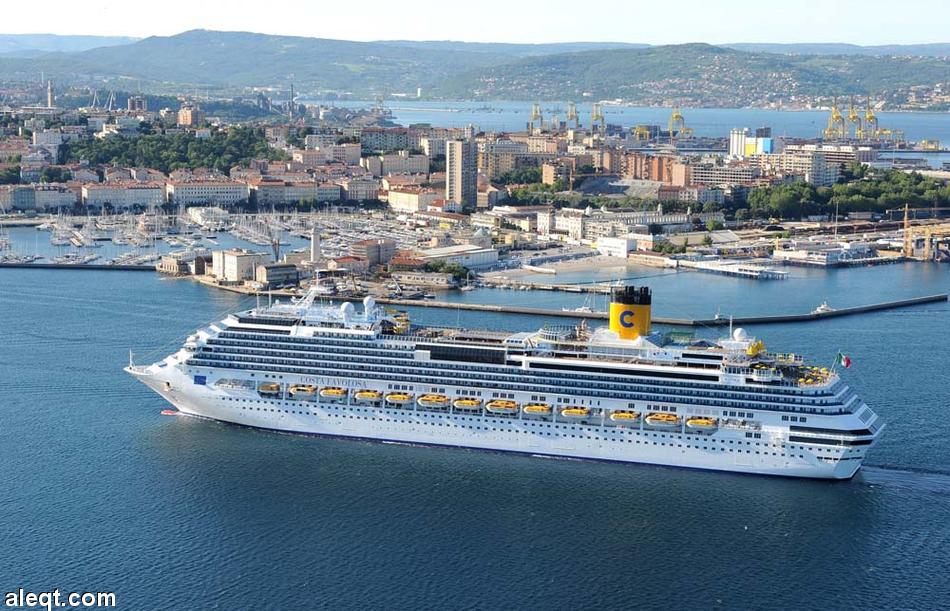
Die Manipulation, die die Verzollung der Waren nicht ändert (z. B.
Aussortierung, Musterung, Beschriftung, Vertrocknung und allgemeine
Qualitätsverbesserung) kann auf den im Freihafen gelagerten Waren ohne
Aufzahlung von Zoll und MwSt. auf ihrem Wert durchgeführt werden. falls die
Ware in ein Land, das nicht zur EU gehört, geschickt wird, wird nichts
verlangt, was um MwSt. für die Ware geht. Übrigens kann man bei diesen
Bearbeitungen Elektrostrom und andere Energiewesen zum reduzierten Preis,
dank der Reduzierung der Verbrauchssteuer, erhalten. Laut dieser
Bearbeitungsart, immer mit Erlaubnis der Zollbehörde, ist es auch möglich,
die Marke “Made in Italy” zu bekommen.
1880 betrug die Umschlagsmenge in den Triester Häfen 1,2 Millionen
Tonnen.
Bis zum Jahr 1912 stieg diese Menge auf 4,573 Millionen Tonnen.
Heute sind sie 62 Millionen.
Triestiner Kulinarium
Triest ist vom Duft nach Zimt, Vanille und Schokolade durchdrungen, und legt
Wert darauf, eine Art olfaktorisches kollektives Gedächtnis am Leben zu
erhalten, so als könnte man sich nur aufgrund dieser Gerüche und Geschmäcker
wirklich als Triestiner fühlen. In den Rezepten dieser friaulischen Koiné,
ein Ergebnis von neuen Zubereitungsformen aus den unterschiedlichen
Traditionen, lassen sich zumindest drei verschiedene Schichten
unterscheiden: Die erste ist ein Erbe der volkstümlichen Küche des Karsts
und der angrenzenden istrischen Gegenden.
Die zweite beinhaltet die feine, bürgerliche Küche, die von den Familien der
Beamten und Militärs des Habsburgerreiches eingeführt wurde, aber auch von
bedeutenden Kaufleuten aus Dalmatien, Griechenland und der Türkei. Die
dritte Schicht ist schließlich das Erbe einer äußerst anspruchsvollen
internationalen Küche, die auf den Schiffen des österreichischen Lloyd
gepflegt wurde..
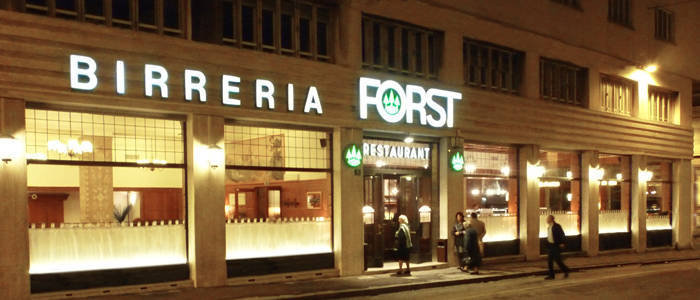
Merkwürdig, dass die Wiener Küche ausgerechnet in der mediterranen
Hafenstadt eine ihrer charmantesten Fleischwerdungen erfahren darf..
Als Wiener ist man ja immer wieder bass erstaunt, wie überschwänglich
insbesondere Triestiner die Schönheit und den Stil der Stadt am Donaukanal
loben können. Dabei sieht es aus unserer Perspektive eher so aus, dass die
in Triest doch eh alles haben, was man an Wien mögen kann, und die Kraft und
die Herrlichkeit Italiens noch dazu..
Konkret wird man sich in Triest niemals lange um einen anständigen,
handgezogenen Apfelstrudel umsehen müssen, von Sachertorten, Putizza
genannten Nuss-oder Mohnstrudeln und anderen Hervorbringungen
austro-slawischer Konditorkunst ganz zu schweigen..
Und überhaupt, die Buffets: Ob sie nun "da Pepi", "da Mario" oder "Birreria
Rudy" heißen, in Wahrheit sind sie doch allesamt Tempel eines Kultes, der
wienerischer nicht sein könnte - und in Wien dennoch fast vergangen ist. Der
Kult um die "Merenda de pirón " nämlich, was sich wörtlich als
Gabelfrühstück übersetzen lässt und aus kleinen Portionen vorzugsweise
deftiger Speisen besteht, welche mit vernünftigen Mengen Alkohols zwischen
dem morgendlichen Caffč und Kipfel und dem Mittagstisch eingenommen werden
wollen, um das Wohlbefinden zu steigern und den Gaumen bei Laune zu halten..
Dazu gehört etwa Schinken (prosciutto) von unfassbarer Qualität, der
zwischen Friaul, dem Karst und der istrischen Halbinsel in einer
grenzüberschreitenden Konzentration und Vielfalt heranreift, die weltweit
mit Sicherheit einzigartig ist..
Auch die Cevapcici sind ein gastronomisches Erbe der Monarchie, das in
Triest (im Unterschied zu Wien) mit Hingabe gepflegt wird - wenn auch
hauptsächlich in privatem Rahmen..
Aus Gründen wie diesen ist ein Aufenthalt in Triest für den leidgeprüften
Austriaken stets auch so etwas wie Heimat-Urlaub in einer Stadt, in der
alles so zu sein scheint, wie es in einer gerechten Welt zu Hause auch wäre.
Das gilt natürlich ganz besonders für den freien Blick aufs Mittelmeer..
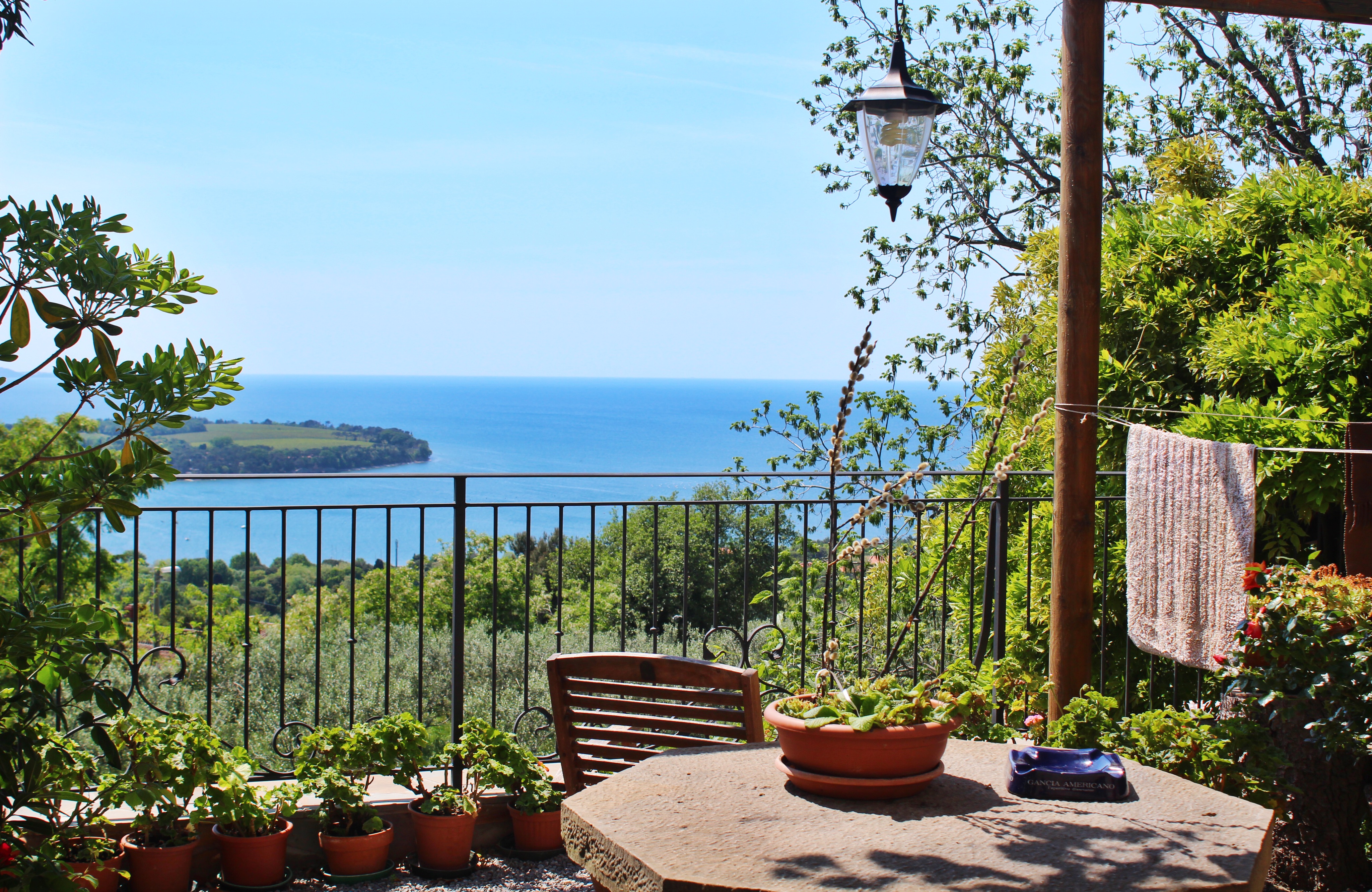
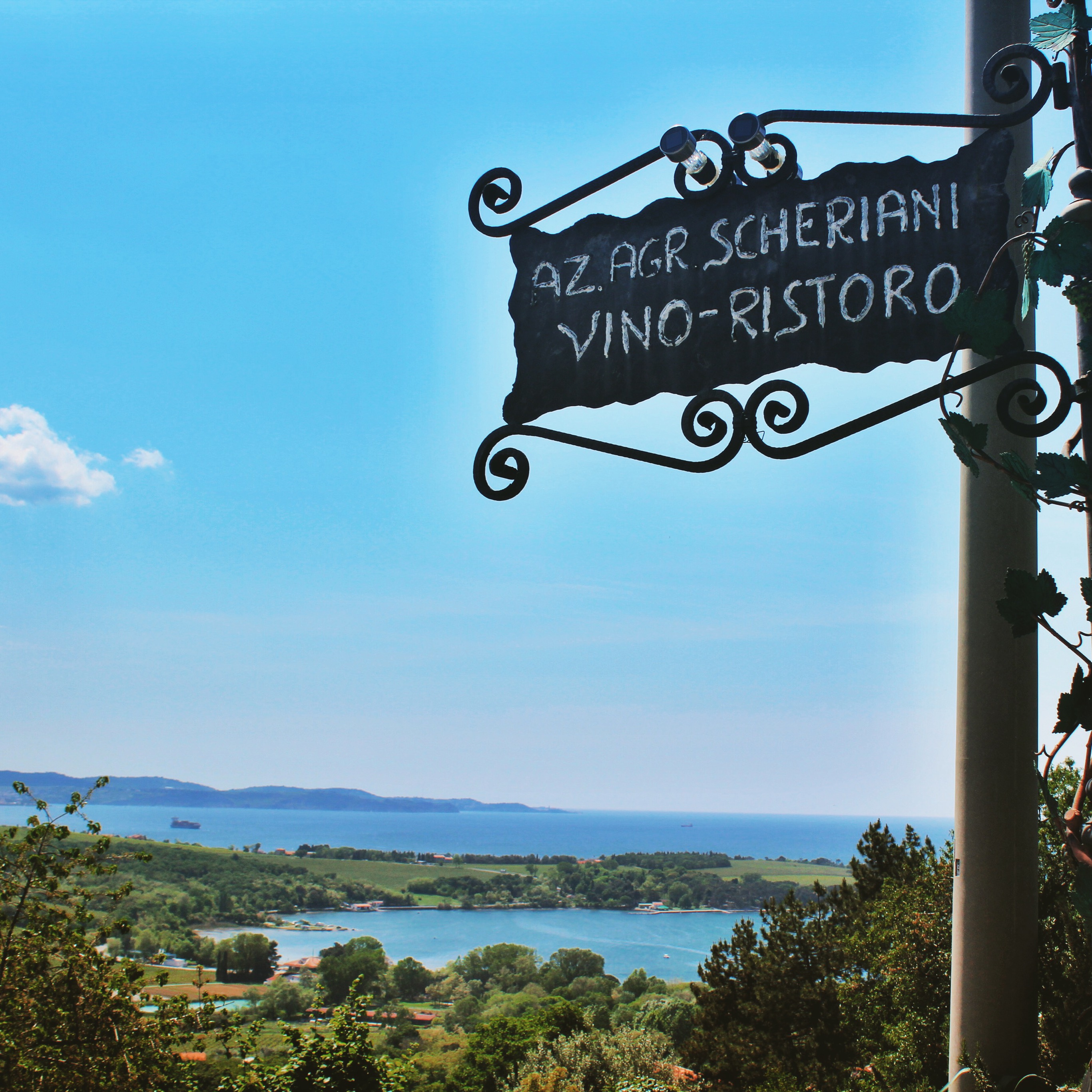
Einkaufsparadies in
der Adriametropole
Triest
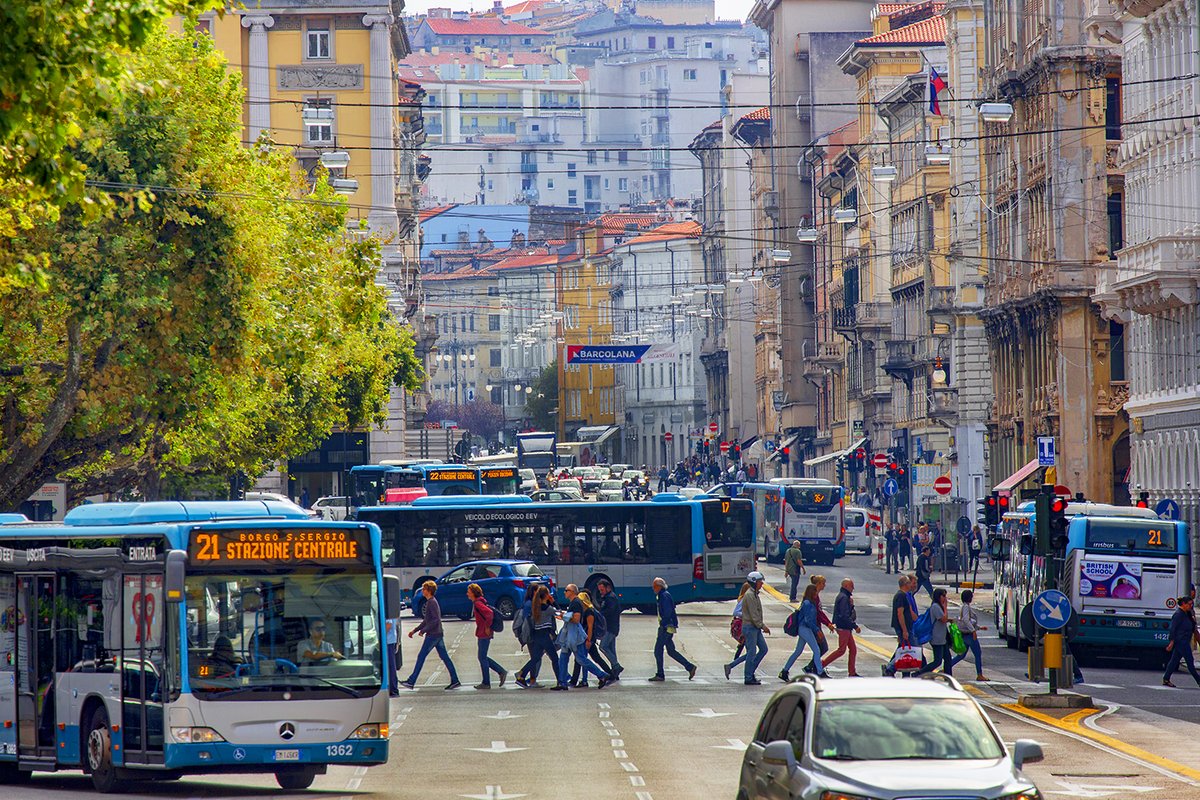
In der „Borgo Teresiano”, dem nach der
Kaiserin Maria Theresia benannten, schachbrettartig angelegten,
neo-klassizistisch Zentrum von Triest gibt es ca. 4500 Shops, große
Kaufhäuser und 2 Einkaufszentren – ein wahres Shopping-Paradies! In
der Altstadt zwischen der Piazza Unita` d'Italia und dem Hügel von San
Giusto gelegen, finden Sie unzählige Second-Hand Buchläden und Antikhändler
und das ganze Jahr über finden auf den vielen Plätzen Märkte und Flohmärkte
statt.

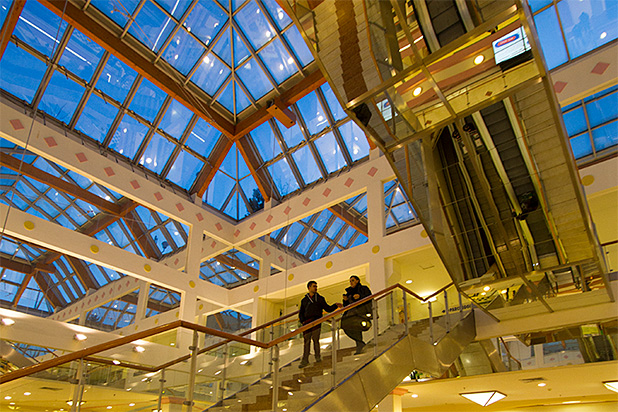
| |
|
KREUZFAHRTHAFEN TRIEST
Seit 1907 Kreuzfahrthafen Mitteleuropas am Mittelmeer
Für Gäste aus Süddeutschland, Österreich und der Schweiz ideal, denn
der Hafen ist einfach mit dem Auto oder Zug zu erreichen.
.jpg)
 Als eine der ersten Reedereien fuehrte die Gesellschaft
Oesterreichischer Lloyd Triest 1907 mit dem Dampfer "Thalia"
Vergnuegungssfahrten im Mittelmeer ein, aus dem das Konzept der
Kreuzfahrten entstand. Die Thalia war ein 1886 in Dienst gestelltes
Passagier- und Frachtschiff des Österreichischen Lloyd, das nach
einem Umbau ab 1907 als Kreuzfahrtschiff vor allem im Mittelmeer und
Europäischen Nordmeer lief. Als eine der ersten Reedereien fuehrte die Gesellschaft
Oesterreichischer Lloyd Triest 1907 mit dem Dampfer "Thalia"
Vergnuegungssfahrten im Mittelmeer ein, aus dem das Konzept der
Kreuzfahrten entstand. Die Thalia war ein 1886 in Dienst gestelltes
Passagier- und Frachtschiff des Österreichischen Lloyd, das nach
einem Umbau ab 1907 als Kreuzfahrtschiff vor allem im Mittelmeer und
Europäischen Nordmeer lief.
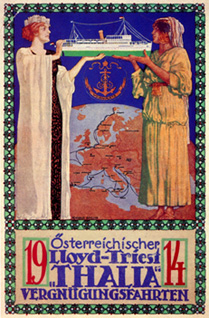 Das aus Stahl gebaute Dampfschiff Thalia, das nach der Muse der
griechischen Mythologie für komische Dichtung und Unterhaltung
getauft worden war, lief am 5. Juli 1886 auf der Werft William Denny
and Brothers im schottischen Dumbarton unter der Werftnummer 314 vom
Stapel. Das zweimastige Passagier- und Frachtschiff hatte einen
Rauminhalt von 2.371 BRT und eine Maschinenleistung von 2.554 PS.
Die Thalia verfügte über 70 Betten in der 1. Klasse und 24 in der 2.
Klasse und wurde noch 1886 von der Dampfschifffahrts-Gesellschaft
des Österreichisch-Ungarischen Lloyd in Dienst gestellt. Das aus Stahl gebaute Dampfschiff Thalia, das nach der Muse der
griechischen Mythologie für komische Dichtung und Unterhaltung
getauft worden war, lief am 5. Juli 1886 auf der Werft William Denny
and Brothers im schottischen Dumbarton unter der Werftnummer 314 vom
Stapel. Das zweimastige Passagier- und Frachtschiff hatte einen
Rauminhalt von 2.371 BRT und eine Maschinenleistung von 2.554 PS.
Die Thalia verfügte über 70 Betten in der 1. Klasse und 24 in der 2.
Klasse und wurde noch 1886 von der Dampfschifffahrts-Gesellschaft
des Österreichisch-Ungarischen Lloyd in Dienst gestellt.
Bereits 1891 hatte die deutsche Reederei HAPAG unter Albert Ballin
die erste Kreuzfahrt mit der Augusta Victoria zur besseren
Auslastung des Schiffs in den Wintermonaten organisiert. Diese Idee
wurde nun auch beim Österreichischen Lloyd aufgegriffen. Nachdem
1906 mit der SS Bohemia (Indienststellung 1896) und der Tahlia
selbst recht erfolgreich solche Fahrten durchgeführt worden waren,
wurde die Thalia 1907 zum Kreuzfahrtschiff mit vier Decks und einer
einheitlichen Kajütenklasse umgebaut.

Das Oberdeck diente der
kulinarischen Versorgung von Passagieren und Mannschaft. Von der
steuerbordseitig gelegenen Passagierküche wurden anspruchsvolle
Gerichte bereitgestellt, die in dem achterlich belegenen großen
Speisesalon für 180 Personen an Tischen zu 6 bis 16 Plätzen
eingenommen wurden. Letzterem schlossen sich Kabinen für
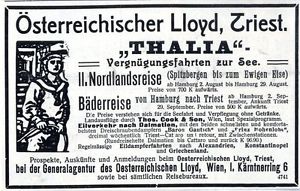 Passagiere
und den Oberkellner an, während davor und bugseitig u. a. der von
der Reederei verpflichtete Arzt, der seine Dienste unentgeltlich
anbot, die Bordapotheke und der „Barbier“ logierten sowie weitere
Kabinen für Passagiere und die Maschinisten zur Verfügung
standen.Bei Buchung der Luxuskabinen wurde ein etwas höheres Entgelt
fällig. So kostete diese z. B. für eine Fahrt vom 11. April bis 12.
Mai 1913 auf der Route „Triest-Marokko-Kanarische Inseln-Genua“ mit
Bad 4.000 Kronen und ohne 3.600. Je nach Deck waren für
Einbettkabinen 940 bis 1.700 Kronen und Zweibettkabinen 1.440 bis
3.000 Kronen – die Dienerschaft 480 Kronen (pro Bett) – zu
entrichten, wobei die Kaufkraft einer Krone etwa 5 Euro entsprach. Passagiere
und den Oberkellner an, während davor und bugseitig u. a. der von
der Reederei verpflichtete Arzt, der seine Dienste unentgeltlich
anbot, die Bordapotheke und der „Barbier“ logierten sowie weitere
Kabinen für Passagiere und die Maschinisten zur Verfügung
standen.Bei Buchung der Luxuskabinen wurde ein etwas höheres Entgelt
fällig. So kostete diese z. B. für eine Fahrt vom 11. April bis 12.
Mai 1913 auf der Route „Triest-Marokko-Kanarische Inseln-Genua“ mit
Bad 4.000 Kronen und ohne 3.600. Je nach Deck waren für
Einbettkabinen 940 bis 1.700 Kronen und Zweibettkabinen 1.440 bis
3.000 Kronen – die Dienerschaft 480 Kronen (pro Bett) – zu
entrichten, wobei die Kaufkraft einer Krone etwa 5 Euro entsprach.
|
Bergwerkstadt Idria, Schloss Gewerkenegg
und Quecksilberbergwerk (1492)
81 km. von Triester Busbahnhof : Unesco Weltkulturerbe
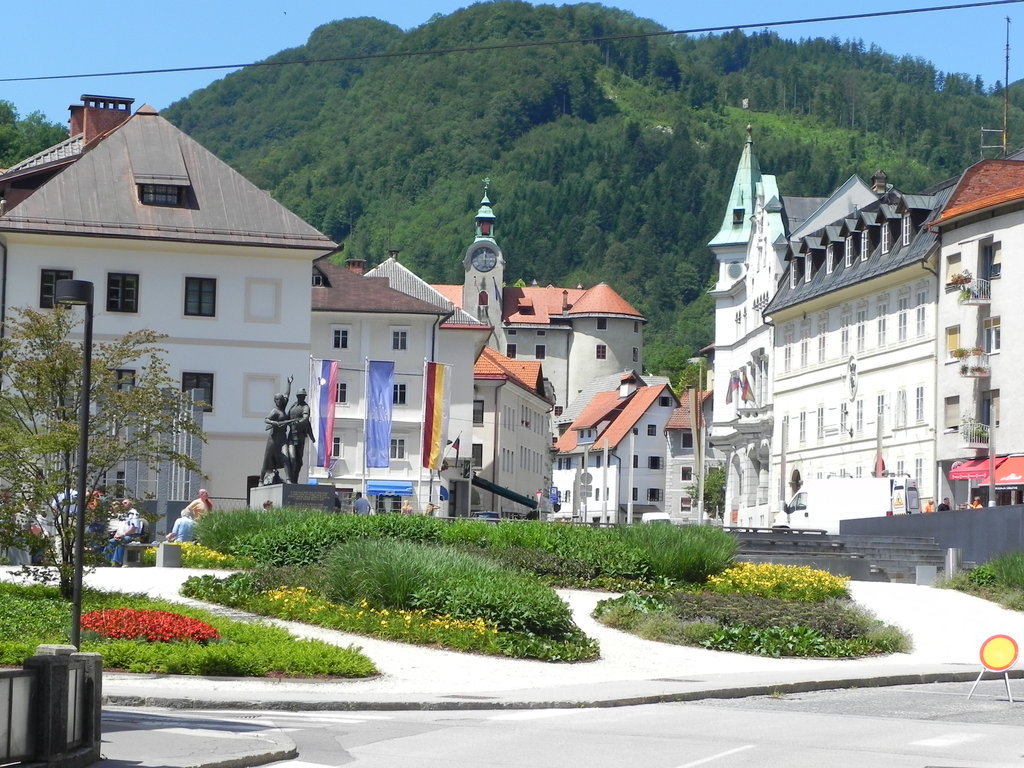
Idria ist eine Bergwerksstadt, bekannt für ihr weltweit zweitgrößtes
Quecksilberbergwerk. Ein unvergessliches Erlebnis beim Besuch der
Stadt bieten die Besichtigung des Schaubergwerks Antonius-Stollen
und der Abstieg in die Tiefen des Untergrundes von Idria, wo die
Bergleute in 500 Jahren über 700 km Stollen ausgegraben hatten.
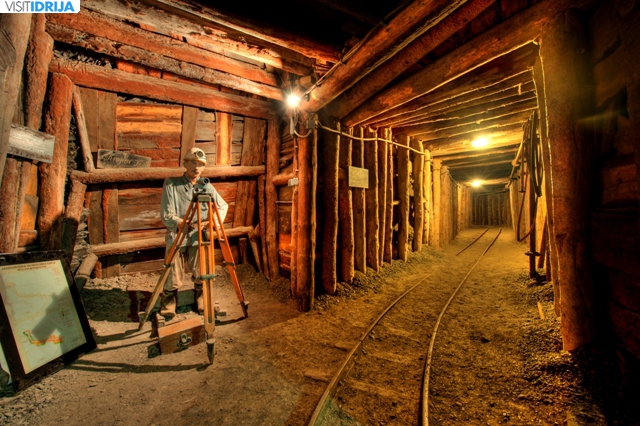
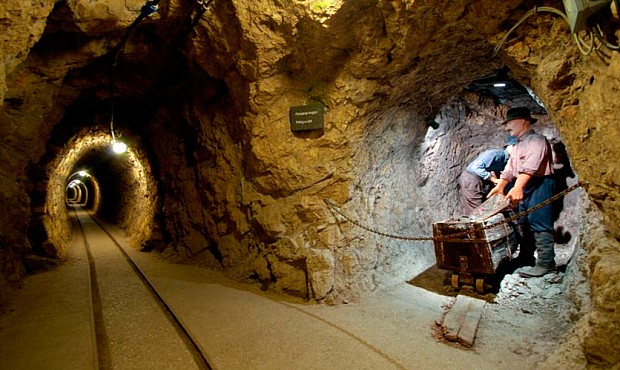
Die über der Altstadt thronende Burg Gewerkenegg wurde zu Beginn des
16. Jahrhunderts als Verwaltungsgebäude des Quecksilberbergwerks
erbaut.
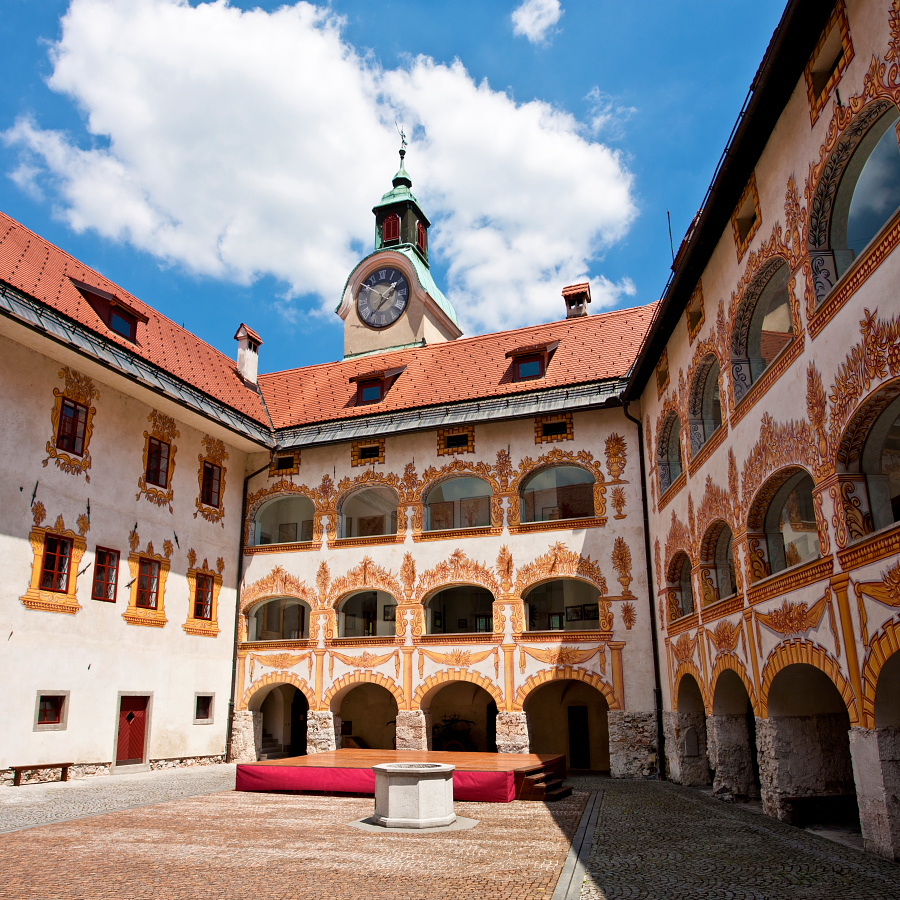
LESETIPPS
Theodor Däubler wurde als Sohn einer
schlesischen Mutter und eines aus Schwaben stammenden Vaters in
Triest, dem wichtigsten Hafen Österreich-Ungarns, geboren, wo er
zweisprachig, deutsch-italienisch erzogen wurde. Seine Jugend
verbrachte er in Triest. Der Großvater mütterlicherseits, Theodor
Brehmer , war Generalinspekteur der Triestiner Assicurazioni
Generali
Theodor Däublers Hauptwerk ist der riesige,
episch-lyrische Zyklus "Das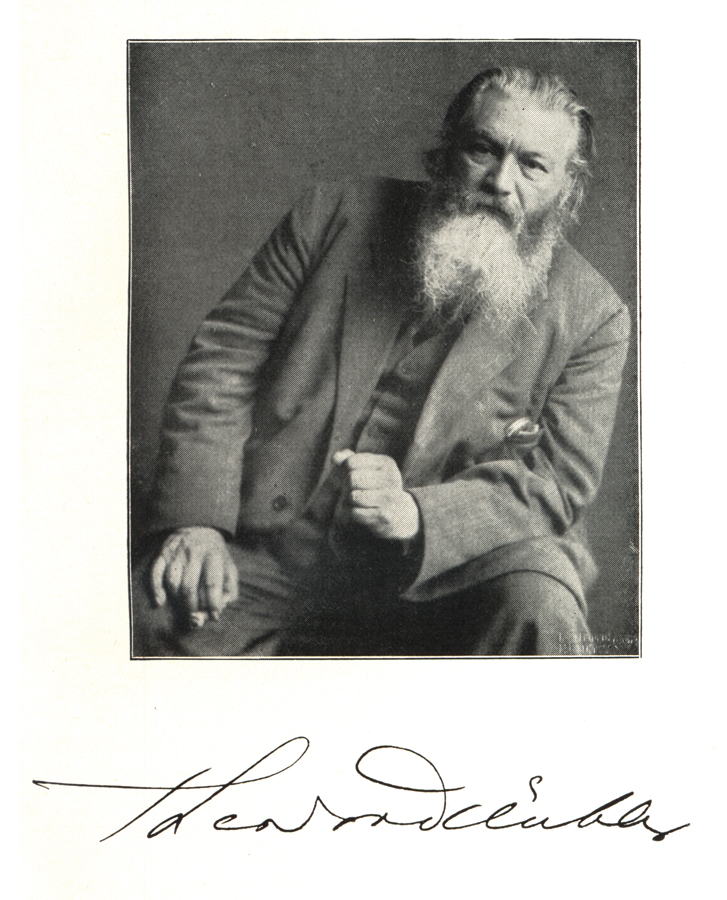 Nordlicht",
über 30 000 Verse, die die Formelemente und Themen seiner Poesie
enthalten: Verdichtung verschiedener Mythen, Liebe zu Rhythmus und
Versform, Symbolik, Bilderreichtum, hymnische Sprache. Diese
kosmische Phantasie entfaltet Däublers Privatmythos des zur
Lebensquelle verklärten Sonnenlichts, ist Dichtung über das
künstlerische Schaffen, Menschheitsgeschichte als Läuterung hin zum
Geist.. Nordlicht",
über 30 000 Verse, die die Formelemente und Themen seiner Poesie
enthalten: Verdichtung verschiedener Mythen, Liebe zu Rhythmus und
Versform, Symbolik, Bilderreichtum, hymnische Sprache. Diese
kosmische Phantasie entfaltet Däublers Privatmythos des zur
Lebensquelle verklärten Sonnenlichts, ist Dichtung über das
künstlerische Schaffen, Menschheitsgeschichte als Läuterung hin zum
Geist..
Auf sonniger See
Ein Segel wird zur Meereswanderblüte,,
Mit Plätscherblättern silbert es dahin,,
Dir kommen Lotosblumen in den Sinn,,
Doch plötzlich untertulpt sich eine Tüte..
Dir wird, als ob das Meer sich blau beglühte,,
Die Silbertaster werden blaß wie Zinn,,
Ein Wind bringt dieser Pflanzlichkeit Gewinn..
O welches Blühen, welche Mittagsgüte!!
So wandern Wunderblumen rotverschlossenn
Und golden bloß wie Knospen aus der Flut,,
Nur eine Lilie ist verzückt entsprossen..
Ihr Segeln sonnt sich in der Silberhutt
Gespiegelter und flackerschwanker Kelche,,
Ein bleiches Suchen wellt sich: Welche??
Theodor Däubler . 1876 - 1934
Zwischen grünen Hügeln, weiße Klippen und ein frei-blaues Meer,
Triest ist eine der schönsten Städte an der Adria, das seit immer
für seine reiche Geschichte, kulturelles Erbe und bestimmter
mittler-Europäischer Charme bekannt ist, die über den Jahrhunderten
vermischt haben, um eine Atmosphäre zu verursachen, die einfach
einzigartig ist. Kultur, Atmosphäre, und ein bestimmter
mittler-Europäischer Charme bilden diese Stadt heute ein unicum von
seiner Art.
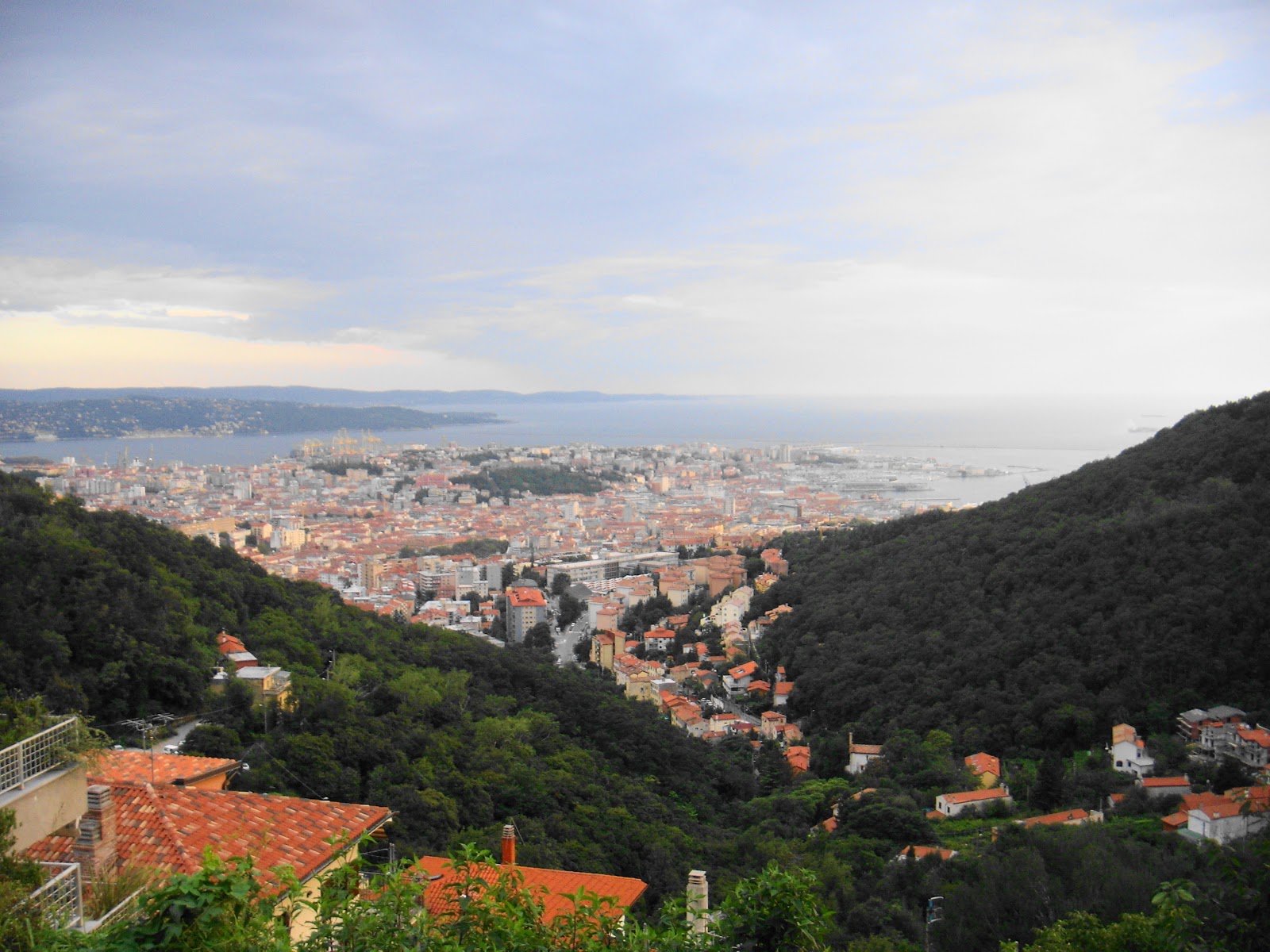
Erklärte freien Hafen im 1700, als unentbehrlicher
Anschluß auf dem Meer für das Habsburger Reich, es wurde bald der
Bestimmungsort der Kaufleute, Unternehmer und Abenteurer von der
Welt, und fing an, die Eigenschaften einer zutreffenden Weltstadt zu
erwerben.

MUGGIA (Mulgs)
Ein venezianischer Schatz
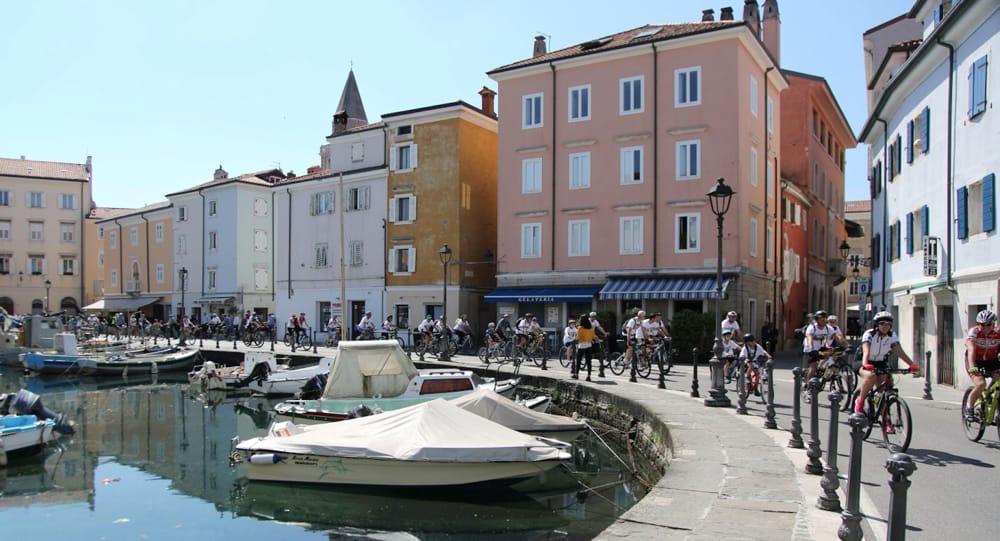
Vom kleinen Hafen Muggia sind es nur einige Schritte zur Piazza
Marconi, dem „Hauptplatz“ der Altstadt. Eigenwillig und markant
erhebt sich hier der 1263 erbaute Dom mit einer elegant
geschwungenen und doch schlicht wirkenden Fassade. Etwas verloren
wirkt sein Glockenturm. Wuchtig wirkt dagegen der dominante Palazzo
Comunale mit dem arkadengesäumten Vorbau
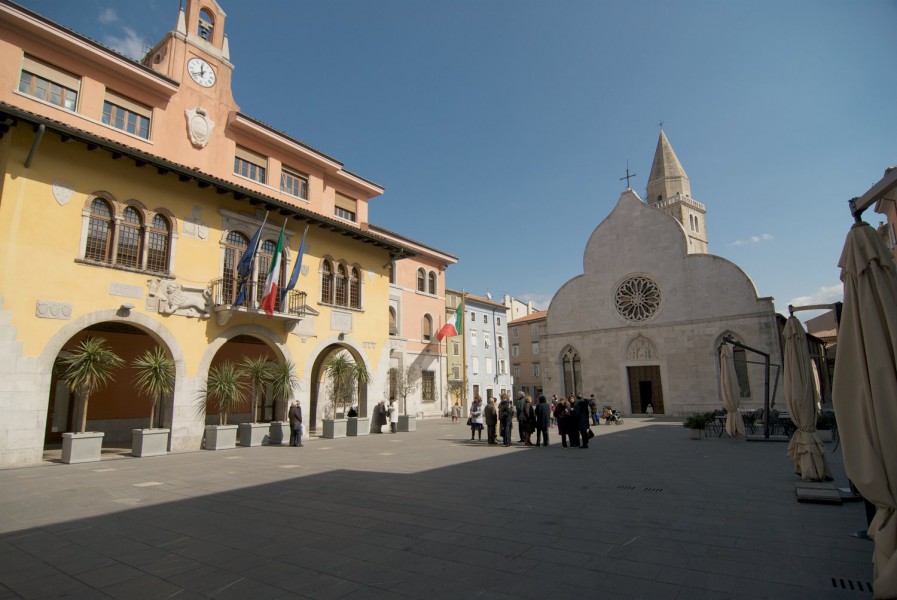
Die uralte Stadt wurde von den Genuesern 1354 zerstört, dann von
der Republik Venedig wieder aufgebaut. Venezianische Spuren
konzentrieren sich vor allem um den mandracchio, das bis ins Zentrum
reichende Hafenbassin. Eines der bedeutendsten Gebäude ist das
Rathaus, dessen Fassade noch vom Palazzo dei Rettori Veneti (15.
Jh.) stammt. Der im 15. Jh. auf einer alten Kirche errichtete Dom
ist venezianischen Ursprungs; die Fassade ziert ein Dreipass und
eine fein gearbeitete Rosette. In der Kirche gibt es wichtige
Goldschmiedearbeiten (15.-19 Jh.). Auf dem seit Ende des 15. Jh.s
bewohnten Hügel des alten Stadtkerns liegt die Wallfahrtskirche S.
Maria Assunta (12. Jh.) mit romanischen Fresken. Der Hügel, ein
wahrer archäologischer Park, führt das mittelalterliche Erbe wie die
Stadtmauern, die Tore und die Stadtgliederung, aber auch das
damalige Alltagsleben vor Augen.
|
|
|
|
|
The
northern part of the territory of
Trieste, which since 1954 is in
Trusteeship of Italian Government
has an area of 302 km2. It extends
from the mouth of the Timavo River
in the North to Punta San Bartolomeo
in the South.
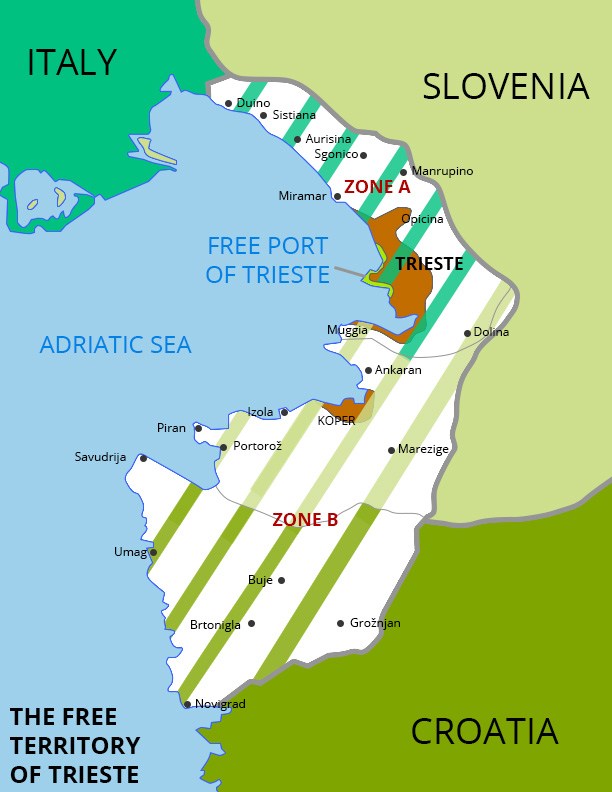
The entire territory of Trieste,
established by the UN in 1947,
extending for a total of 748 sq
km. along the eastern side of the
Adriatic as far as the river Mirna
in the South and has a Mediterranean
climate along the coast and
subalpine in inland areas. The areas
south of Punta San Bartolomeo are in
Trusteeship of the Slovenian
Government (from Punta Grossa to the
river Dragonja) and the Croatian
Government (from Dragonja to
Mirna). The particular legal
position, for which 3 different EU
governement that
administers
de facto each one
a part of the territory of
Trieste, is the
result of what was decided in the
Interim administration
act agreed in London in 1954
( Memorandum of understanding), in
respect of the instrument to the
interim arrangements of the TLT
(Annex VII of the peace treaty of
Paris, ratified in Italy by law
3054/1947).
Between the 3 areas there is
no customs
but while between Italian and
Slovenian transit is free from any
control, between the Slovenian and
Croatian area still for some time
there personal identity documents
are checked.
Italian language is official in all
3 zones, slovenian only in the
northern and in the central zone,
croatian only in the southern zone.
To read the peace treaty in its
official documents in English,
French or Russian: a
Treaty Series vol. 49 No. 747.
Free
Port of Trieste
The
free port is a unique feature at the
international level, with numerous
advantages such as major customs and
tax incentives. The port has five
Free Zones, regulated by the
International Peace Treaty of 1947.
The Free Zones of Trieste, a unique
feature in the European legal
system, give various advantages to
goods in transit (to be stored or
processed), because they are in an
area subject to European Union
customs. For this reason, a special
customs regime applies. The customs
clearance exemption entails a number
of favourable conditions: goods
arriving from non-EU countries, for
example, can be unloaded and stored
(without time limits) without paying
customs duties, VAT and other import
charges until such goods cross the
borders of the free port to be
imported into Italy or other EU
countries. All kinds of goods,
both EU and non-EU, may be stored
indefinitely, the customs origin of
goods can be retained, and the free
port can be home to any kind of
industry, trade or ancillary
activities.
Other benefits of the free port
include harbour duties that are
lower than in other Italian ports,
simplified transit for commercial
vehicles directed abroad, and
vehicle tax exemption for
international vehicles.
Monument to the Empress and
Queen Elisabeth (Sissi)
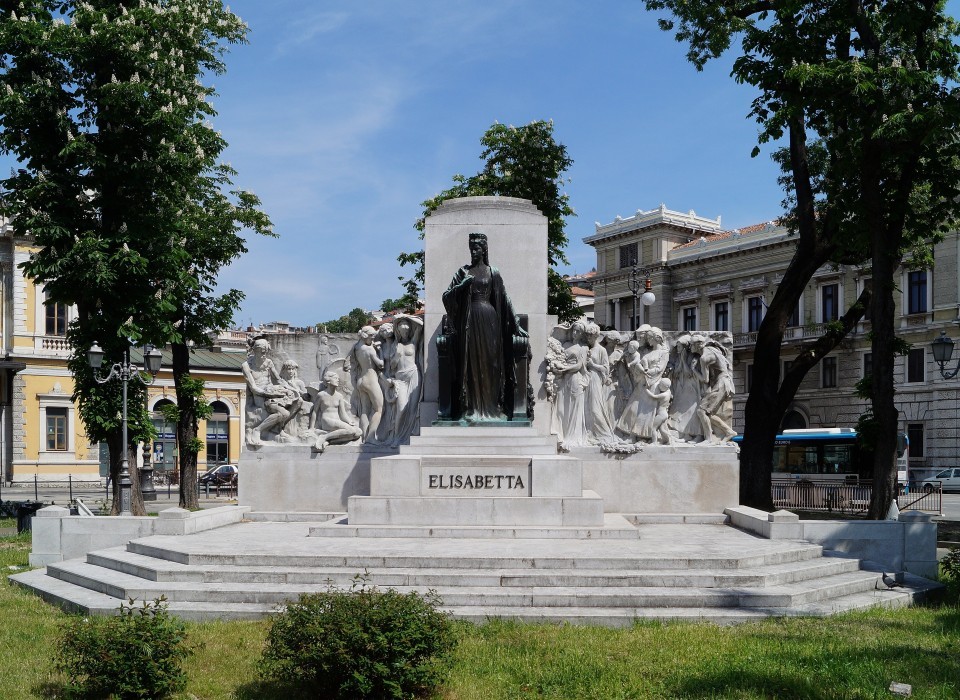
The monument is the work of
the Viennese sculptor Franz
Seifert. In front of an
ideally held throne, the
Empress is standing with her
head slightly raised,
holding a veil of cloth to
her breast with her right
hand, while the left is
leaning lightly on the
throne's back. The noble
features are of serious
expression. A mighty stone
block forms the background
of the figure; it is kept in
simple lines and graduated
at the top. As to the origin
of the monument in Trieste,
it is reported that on
December 2, 1900, a
committee was established in
Trieste, after nearly a year
of preparatory work, and
issued an appeal to the
inhabitants of the coastal
country.
.jpg)
On November 30, 1902, an
honorary committee was
formed, which, joining the
enterprise of the workers,
was eager to seek the
promotion of the beautiful
work.Already in 1906
sufficient funds were
available and of 28 received
designs Franz Seifert's
model was intended for
execution. Reception of
Empress Elisabeth by
Charlotte in front of
Miramar e. In the background
Franz Josef and his brother
Maximilian. During her time
in Trieste, Sisi inhabits
Miramare Castle just outside
the city - a dream castle on
cliffs by the sea. It was
built by Emperor Franz
Joseph's brother Maximilian,
who ruled from 1864 as
emperor in Mexico. In 1867
he is executed there. In the
castle you will find various
references to several stays
of Franz Joseph and
Elisabeth.

Trieste is for Empress Sisi
the "springboard" to the
south. This is the starting
point of many of their
voyages. Between 1869 and
1896, the Austrian monarch
stayed here 14 times before
or after traveling across
the Mediterranean. From
Trieste, Elisabeth also goes
to Greece. On the island of
Corfu, around 1890, the
Empress builds a white
marble palace - the
Achilleion - to which it
draws again and again. Since
1955, the castle complex has
served as a museum open to
the public. It has remained
unchanged and gives an
insight into a contemporary
princely residence.

The extensive park, which
also features exotic plants,
was originally planned as a
meditation site and is set
in terraces. Steps lead down
to the sea. As a garden
house serves a Castelletto,
in which in later years
Maximilian's wife Charlotte
was imprisoned because of
her mental confusion. The
area has been under Habsburg
rule since the 14th century.
If you come from the castle
to Trieste, a picturesque
port city, you can see in
front of the main station on
the Elizabeth monument ..
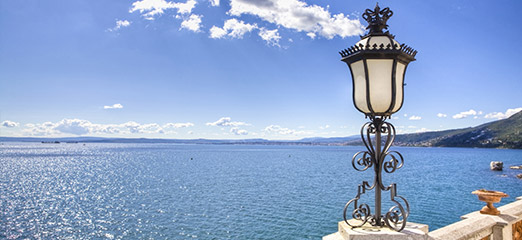
Maximilian Ferdinand Joseph
von Habsburg, Kaiser von
Mexiko
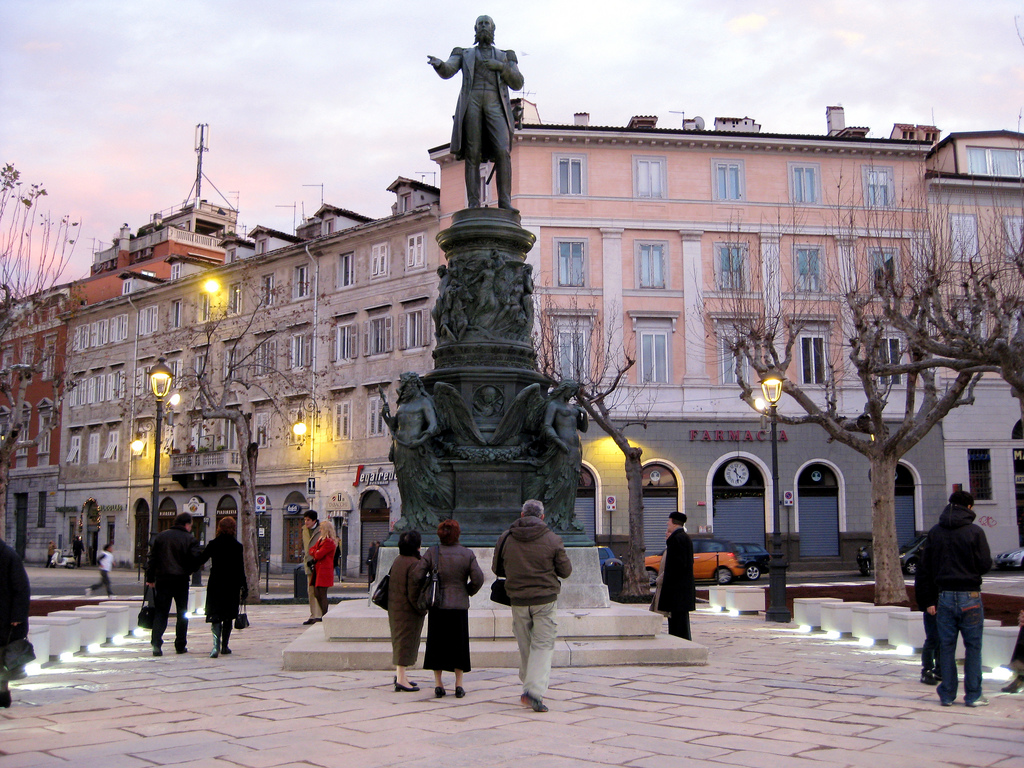
Overlooking the Bay of Grignano, the gorgeous white stone Castello di
Miramar graces the seafront
just north of Trieste. In
spite of it's strategic
location, the castle was
built purely as a family
home and is devoid of
defensive capabilities. The
Archduke Maximilian, brother
of Franz Josef commissioned
the building of this 19th
century extravaganza.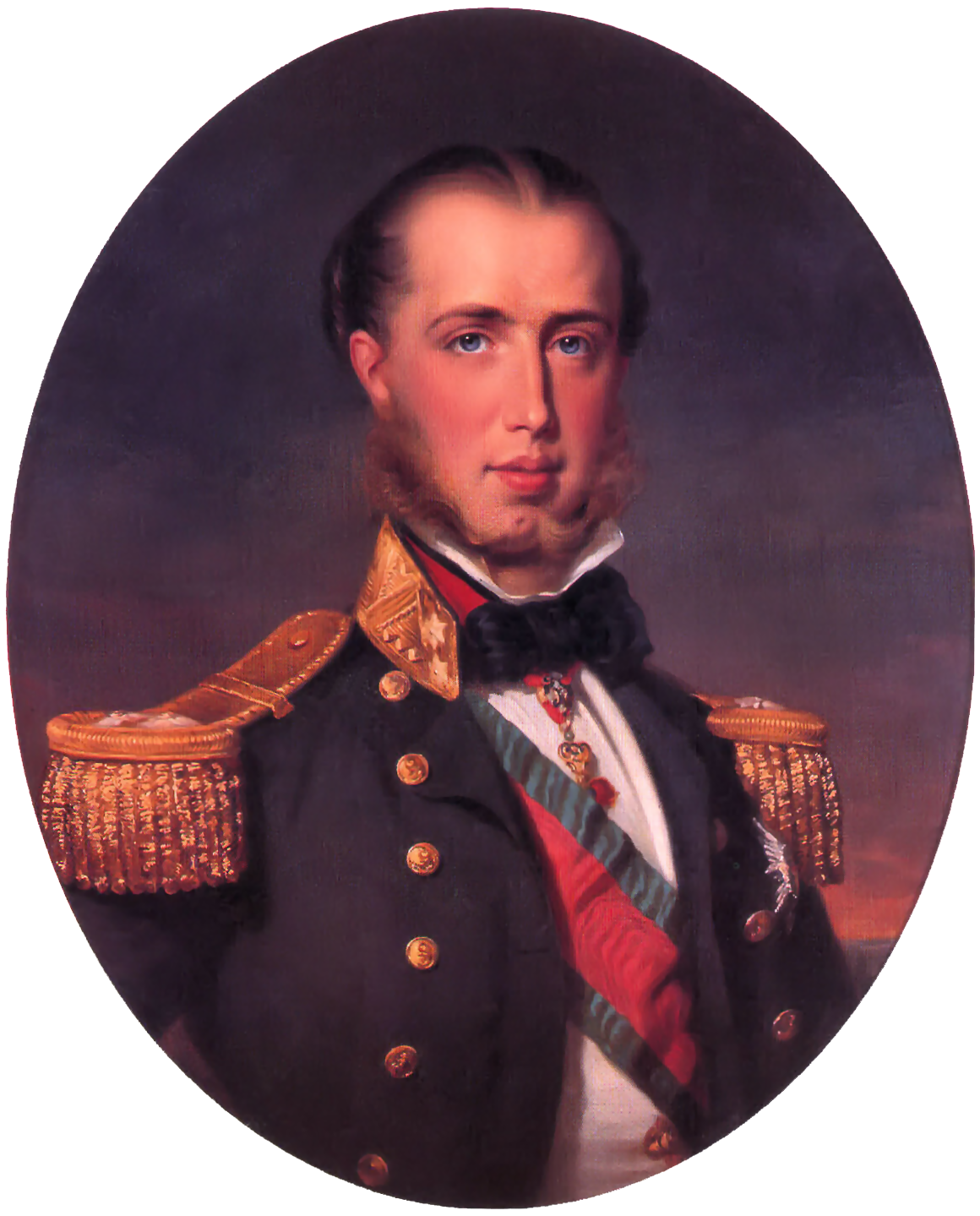 He married the Princess
Charlotte of Belgium and
they lived happily here,
until Napoleon III of France
took Trieste from the
Hapsburgs. Bus 36 ( 0.80 €
) or sea boat line 2.70 €
The day we visited, a group
of young school children
were being given a tour by
one of the docents and the
children were delighted with
the story of Maximilian and
"Carlotta".
He married the Princess
Charlotte of Belgium and
they lived happily here,
until Napoleon III of France
took Trieste from the
Hapsburgs. Bus 36 ( 0.80 €
) or sea boat line 2.70 €
The day we visited, a group
of young school children
were being given a tour by
one of the docents and the
children were delighted with
the story of Maximilian and
"Carlotta".
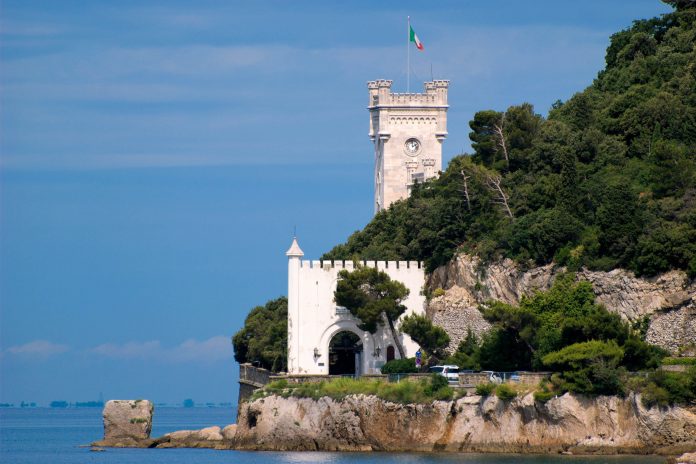
All went well for the couple
as they lived here at
Miramar until he was given
the title of Emperor of
Mexico in 1864 and together
they sailed to Mexico.
Unfortunately, his was not a
good reign and he faced a
firing squad in 1867.
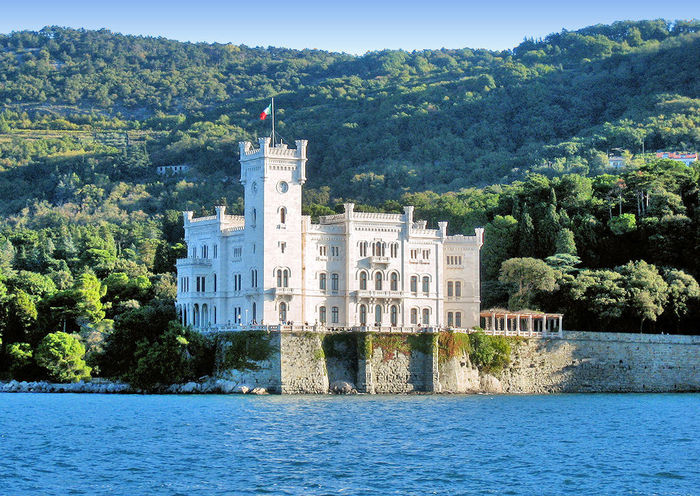
The castle is preserved in
its original condition and
reflections of Maximilian's
love of the sea are
everywhere. His wood paneled
bedroom on the first floor
was built to resemble the
cabin of a ship and a glance
from the window of any of
the second floor rooms
provides a spectacular view
over the Bay of Grignano and
the Adriatic beyond. His
love for exotic places is
displayed in the Chinese and
Japanese salon.
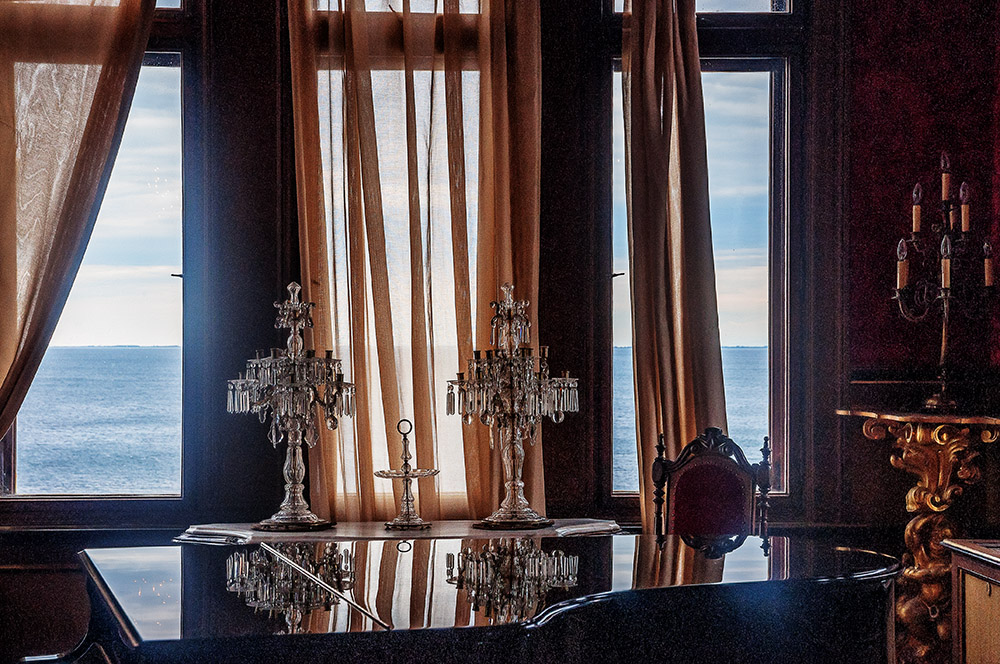
As you stand at the base of
the circular staircase, if
you look up, there is a
glass-bottomed
fishpond. Sadly, Carlotta
returned to live out her
days in Brussels; driven
insane by the ordeal in
Mexico.
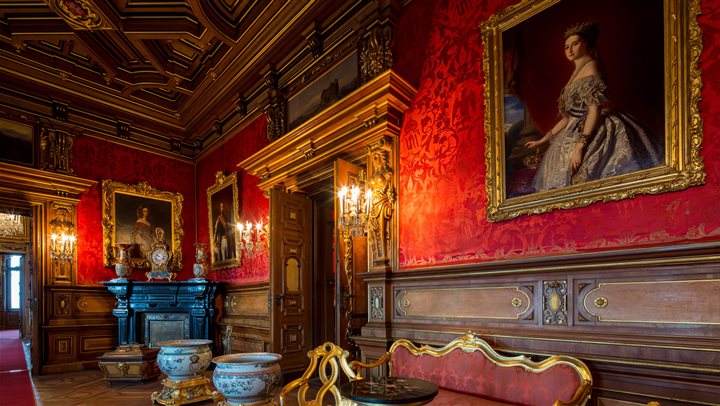
If the story sounds familiar, it was made into a movie "Juarez" starring
Bette Davis. It appears
that Maximillian was a far
better botanist than he was
an emperor of Mexico! The
magnificent park and gardens
surrounding the castle were
designed by Maximilian
before his ill-fated voyage
to Mexico.
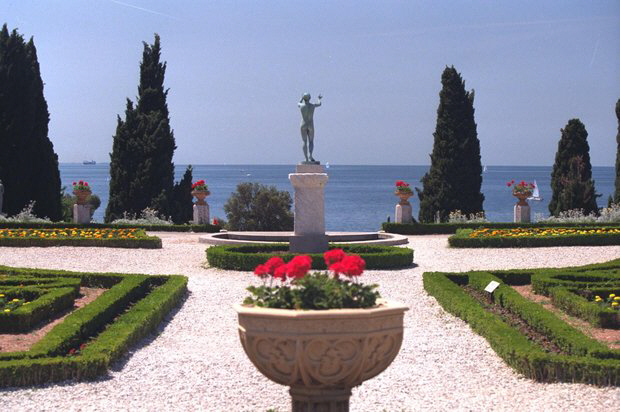
Formal gardens organize the
outdoor space, and
throughout the park's
fifty-four acres are plant
and tree species collected
from every corner of the
world—an anxious hoarding by
a dying empire. As I
wandered from room to room,
I read a tale of insecure
power in the castle's
interior-design survey of
history: the medieval stone
walls, the heavy Baroque and
neo-Renaissance furniture.
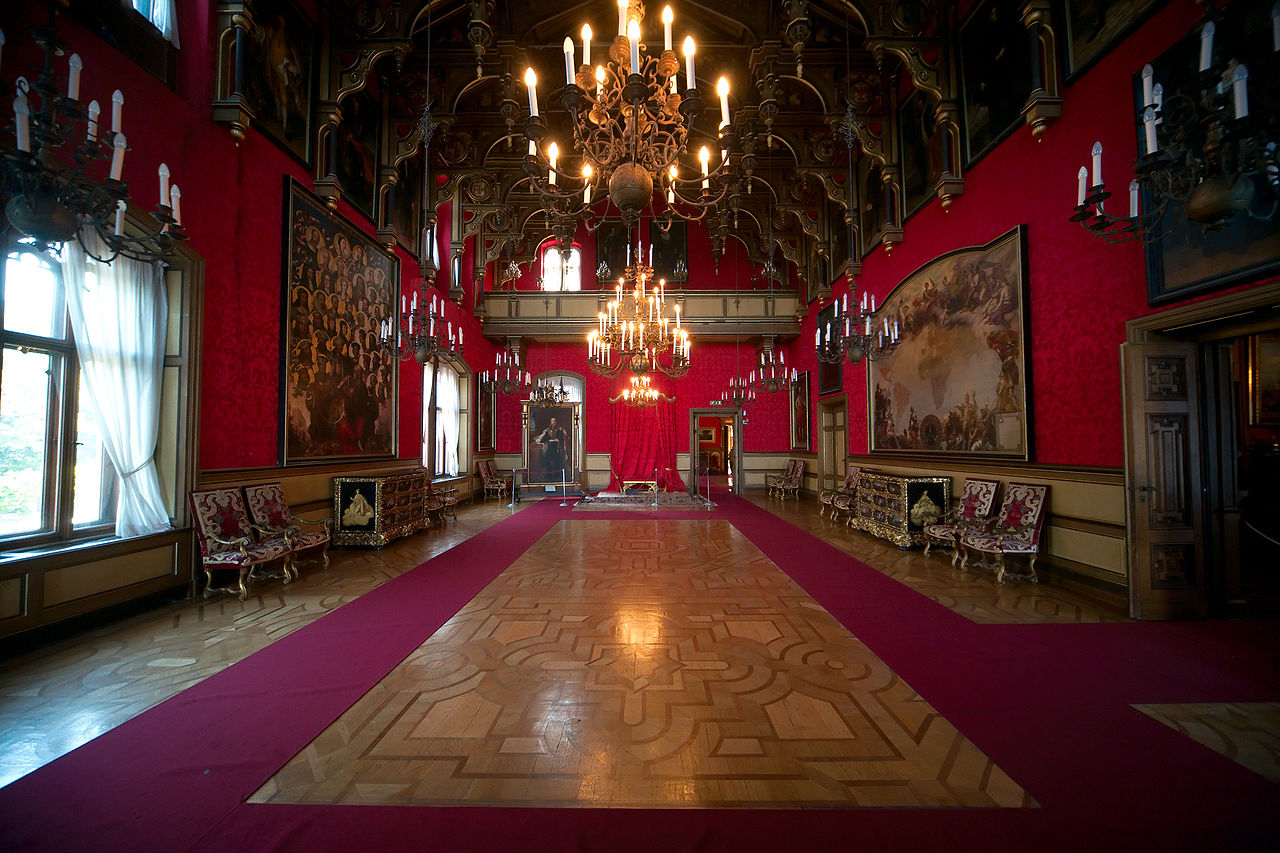
This is Second Empire
bombast, persuading itself
of its legitimacy,
dismissing the elegant
restraint of Biedermeier.
Ideal for pleasant strolls,
the Parco di Miramar
includes a series of
delightful walks above the
Bay, manicured gardens,
pavilions, a greenhouse and
several ponds. Frequently,
special exhibits of flowers,
butterflies, and birds are
also presented.
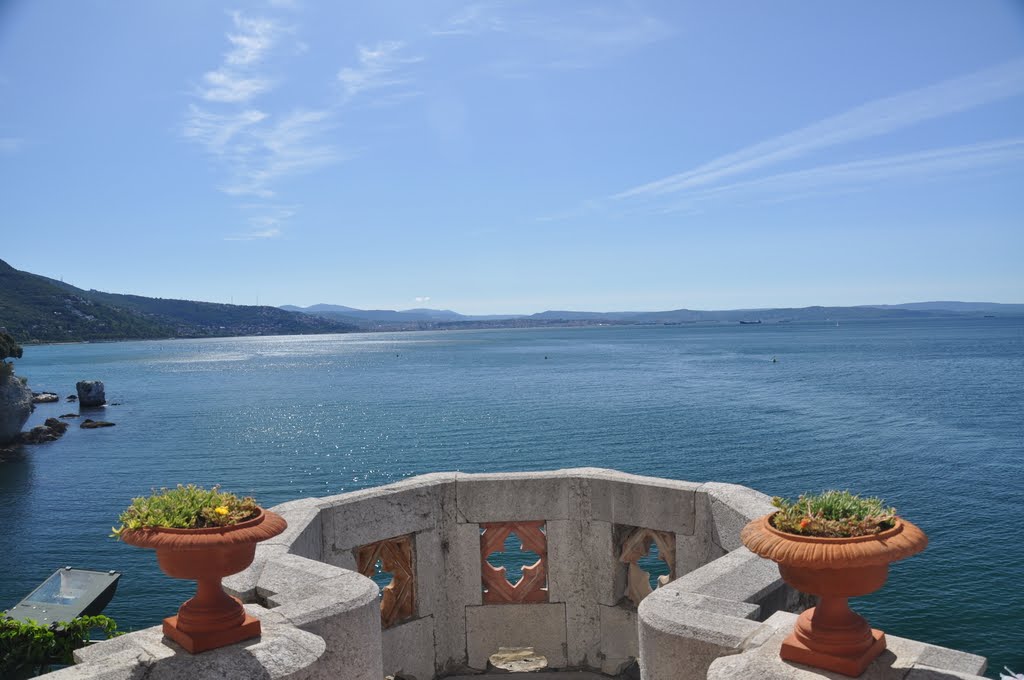
There is also an attractive cafe and shop in the upper garden area, which
offers a pleasant stop for
refreshments and people
watching. The cafe is quite
inexpensive and has a nice
selection of luncheon menu
items and a good variety of
coffees and beverages.
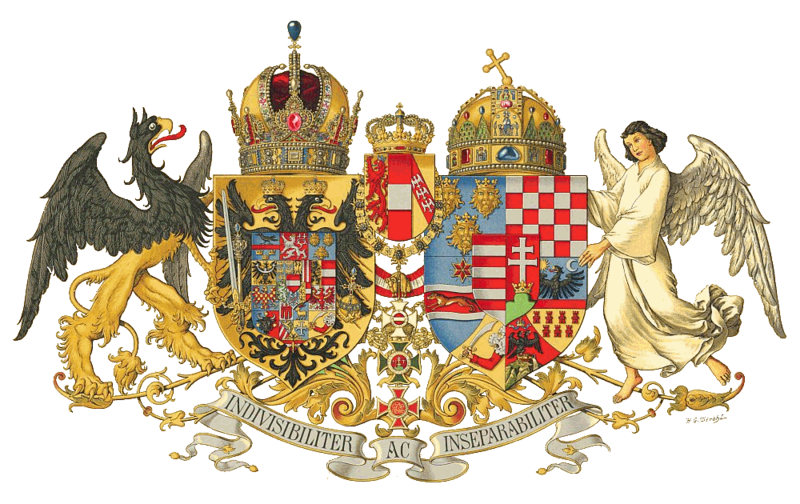
The "Monarchs' Salon", is embellished with portraits of a King of
Norway, the Emperor of
Brazil, a Czar of Russia –
anyone, no matter how
fraudulent or despotic, as
long as they're nominal
monarchs.
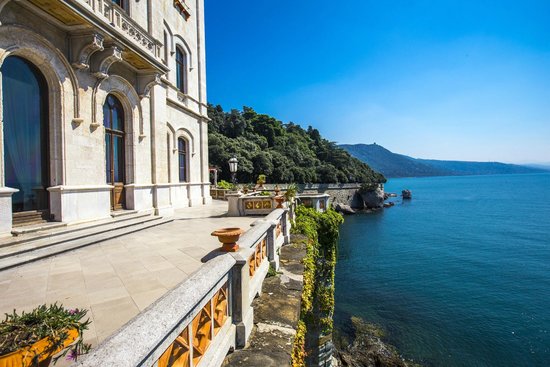
This softens you up for the bedroom and its images of the most important
events in the history of
this area, pride of place
going to the construction of
the castle, of course. Other
rooms are paneled and
furnished like a ship's
quarters, reflecting
Maximilian's devotion to the
Austrian Navy. The gardens
are open daily in summer
from 8 am to 7 pm and in
winter from 8 am to 4 pm.
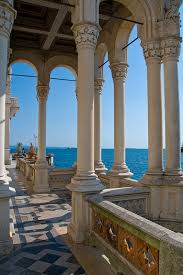
For the full romantic treatment, in summer you can hear the entire sad
story. A son et lumière
called "Miramar's Imperial
Dream", performed as a light
and sound show (luci e
suoni) at 9:30 and 10:45
pm is performed beside the
sea, with a regular
performance in English;
check with the tourist
office or the castle tel
040.224.143 / 040 679
6111 for information on
dates and times for
English performances. Entry
on concert night is
approximately $ 7 US.
The Castle located in a
marvelous panoramic position
on a rock foreland, is
surrounded by a garden in
Italian style, rich of rare
essences. The biological
characteristic of the cost,
surrounding the foreland may
be unique in the
Mediterranean sea, it's a
Natural Reserve . There are
a number of ways to get to
Miramar, of which the
simplest is to take the #36
bus from Piazza Oberdan .
Local Trains heading west
from Trieste also stop, and
in summer (25 April / 15
October) there's a boat
service from the harbor (
2,70 € )
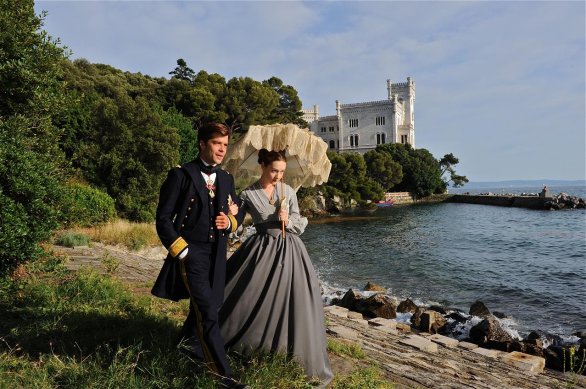
|
Trieste is an ancient city tracing
its roots back some four millennia.
In Ancient Roman times it became an
important port city, and over the
following millennium or two
repeatedly changed hands between the
Byzentines, Franks, Venetians,
Germans, French and Austrians.
Eventually
it firmly became part of the
Habsburg Empire in the 19th century.
Trieste provided vital access to the
Mediterranean Sea for the otherwise
landlocked empire and as such became
an important naval base.
In addition
to its military importance, Trieste
also remained a significant merchant
city and at the turn of the 20th
century had become a cultural hotbed
as well. It developed a decidedly
Central European air, also reflected
in its architecture, which is often
more akin to Vienna or Budapest than
any Italian cities. This unique
character partly remains to this day
(see below).
Almost a cultural enclave on the
“Austrian Riviera” the city
attracted many artists, philosophers
and intellectuals – amongst them
James Joyce and Sigmund Freud. It
also had a large Jewish community.
But with WW1 the city's fate would
begin to change dramatically. Owing
to Italy's involvement in the war,
especially on the Isonzo front just
north of Trieste,
Italy was granted territorial gains
at the end of the war. And this
included Trieste as well as parts of
what today is Slovenia.
With the Italian takeover came a
phase of enforced Italianization and
repression against mainly
Germans and
Slovenes. Many emigrated to
evade the repression, while many
Italians moved in.
At the end of WWII, Yugoslav
partisans took over Trieste for a
while before the city fell under
Allied administration. During the 40
days of Yugoslav occupation, the
partisans launched a campaign of
retaliation against Italians,
presumed to be
all fascists as well as
against anti-communist Slovenes.
Many were deported and quite a few
murdered.
From 1947
to 1954 the region was declared a
“Free Territory” by the UN, with the
western half, including the city of
Trieste, under Allied administration
(Britain and the USA), and the
eastern half administered
by Yugoslavia.
In
1954, the Allied
passed their administration of the
western half to
the italian
Governement,
while the eastern half remained
under temporary
Yugoslavian
administration.
But Trieste has since become a
firmly Italian city and an important
harbour and industrial centre.
The city has only about a quarter of
a million inhabitants, but it feels
much bigger and more metropolitan
than this population size would
suggest. That's partly due to all
the busy industry and the port, and
also due to the grandness of the
architecture and the wide
boulevards. Quite a unique place!
Schiffslinien + Nahverkehr
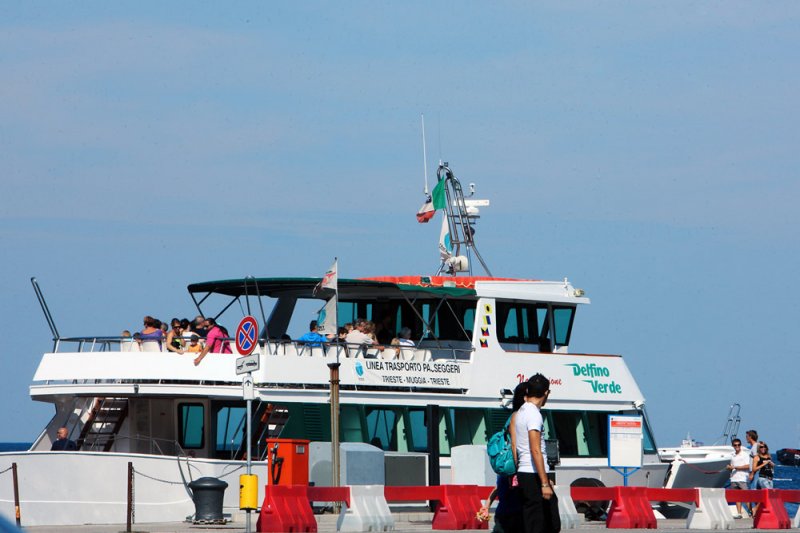
>
Trieste – Barcola – Grignano –
Sistiana
>
Trieste
– Muggia
>
Trieste-
Pirano- Parenzo-
Rovigno- Pola- Lussino
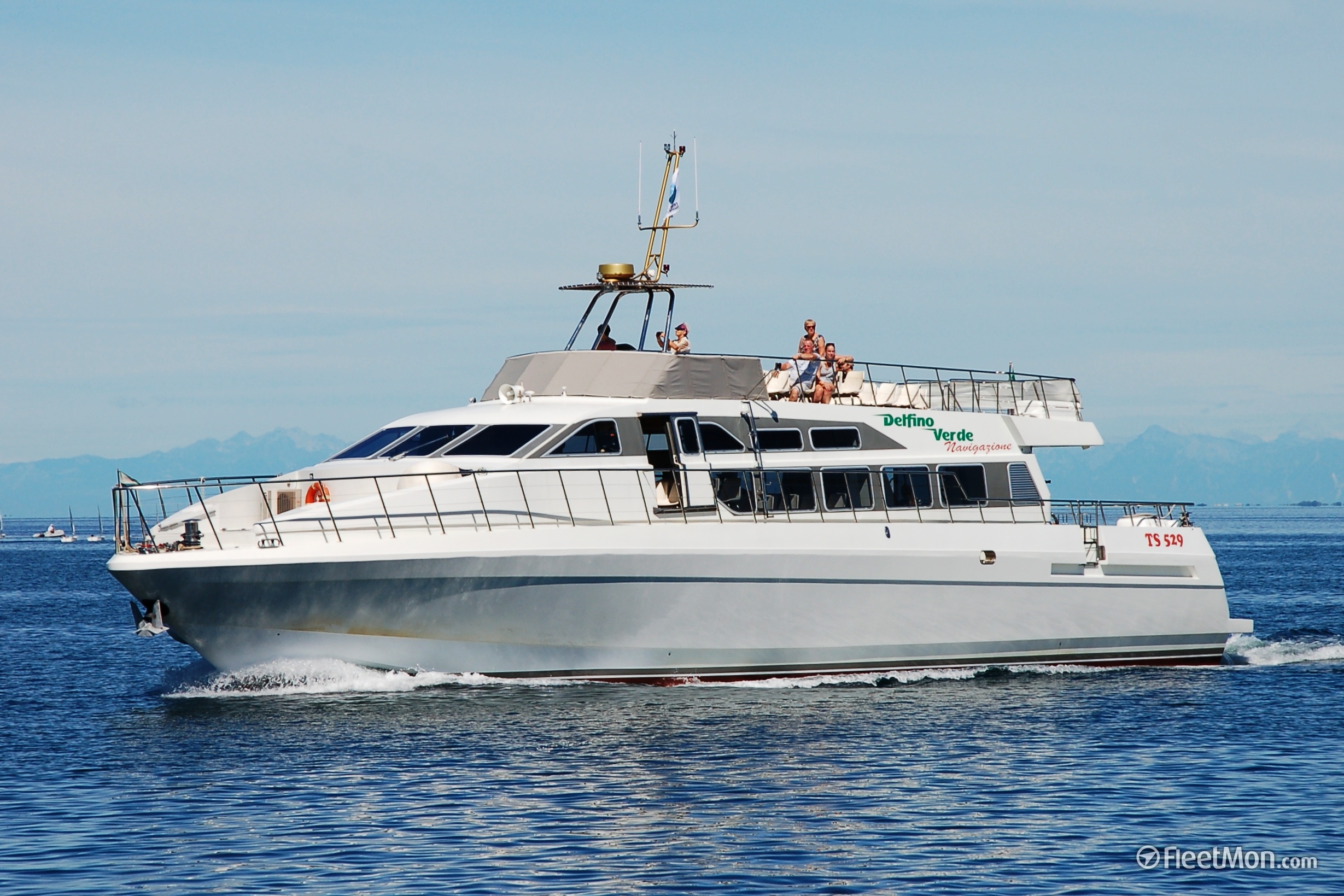
>
Trieste-
Isola di Grado
Trieste
may be the only city in Europe that
appears more often in reflective
essays than guide books or newspaper
travel sections. Once the main port
for the Habsburg Empire, today the
city is most often overlooked by
those making the Let’s Go Grand
Tour. Even many Italians forget it’s
there, tucked into a five-mile-wide
hillside between Slovenia and the
Adriatic.
But for those who have spent any
time at all time in Trieste, there’s
nothing else like it in the world.
James Joyce moved there to teach
Berlitz courses at age 22, and he
stayed for 16 years; in the meantime
he wrote most of Dubliners, all of A
Portrait of the Artist as a Young
Man and a good chunk of Ulysses. The
British travel essayist Jan Morris,
who recently published an elegy to
the city entitled Trieste and the
Meaning of Nowhere, writes that it
"always seems to be on a fold in the
map, hemmed-in, hole-in-corner" –
and yet Morris, like so many others,
keeps coming back.
With a population of just under
250,000, Trieste is one of a string
of mid-sized, former Habsburg cities
– along with Ljubljana, Zagreb, Graz
and Pilsen – that have managed to
retain their old-world charm in the
face of constant political turmoil
over the last 100 years. At the turn
of the last century, Trieste was
Austrian; later it was held by
Italy, Germany, Yugoslavia and, in
1954, Italy again; before that it
was held, alternately, by the
Illyrians (its founders), the
Romans, the Goths, Venice and
Napoleonic France.
But while the city main church, the
Cathedral of San Giusto, is built in
a high Romanesque style, and while
much of the southwestern section of
the city is dominated by blank 1950s
apartment blocks and heavy
industrial eyesores, Trieste is
still very much a Habsburg town. The
city owes much of its architectural
face to Austria’s Empress Maria
Teresa; in fact, the center of
downtown, hemmed in between the
train station, the waterfront and
the Colle de San Giusto hill, is
called Borgo Teresiano, or "Teresa’s
Quarter" (later annexations are
named Borgos Giussepino and
Franceschino, after Emperors Joseph
II and Francis II).
Seeing in the city an opportunity to
build her empire’s naval and
merchant strength, the Habsburg
empress expanded the port facilities
and laid down a precise gridwork of
imposing Viennese blocks and wide
boulevards. Walk down Via XXX
Ottobre and you might think you’re
strolling somewhere just off
Karlsplatz.
Alternately, you might find yourself
recalling Vienna’s Café Central when
seated in Café Tommaseo or Café San
Marco, two of Trieste’s many
gathering places in a city that
takes its coffee extremely seriously
(Illy, the premiere Italian coffee
maker, is based there). Tommaseo,
just off the water and around the
corner from the vast Piazza dell
Unita d’Italia, caters to a rather
upscale, business crowd. San Marco
(closed on Wednesdays) is full of
students. Other cafes include Caffé
Rex and Caffe degli Specchi.
Triestino café culture is very much
a nexus between those of Vienna and
Rome – espresso is as popular there
as it is anywhere else in the
country, and drunk just as often.
But like residents of other former
Habsburg towns, Triestinos like to
linger over their coffee, and they
prefer comfortable chairs and
well-decorated interiors to the
stand-up, fast-food espresso ethos
found in the Boot.
Unfortunately, perhaps the café with
the greatest claim to fame is also
one of those least traversed by the
city’s latteratti, and for good
reason. Caffe Pasticceria Pirona,
located on Via Giosue Carducci at
Piazza Carlo Goldoni, was a favorite
of Joyce. But today it is overpriced
and touristy; the baked goods are
worth sampling, but there’s no
atmosphere to speak of – and, seeing
as how the place lacks seats, you
wouldn’t spend much time there even
if you wanted to. Trieste, does,
however, offer more than few other
pieces of Joyceana: There is a
walking tour available from the
tourist office, and every year at
Bloom’s Day the city offers a series
of lectures and readings related
to Ulysses.
And while Joyce is certainly the
most famous literary name associated
with Trieste, many other authors and
artists have crossed paths with the
city. Italo Svevo, an acolyte of
Joyce, was a native. Sir Richard
Burton, the great traveler and
Arabist, died here while serving as
consul; Johann Winkelmann, the
German neo-classical architect, was
murdered in his room at the Locanda
Grande hotel. Egon Schiele spent
time in Trieste, and Rainer Maria
Rilke wrote his masterpiece "Duino
Elegies" while a guest of the Thurn
and Taxis families at their Duino
Castle, about 17 miles outside town.
Roman Forum of Aquileia
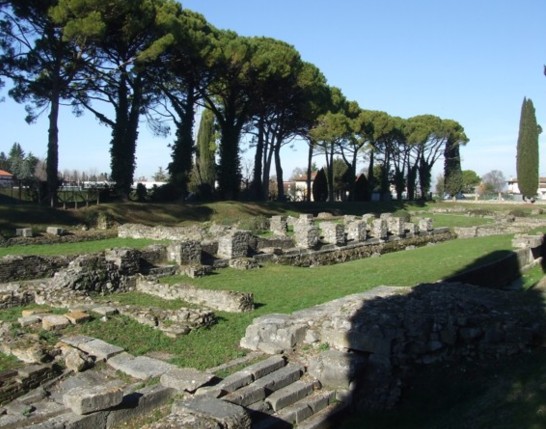
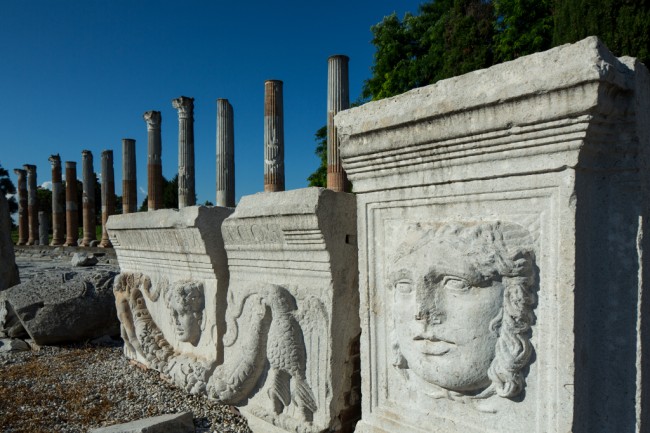
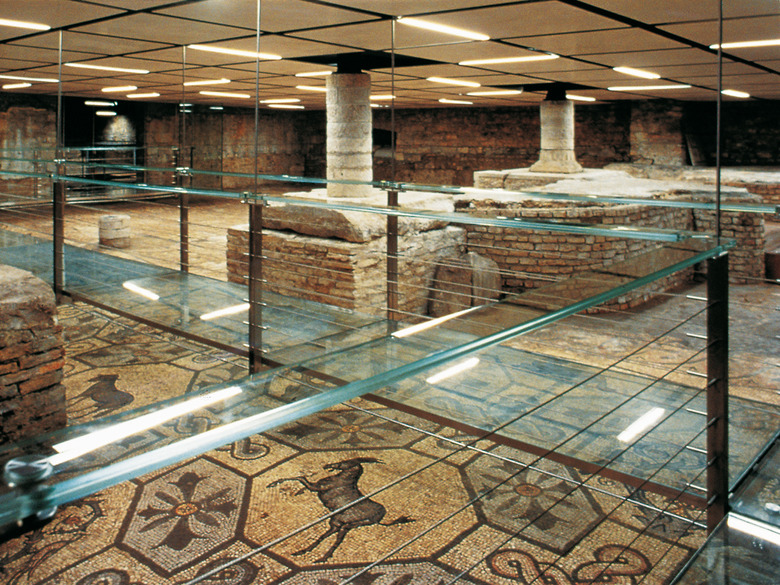
"Aquileia omnium sub occidente
urbium maxima" ("Aquileia, the
greatest of all the towns in the
West"). That is how the Byzantine
emperor Justinian described the town
in the sixth century and, though he
perhaps was exaggerating a little,
Aquileia could once boast to be the
ninth largest city in the Roman
Empire, fourth in Italy. As the
capital of Regio X (the Tenth Roman
Region), it was for centuries the
seat of the Roman governor as well
as the home of the Northern Adriatic
Fleet. In the first century AD, the
Roman historian and geographer
Strabo described it as a "bustling
trading center for Mediterranean and
transalpine countries." In
recognition of its impressive ruins
and its important place in Roman
history, Aquileia is considered a
World Heritage site by the United
Nations.
And in light of its significant role
in early Christian history, when it
was for thirteen centuries the seat
of a Christian Patriarch, it was
proclaimed by the Vatican City as
one of the five official Jubilee
cities in Italy. The city preserves
both Roman and early Christian
ruins, including the Roman port and
forum, remains of Roman public baths
and private houses with beautifully
preserved mosaic floors, Roman roads
with visible chariot tracks, a Roman
burial ground, and the ancient
Patriarchal Basilica preserving both
the largest known Paleo-Christian
polychrome mosaic floor in Western
Europe (early fourth century), and a
ninth century crypt adorned with
thirteenth century frescos.
A regional capital of about 100,000,
Aquileia never quite regained its
prominence after being sacked by
Attila, and gradually dwindled into
a small provincial town. It has an
amazing archaeological museum, and
there is a walk you can take along
the Via Sacra, once the principal
street of Aquileia's important
river-port system and now an
astonishingly beautiful lane lined
with cypresses, lush lawns, a canal
and archaeological fragments. The
floors of private Roman houses
remain in a field near the Via Sacra
and across the main road; these
well-preserved mosaics depict
animals and geometric forms that
give you a sense of the domestic
architecture and of the layout of a
neighborhood in ancient Rome. Any of
this would be enough to merit a trip
to Aquileia, even if it weren't for
its real eye-popper: the patriarchal
basilica, founded in the fourth
century and worked on for almost a
millennium, with a floor the size of
a soccer field and a fourth-century
pavement, more than 800 square
yards, completely covered with a
prodigious mosaic portraying
writhing animals, faces, birds, a
fight between a rooster and a
turtle, a detailed and animate
fishing scene. These images out of
some paleo-Christian Looney Tunes
assume the additional weight of
being early Christian symbols. There
are two crypts, one painted with
12th-century frescoes of the life of
St. Hermagoras, a martyr and an
early bishop of Aquileia, and
another in which you can see,
through a plexiglass floor, more
recent excavations exposing yet more
mosaics.
The most important Roman
archaeological site in northern
Italy, considered by UNESCO a
Heritage of Mankind. A bit of
history Founded in 181 B.C. by the
Romans, because of exclusive
military reasons relating to
expansionist aims of Roman Empire
towards central European and Balkan
regions, Aquileia developed from a
military outpost to the capital of
the "X Regio Venetia et Histria",
taking on great strategic, economic
and cultural importance. It became
flourishing and prosperous thanks to
the vast trade through a functional
and capillary road network. It used
to have mighty defensive walls and
enormous buildings such as circus,
amphitheatre, theatre, thermal
baths, official buildings and
palaces, forum at the crossing
between the main cardo and
decumanus. Not to forget the river
port, where large cargo ships were
moored. It reached its peak during
Caesar 's empire: its inhabitans
were more than 200.000 and
became one of the biggest and
richest city of the whole Empire. It
was the residence of many emperors,
its palace was very visited. With
Attila's destruction in the middle
of 5th century AD, there was the
final economical and social collapse
of Aquileia that lasted till the
Medieval period. With Alboino's
invasion in 571 Aquileia fell under
the Langobard rule but it remained
an important political and cultural
centre, also during Hungarian
invasions (10th century AD),
notwithstanding it was a problem
area of the Empire, meeting point of
Latin, German and Slav civilization.
From the 6th century the prelates
were qualified as patriarchs, with
supremacy over other bishoprics, and
from 1077 they obtained from the
German Emperor the control of
Friuli, with ducal prerogatives. The
temporal power of the patriarchs of
Aquileia continued until the
Venetian conquest of Friuli in 1420.
For such an important ecclesiastical
city several churches were built.
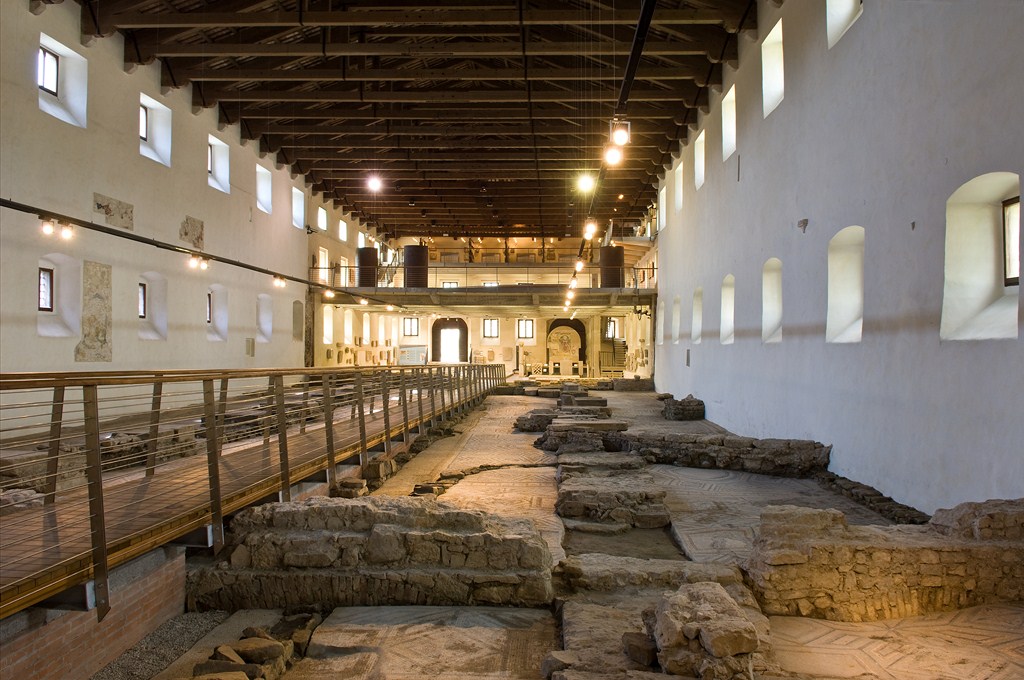
In der Basilika befindet sich das größte, schönste und besterhaltene Fußbodenmosaik im Westen. 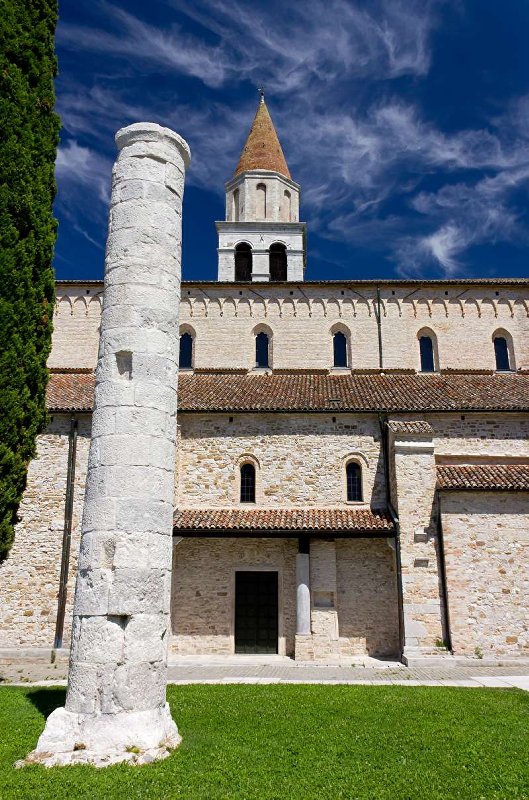 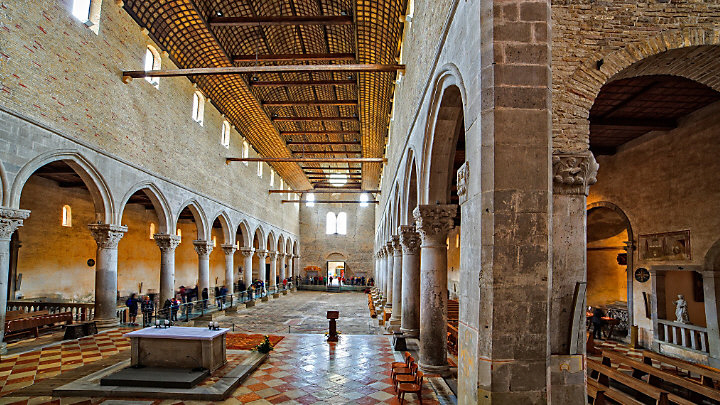
What to see Many are the Roman ruins
still visible today, among
which: the Roman Forum, the Roman
graveyard, the Fluvial port - where
heavy cargo ships docked loaded with
goods and where imposing stone
blocks of its wharves can still be
seen -, the streets and some Roman
houses; The splendid Basilica di S.
Maria Assunta was built over a
4th-century building, and was
enlarged many times in the following
centuries (many of these
enlargements were destroyed by the
barbarian invasions). The temple
still preserves, with some
remodelling, the architectural lines
of the rebuilding ordered in 1031 by
the patriarch Popone, who also had
the imposing 73-m tall
bell-tower built. The basilica
preserves western world's finest and
most spectacular early Christian
mosaics (4th century) with varied
decorative motifs which cover almost
the whole floor (about 750 square
metres). Attila trampled on this
pavement in the year 452, but the
pavement withstood his destructive
passage, as its excellent state of
preservation demonstrates. Of great
interest also the
12th-century Byzantine frescos in
the crypt, the 11th-century frescos
on the vault of the apse and a copy
of the Holy Sepulchre in white
marble. Next to the basilica there
is the baptistery and behind it
the military cemetery where, among
others, ten unknown soldiers found
on the battlefields of the First
World War are buried. Myriads of
finds from the Roman period
(statues, mosaics, coins, glass and
terracotta objects, urns, bronze
objects, a boat, a museum with
inscribed stone slabs, etc.) are
collected in the National
Archeological Museum. Among the
museums worth a visit are also
the Early Christian Museum and
the Civic Museum (Museo Civico).
TAGESAUSFLUG
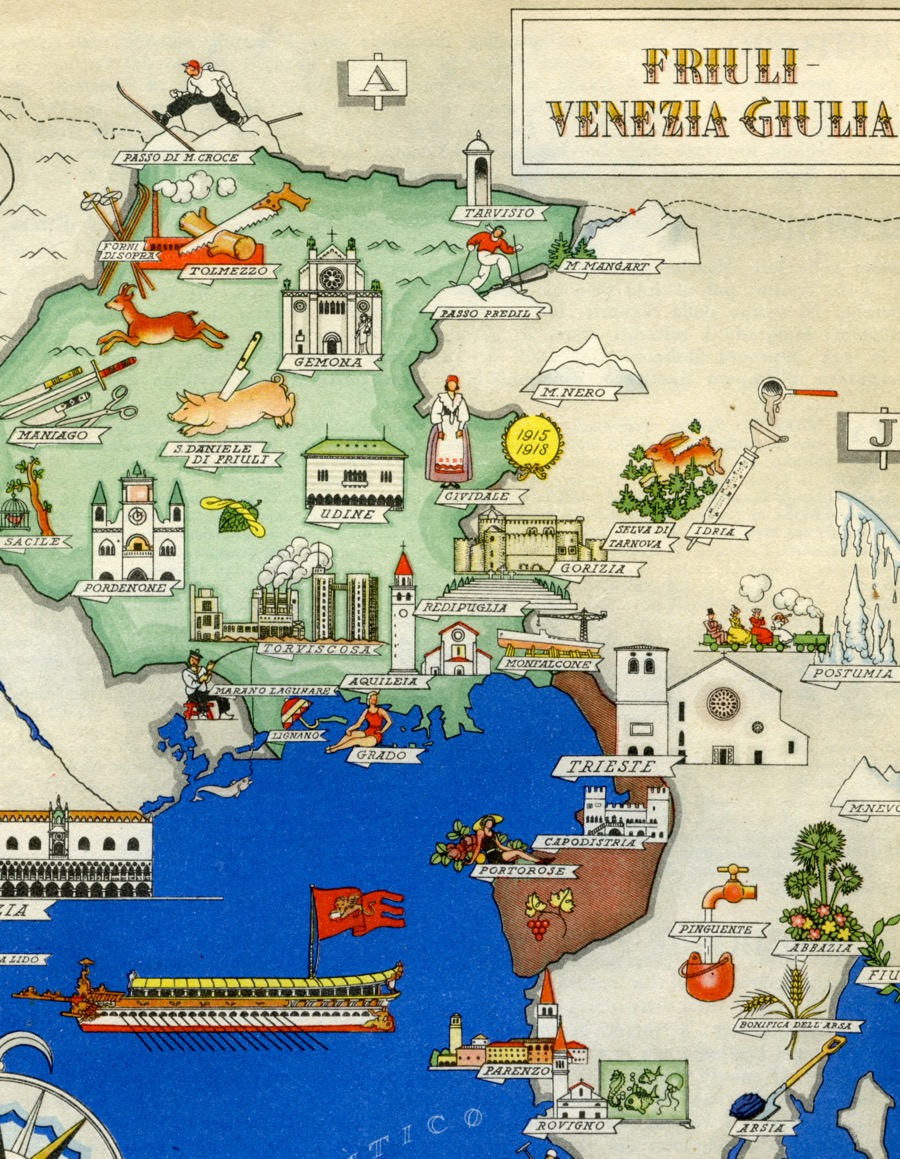
Laibach u. Herzogtum Krain
Tagesausflug (89 km. / 1h25' Bus)
Tägliche
Busverbindungen. Die früheste
Abfahrt aus Laibach ist um 02:45,
die Ankunft in Triest ist um 04:20.
Die späteste Abfahrt ist um 20:25,
die Ankunft um 22:05.
FlixBus - Hellö - Crnja Tours -
Buscenter.it - Croatiabus
- Hin und
zurück ab 18 €
Goeuro
Gettybus
Busradar
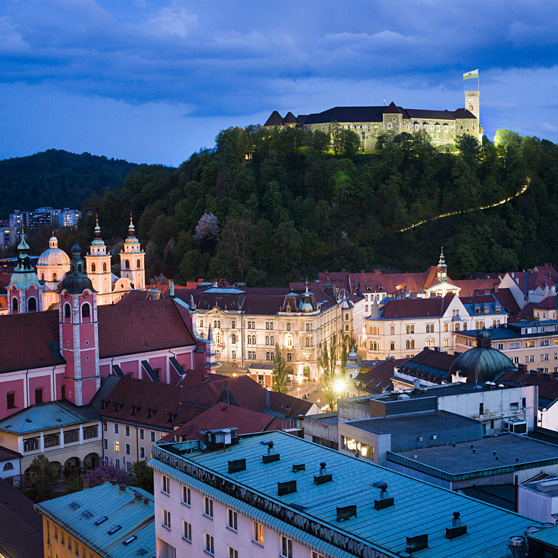
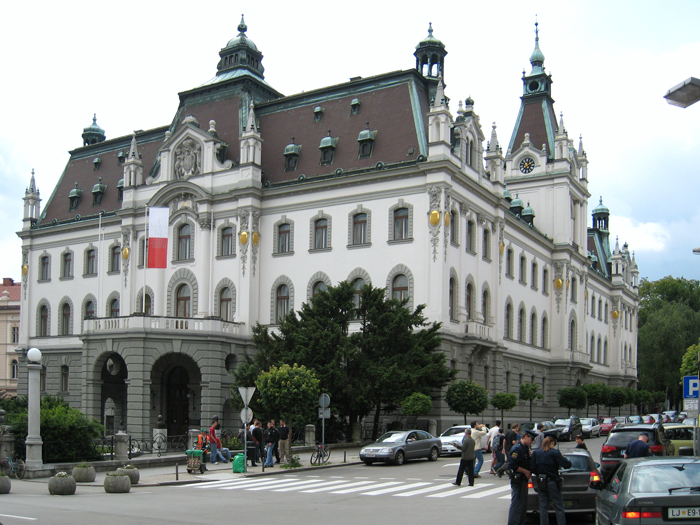
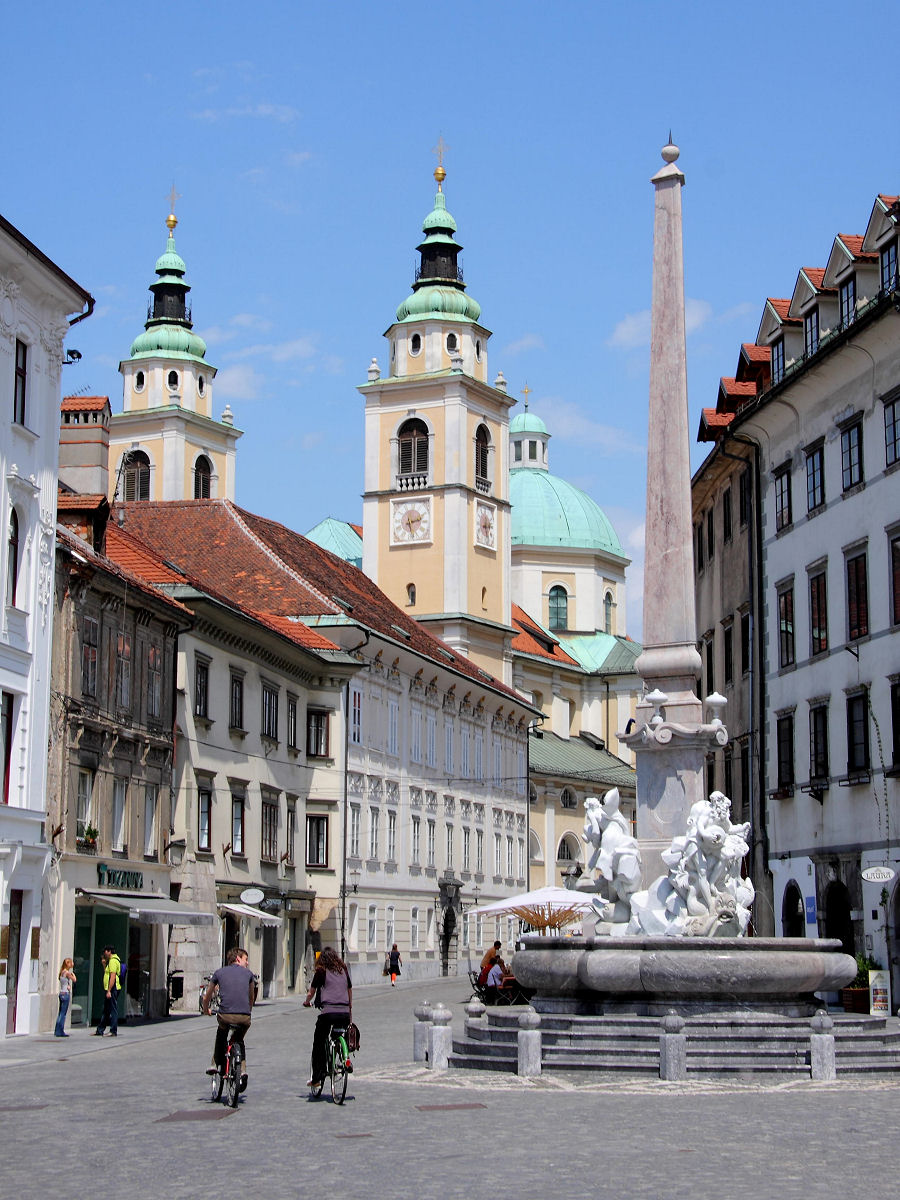
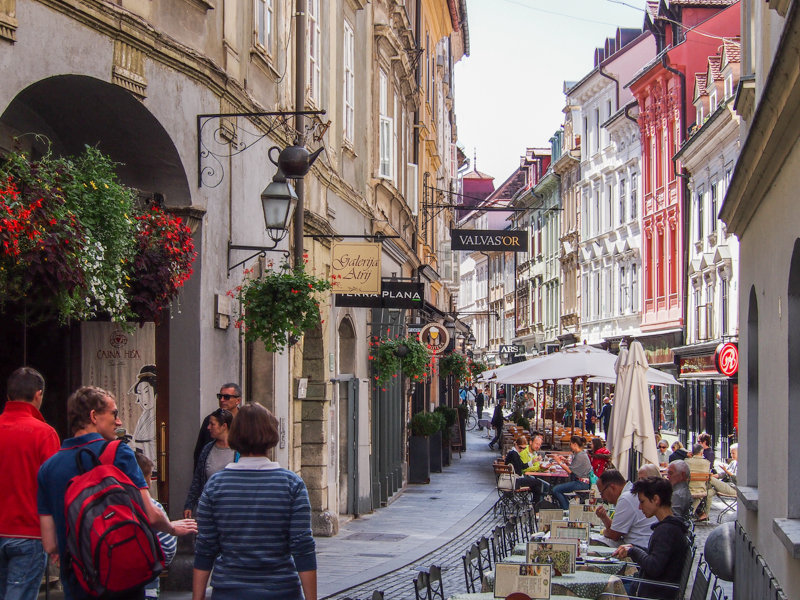
Yestour
Tour Bus Laibach
( 8 Stunden) jeden Montag ab
Triest um 9.00 Uhr.
52.- € pro Person
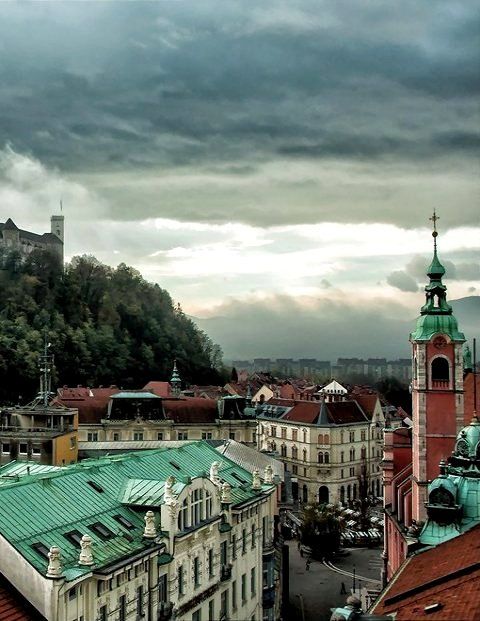
|

Golden Eagle
Luxury Trains ist einer der weltweit
führenden Betreiber von exklusiven
Schienenkreuzfahrten. Die beiden
Zugkompositionen Golden Eagle und Golden
Eagle Danube Express gehören zu den
luxeriösesten Zügen der Welt. Die
Philosophie bei Golden Eagle Luxury Trains
ist es, voll-begleitete Schienenkreuzfahrten
zu abgelegenen Destinationen mit grösst
möglichem Komfort, Stil und Sicherheit zu
organisieren. Golden Eagle
Luxus-Schienenkreuzfahrten bietet
anspruchsvollen und abenteuerlichen
Reisenden eine einmalige Gelegenheit, um
einige der weltweit unvergesslichsten Orte
in Komfort und Stil zu bereisen.
BALKAN EXPLORER
VENICE - TRIESTE - LJUBLJANA - ZAGREB -
SARAJEVO - MOSTAR - DUBROVNIK - BELGRADE -
SKOPJE - THESSALONIKI - SOFIA - PLOVDIV -
ISTANBUL
BALKAN ODYSSEY
VENICE - TRIESTE -
LJUBLJANA - SARAJEVO - MOSTAR - BELGRADE -
PLOVDIV - VELIKO TARNOVO - BRASOV -
SIGHISOARA - KECSKEMET - LAJOSMISZE -
BUDAPEST
.jpg)
GRAND ALPINE EXPRESS
BUDAPEST - VIENNA - SEMMERING PASS - LAKE
ACHEN - INNSBRUCK - ZURICH - ST GOTTHARD
PASS - LAKE COMO - MILAN - LAKE GARDA -
VERONA - TRIESTE - LAKE BLED - LJUBLJANA -
VENICE
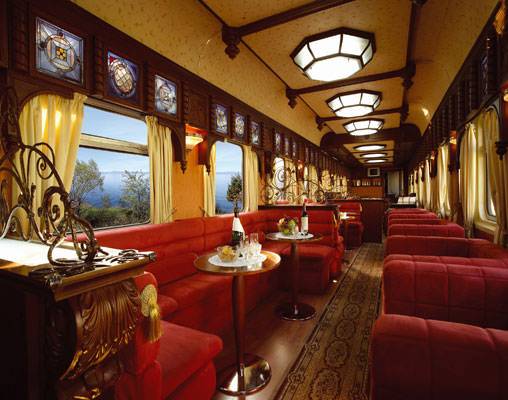
Parenzo - Das Erbe von Rom, Bizantyum
und Venedig
Unesco Weltkulturerbe
Mit dem Boot : Trieste 9.00 - Parenzo 10.30
Parenzo 18.40 - Trieste 20.10
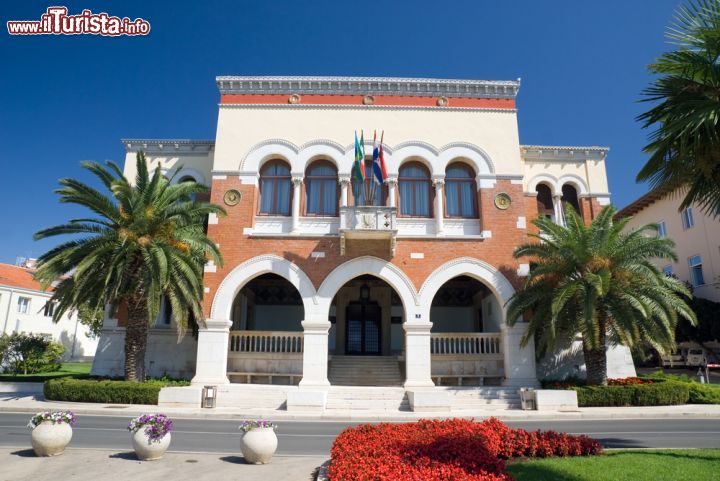
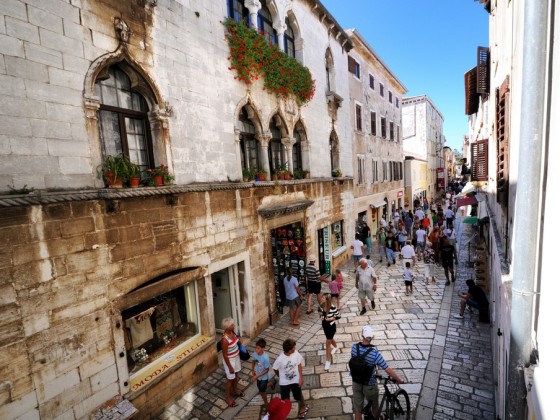
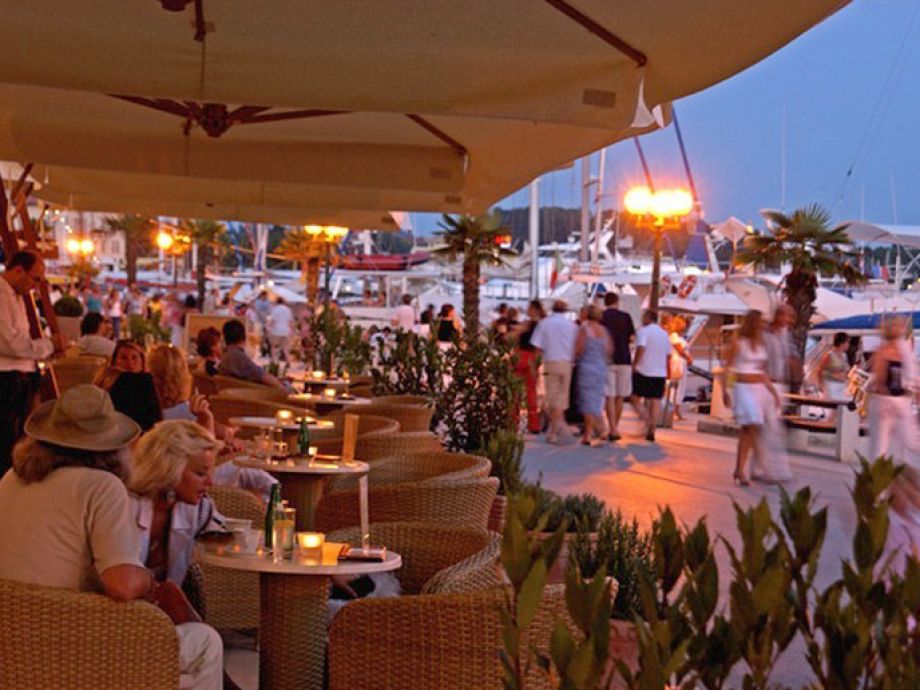
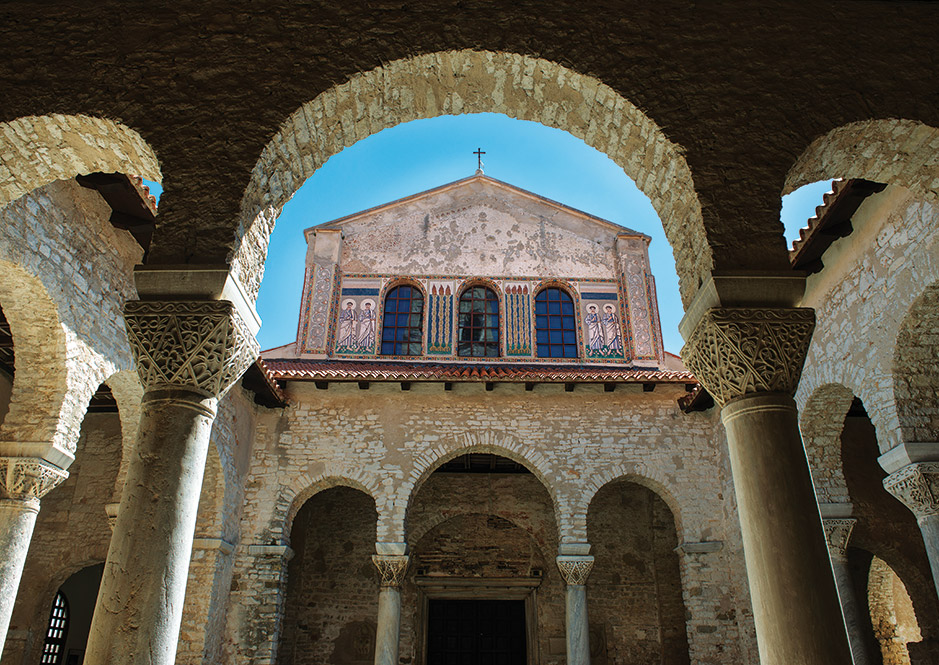
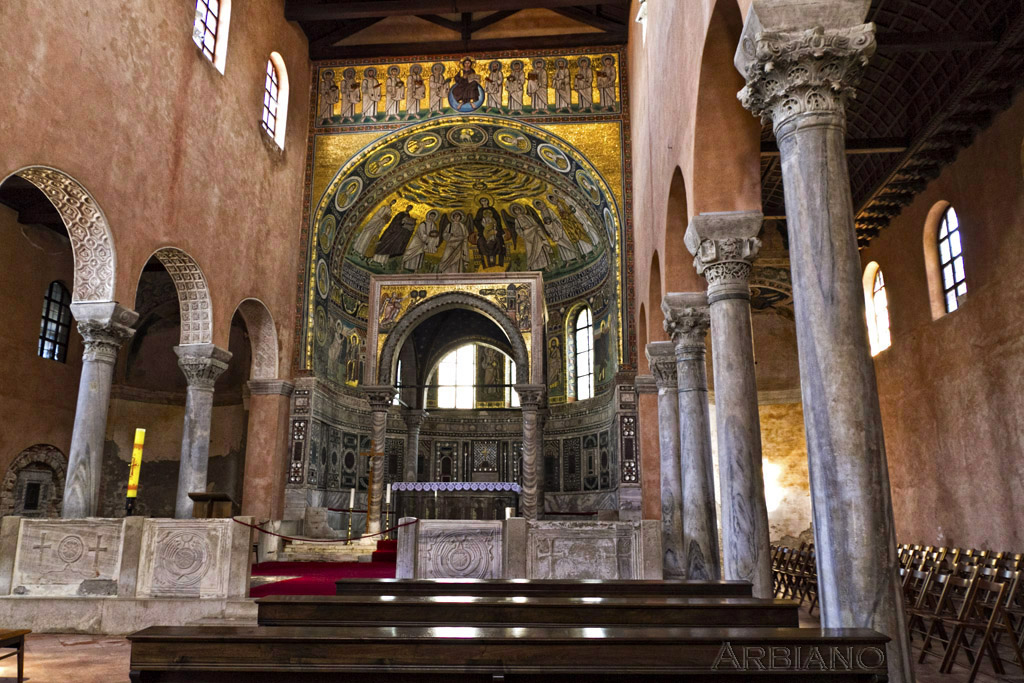
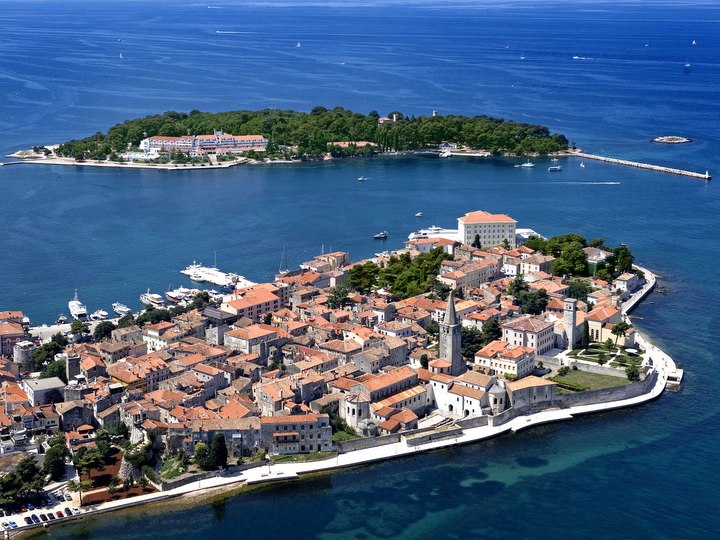
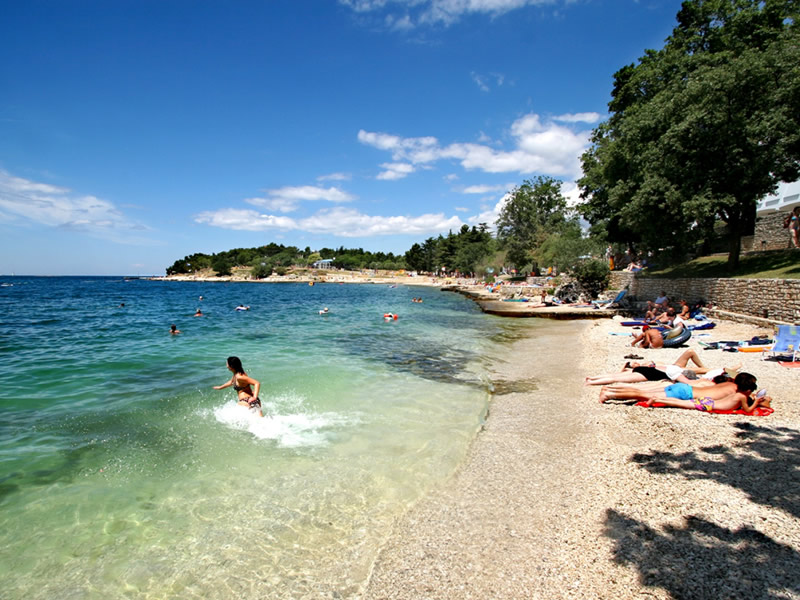
Rovigno, die Perle der Adria
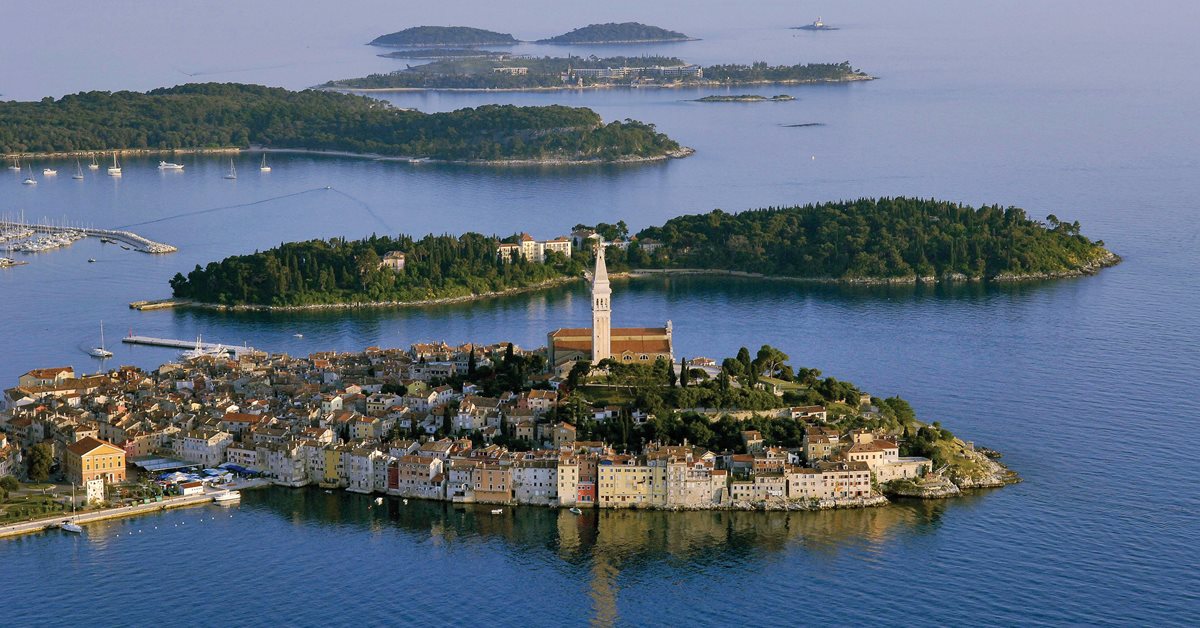
Mit dem Boot
Triest 9.00 - Rovigno 11.10
Rovigno 18.00 - Triest 20.10
Es ist schwierig alles Interessante der
Stadt aufzuzählen. Deshalb schlagen wir
Ihnen vor, die Stadt selbst zu besuchen und
sich ihr zu überlassen... Wir sind sicher,
daß Sie etwas nach Ihrem Geschmack finden
werden und daß Sie, früher oder später,
hierher zurückkehren.
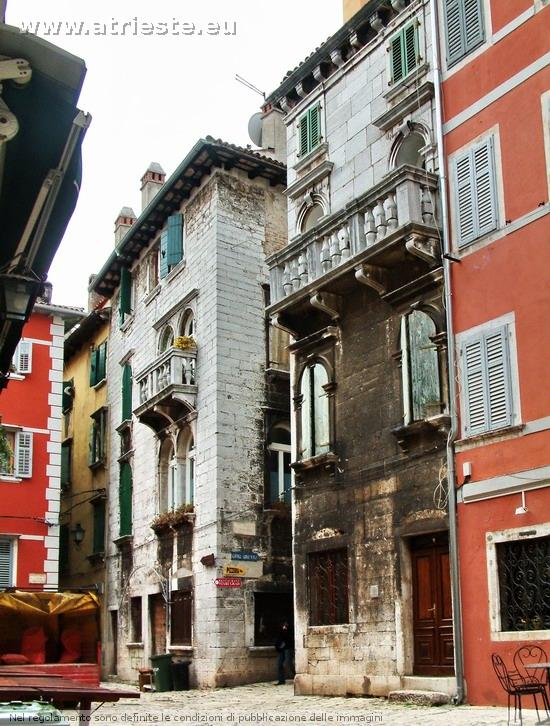
Rovigno zieht schon seit vielen Jahrzehnten
zahlreiche Touristen an und die Mehrheit
kehrt jedes Jahr wieder zurück. Der Grund
dafür ist im Flair vergangener Zeiten zu
suchen. Dies spüren Sie besonders, wenn Sie
durch die engen Altstadtgassen spazieren.
Die Stadt wurde auf einer Insel erbaut und
erst im 18.Jhd. mit dem Festland verbunden.
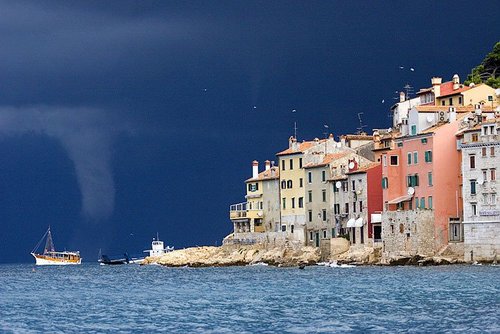
Naturwunder Tropfsteinhöhledie Skt. Kanzianer Grotten (22 km.v Triest)Unesco Weltnaturerbe Die Höhlen von St. Kanzian mit ihrem einzigartigen geologischen Formationen sind bereits seit 1986 als UNESCO Weltnaturerbes gelistet. In der Nähe von Divatscha, hat der Fluss Timavo auf seinem Weg in die Tiefe in jahrtausende langer Arbeit riesige Dolinen und tiefe unterirdische Canyons gegraben, den der Pfad abwärts in schwindelnder Höhe überquert. Tief unter der Erde heißt den Besucher auf seinem Weg durch die Höhlen das Tosen des Timavo willkommen. Charakteristisch für die Höhlen sind ihre vielen Wasserfälle und ausgedehnte Kammern (allein die „Svetina Halle“ ist gigantische 1400 m lang) mit beeindruckenden Tropfsteinen und Sinterformationen. Auf einem 6 km langen Weg läßt sich dieses Naturwunder aus nächster Nähe bewundern. 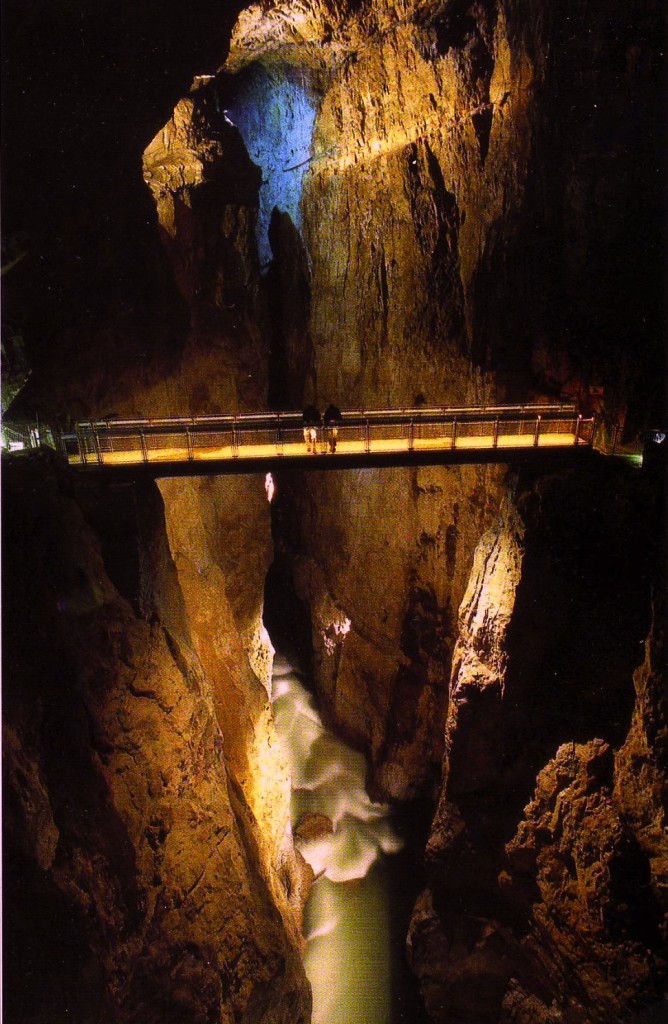
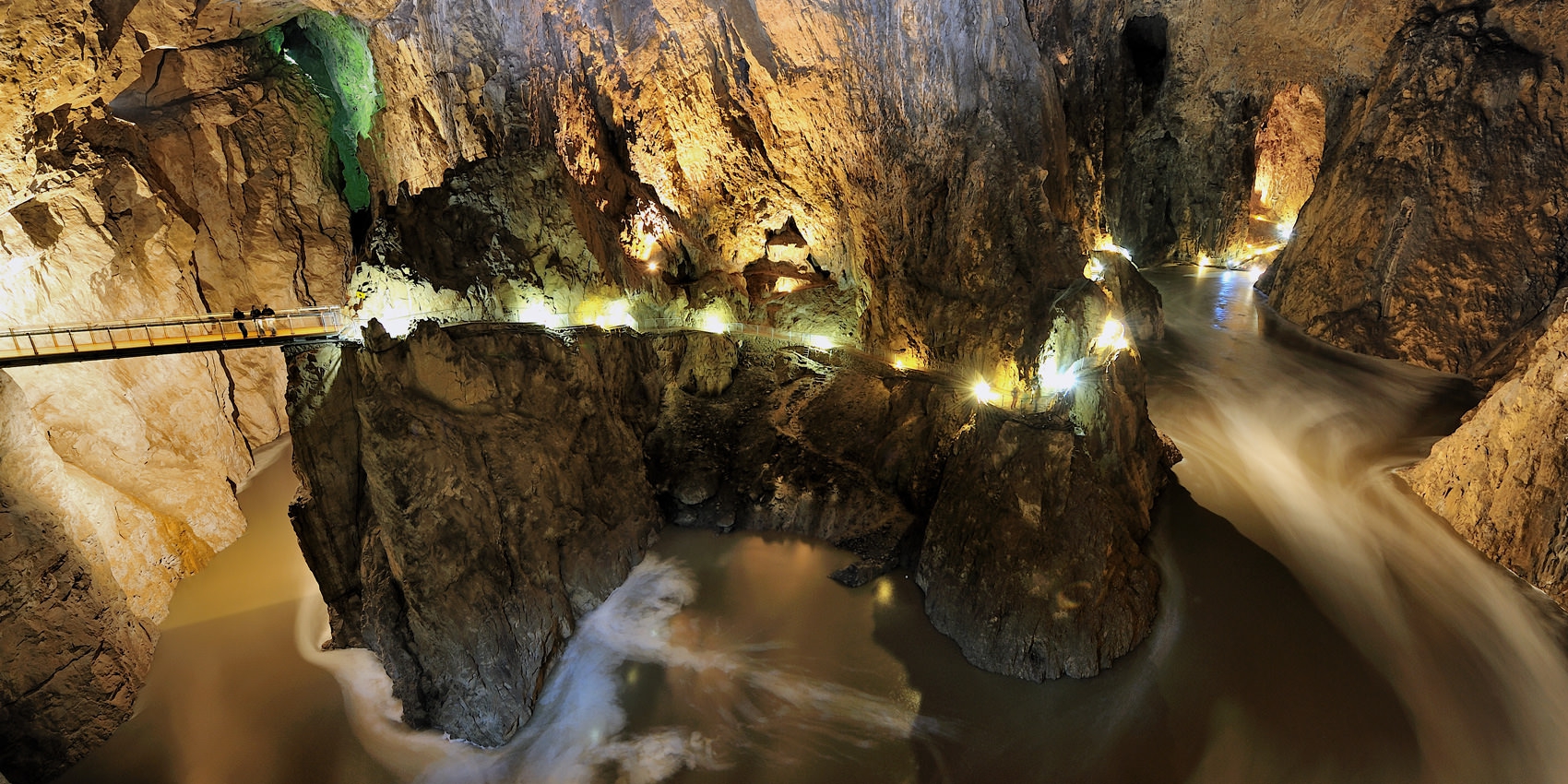
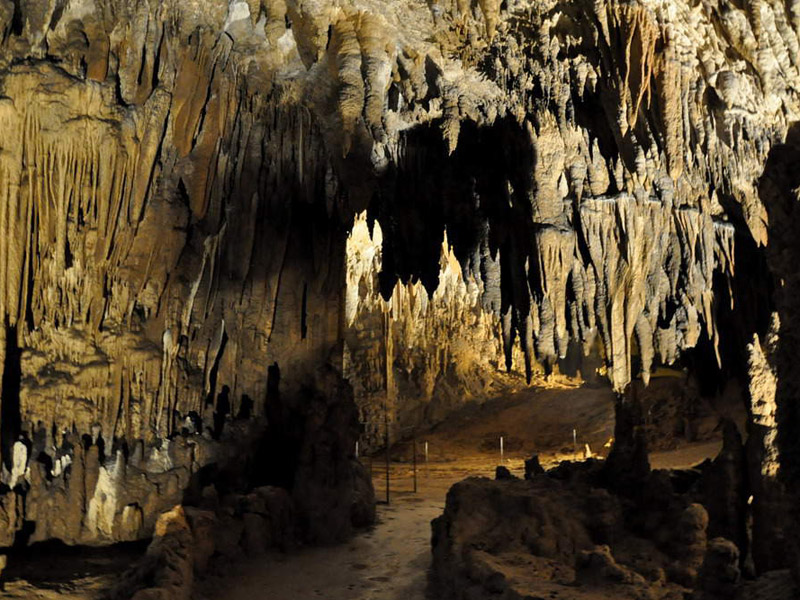
61 km. von Triest - Der smaragde Fluss Isonzo und die Tolmeiner Klammen. 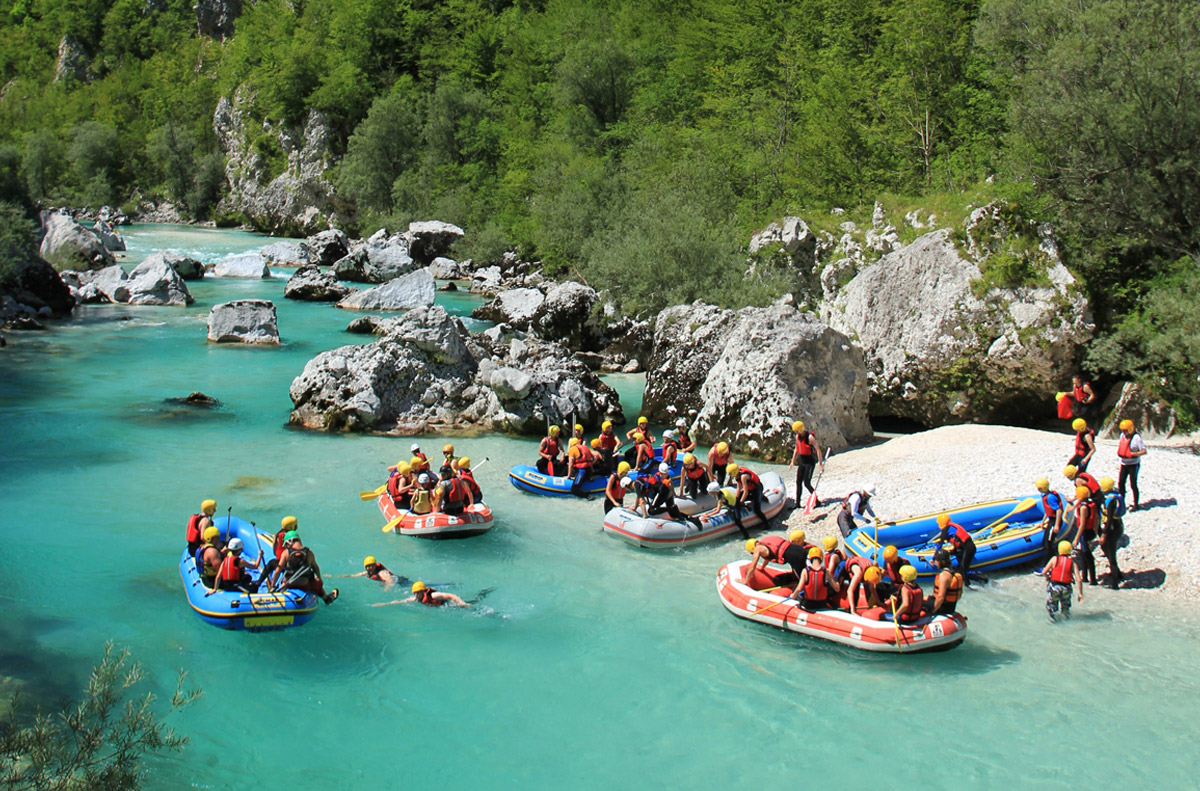
Der schönste Fluss Europas." Mit diesen Worten pries einst der bekannte Alpinist Julius Kugy die Soca, diesen smaragdfarbenen Fluss. In einer atemberaubenden Naturkulisse schillert der smaragdgrüne Wildfluss wie flüssiger Edelstein. 
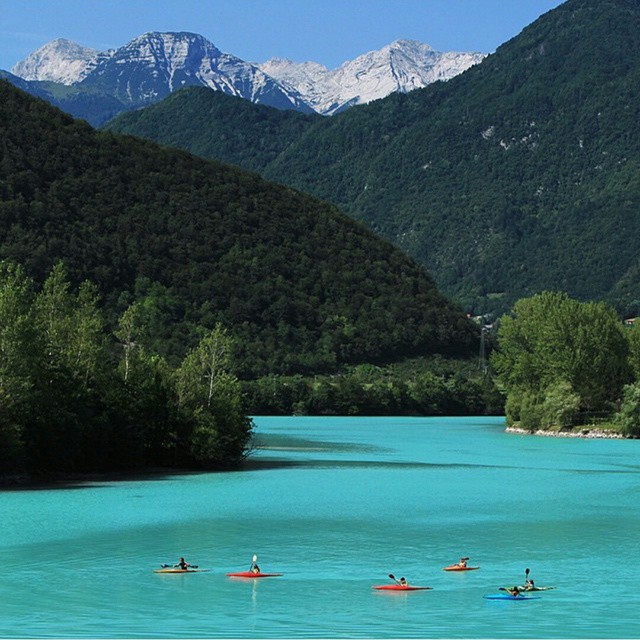
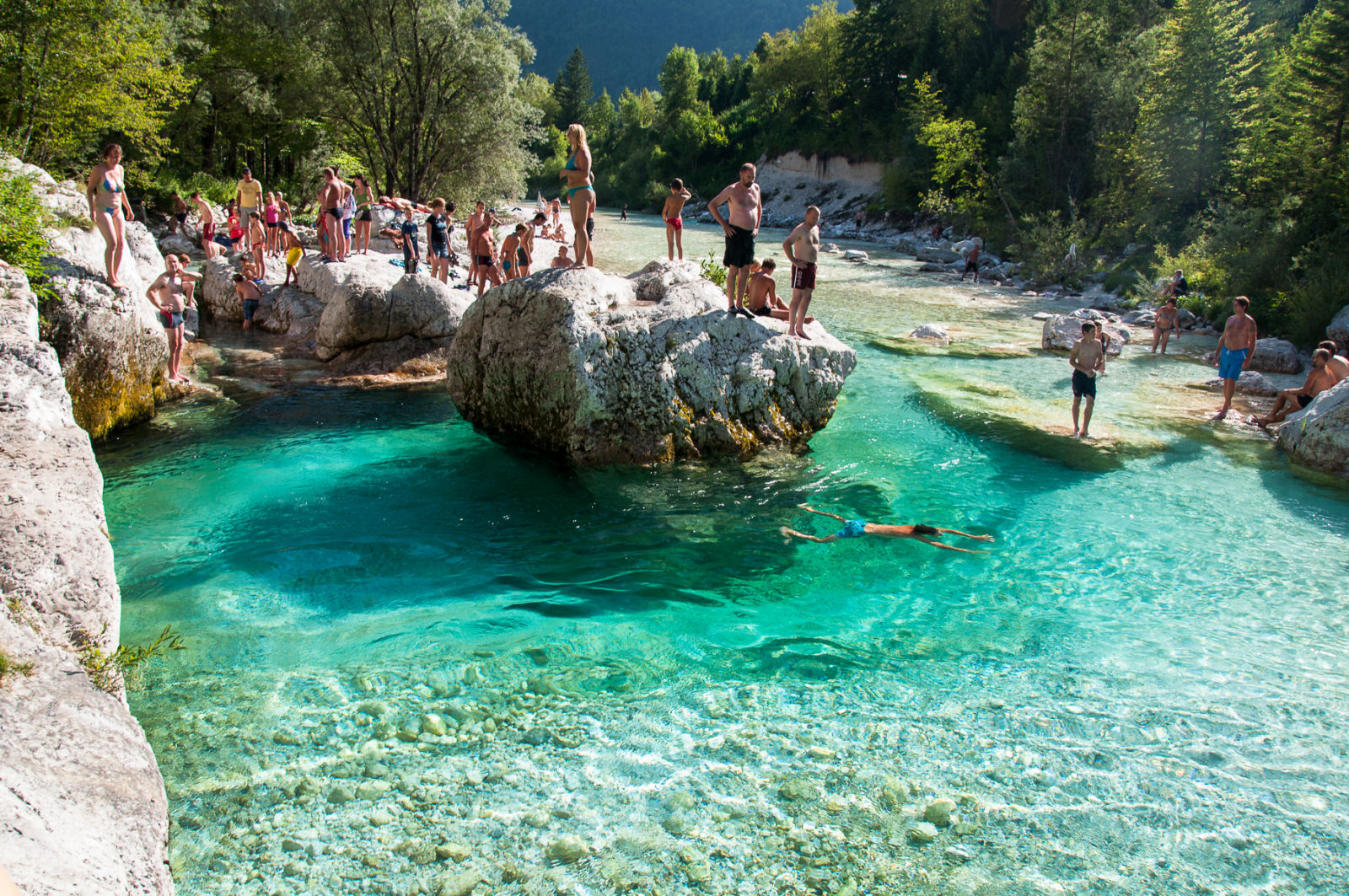
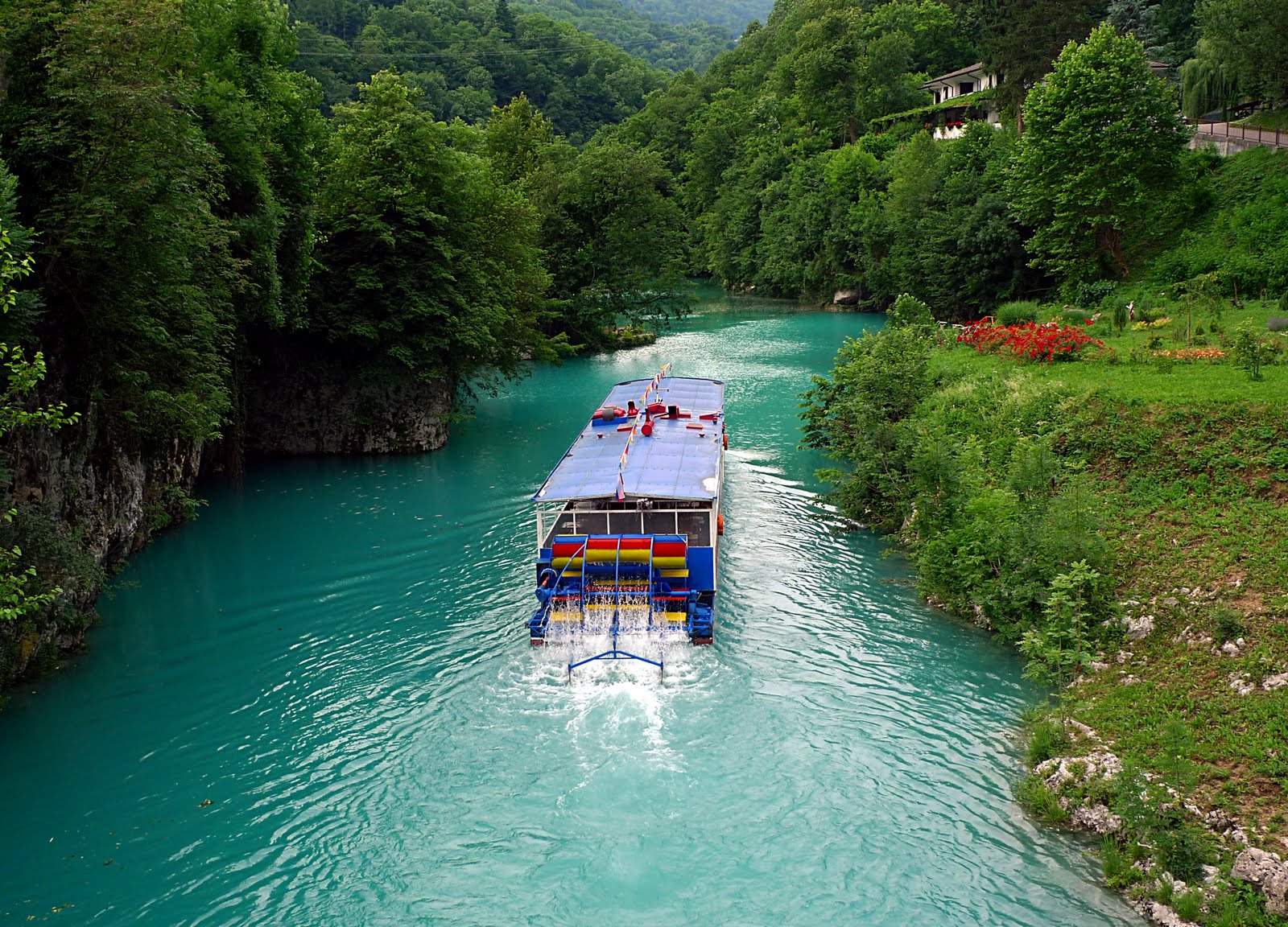
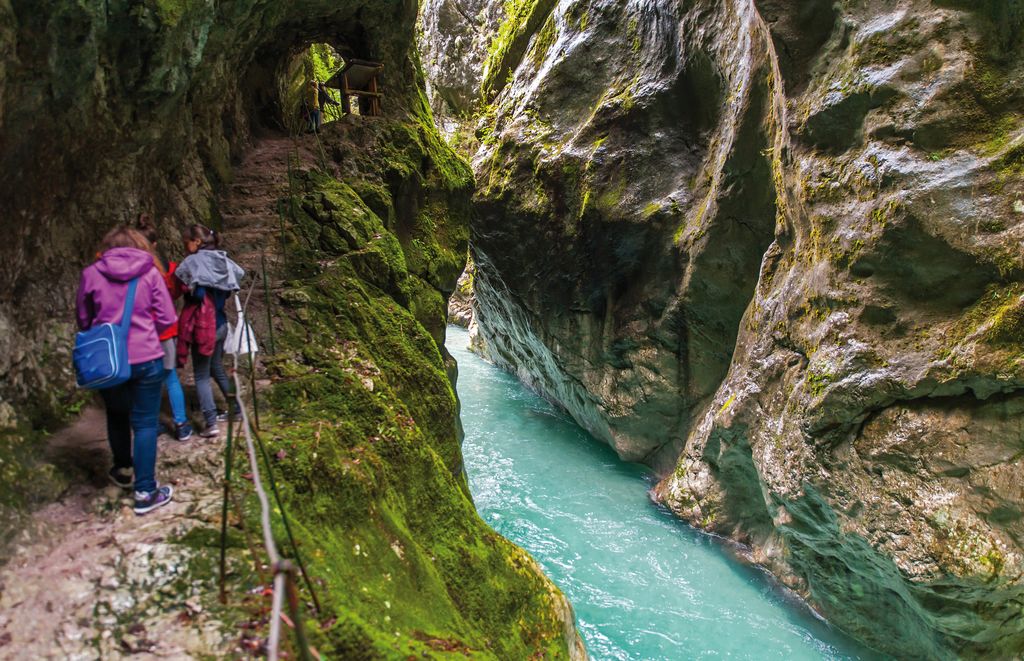
Aquileia Auf den Spuren der Römischen Kaiserzeit 47 km. Unesco Weltkulturerbe In Aquileia, Schutzwall der Invasionen seitens der Barbaren und Startpunkt vieler Feldzüge und Eroberungen sowie großes Handelszentrum, finden wir die Spuren des mächtigen römischen Reiches. Mit der antiken Straße Cardo, die Ruinen des Forums, die Basilika, das Mausoleum, die Therme und die Stadtmauer, ist Aquileia eine der wichtigsten Zeugnissen der antiken römischen Macht. In der Tat ist die Stadt eines der wichtigsten politischen und Verwaltungszentren der Kaiserzeit gewesen. Dank der guten Erhaltung ihrer archäologischer Schätze aber auch dank ihres Einflusses für die Verbreitung des Christentums im Mittelmeerraum, wurde sie 1998 zum UNESCO Weltkulturerbe ernannt. Das wichtige historische Kulturgut der Stadt kann außerdem in den drei Stadtmuseen bewundert werden: Im Museo Archeologico Nazionale (Nationales archäologisches Museum), reich an Zeitzeugnissen sowie Kunsthandwerk und andere Funde der antiken Stadt; Das Museo Paleocristiano (Frühchristliches Museum), in dem die Ruinen eines alten kirchlichen Baus aufbewahrt sind; Das Museo Civico del Patriarcato (Patriarchalisches Stadtmuseum), indem wichtige Reliquien aus Holz und Metall gelagert sind. Aquileia (Agley) war einer der wichtigsten Häfen des römischen Reiches, wichtiges Militär-, Handels- und Religionszentrum. Die Umgebung von Aquileia ist ein berühmtes Weinanbaugebiet. Auch die Natur mit Grundwasserquellen und der Lagune ist sehr reizvoll. Die Basilika aus der Patriarchenzeit mit seinen farbigen, detaillierten Mosaiken ist das bedeutendste Monument Aquileias. Die Archäologische Stätten und die Basilika sind Weltkulturerbe der Unesco seit 1998. Sehenswürdigkeiten: Archäologisches Nationalmuseum und frühchristliches Museum, der römische Flusshafen, das Forum, die Via Sacra, die Basilika, das römische Gräberfeld. Besonders Eindrucksvoll sind die bekannten Fußbodenmosaiken im Inneren aber auch außerhalb der Basilika, über die man zur Krypte der Fresken im byzantinischen Stil geführt wird. Schäden, die nach einem Erdbeben im Jahr 988 entstanden, zwangen im Jahr 1031 den damaligen Patriarch Poppone radikale Restaurierungsarbeiten vorzunehmen, die der Basilika römische Formen verliehen. Höhepunkt dieser Arbeiten wurde der Bau des großen Palazzo Patriarcale (heute nicht mehr vorhanden) sowie des eindrucksvollen Glockenturms, der mit seiner 70 m über die Friaulische Stadt herrscht. Udine - Weiden (67 km.) Ursprünglich war Udine (Weiden) eine kleine spätrömische Ansiedlung und das Schloss, das auf einem isolierten Hügel liegt, stammt aus dem 6. Jahrhundert. In der zweiten Hälfte des 13. Jh. wurde die Stadt zum Sitz des Patriarchats. 1420 bis 1797 fiel Friaul unter die Herrschaft Venedigs. In dieser Zeit wurden zahlreiche öffentliche und private Gebäude: Piazza Libertà, der Wiederaufbau des Schlosses, Palazzo Arcivescovile (Erzbischöflicher Palast), Palazzo Antonini-Cernazai, Projekt von Andrea Palladio und der Palazzo del Monte di Pietà. Im 18. Jh. gelangte Giambattista Tiepolo gerade hier zu seiner vollen künstlerischen Reife: Der Jahrhundert war kulturell sehr lebendig. Nach dem Untergang der Republik Venedig wurden1797 im Frieden von Campo Formio die Machtverhältnisse in Oberitalien neu geregelt. Friaul kam unter die Herrschaft der Habsburger und wurde ein Teil des Königreich Lombardo-Venetien. 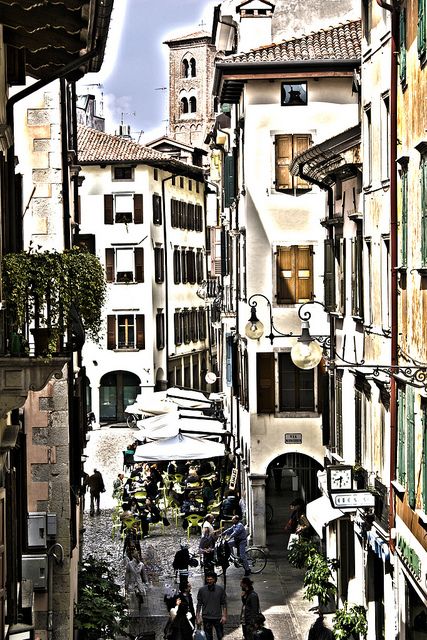
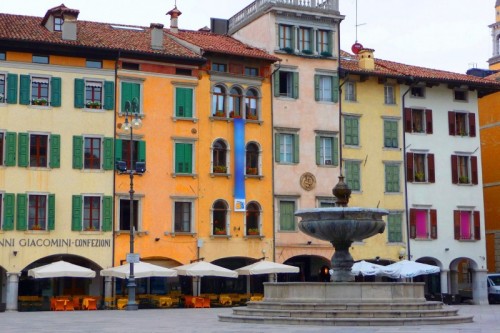
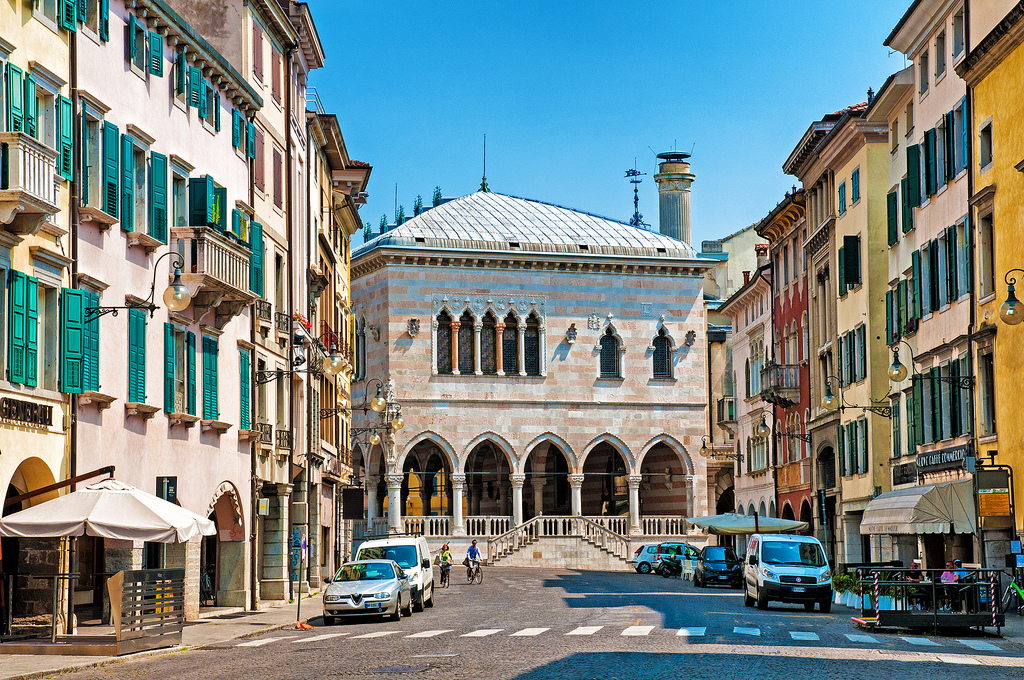
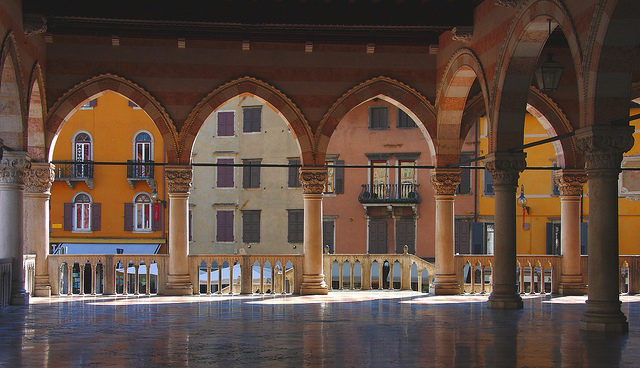
|
|
|

|
Mit “Mathias Sandorf” von Triest in die istrischen
Schluchten des Küstenlandess
Triest, die Hauptstadt des Küstenlandes, teilt sich
in zwei einander sehr wenig gleichende Städte: in eine neue
und reiche, die Theresienstadt, die sich geradlinig am Rande
der Bai erhebt, welcher der Mensch erst den festen Baugrund
abringen mußte, und in eine arme, armselige; letztere ist
unregelmäßig gebaut und liegt eingeklemmt zwischen dem
Korso, der sie von der ersteren trennt, und den Abhängen der
Höhen des Karst, deren Gipfel eine malerisch ausschauende
Zitadelle krönt. In den Hafen von Triest hinein ragt der
Molo von San Carlo, an dem vorzugsweise die Handelsschiffe
ankern..
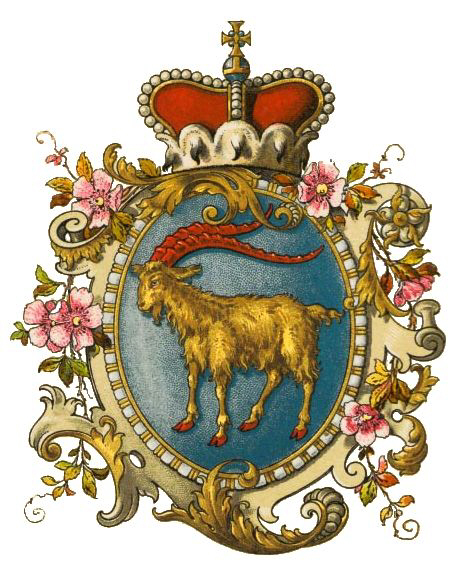
Dort sammeln sich mit Vorliebe, und oftmals in
beunruhigender Anzahl, Gruppen von jenen Umherlungerern,
welche nicht Haus und nicht Herd kennen und deren Anzüge,
Beinkleider, Jacken oder Westen der Taschen völlig entbehren
könnten, weil ihre Eigentümer niemals etwas besessen haben,
was sie dort hinein hätten tun können, und wahrscheinlich
auch niemals dergleichen besitzen werden.””
Jules Verne, Mathias Sandorf 1885Jules Verne, Mathias Sandorf 1885
LIPIZZA DIE HEIMAT DER WEISSEN PFERDE
Lipizza, im Karst- gebiet in der Nähe von Triest, noch
k. und k. österreichisches Hofgestüt.
|
Das historische Ortskern von Lipica wurde
auf den Überresten des ehemaligen Besitzes
des Bischofs von Triest errichtet. Das
Schlüsselelement der Ansiedlung waren das
Schloss mit dazugehörigem Gebaude, mit dem
sogenannten Hof umschlossen. Der Hauptweg
aus Triest führte durch den Triumphbogen
direkt bis zum Eingangsportal vom
»Wölbstall«, dem Hauptstall und wertvollsten
Gebäude im alten Ortskern, auch was die
Architektur angeht. Außerhalb des Hofes
befinden sich der heutige Gasthof, die
Kapelle und weitere Stallungen.
LIPIZZANER
Die Geschichte des Gestüts Lipica ist eng
mit den Habsburgern und der Zeit verbunden,
als das Pferd ein außerordentliches Gut
bedeutete und eine wichtige strategische
Rolle spielte. Die Geschichte von Lipica
beginnt somit im 16. Jahrhundert, als die
verlassene Sommerresidenz zum Hofgestüt
umfunktioniert wurde.
Der Zauber des Gestüts Lipica liegt nicht
nur in dem was wir sehen, sondern auch in
den Geschichten, die die Vergangenheit hier
geschrieben hat. Erst wenn wir die Wege der
Geschichte betreten, können wir die Größe
der hiesigen Reitereitradition verstehen.
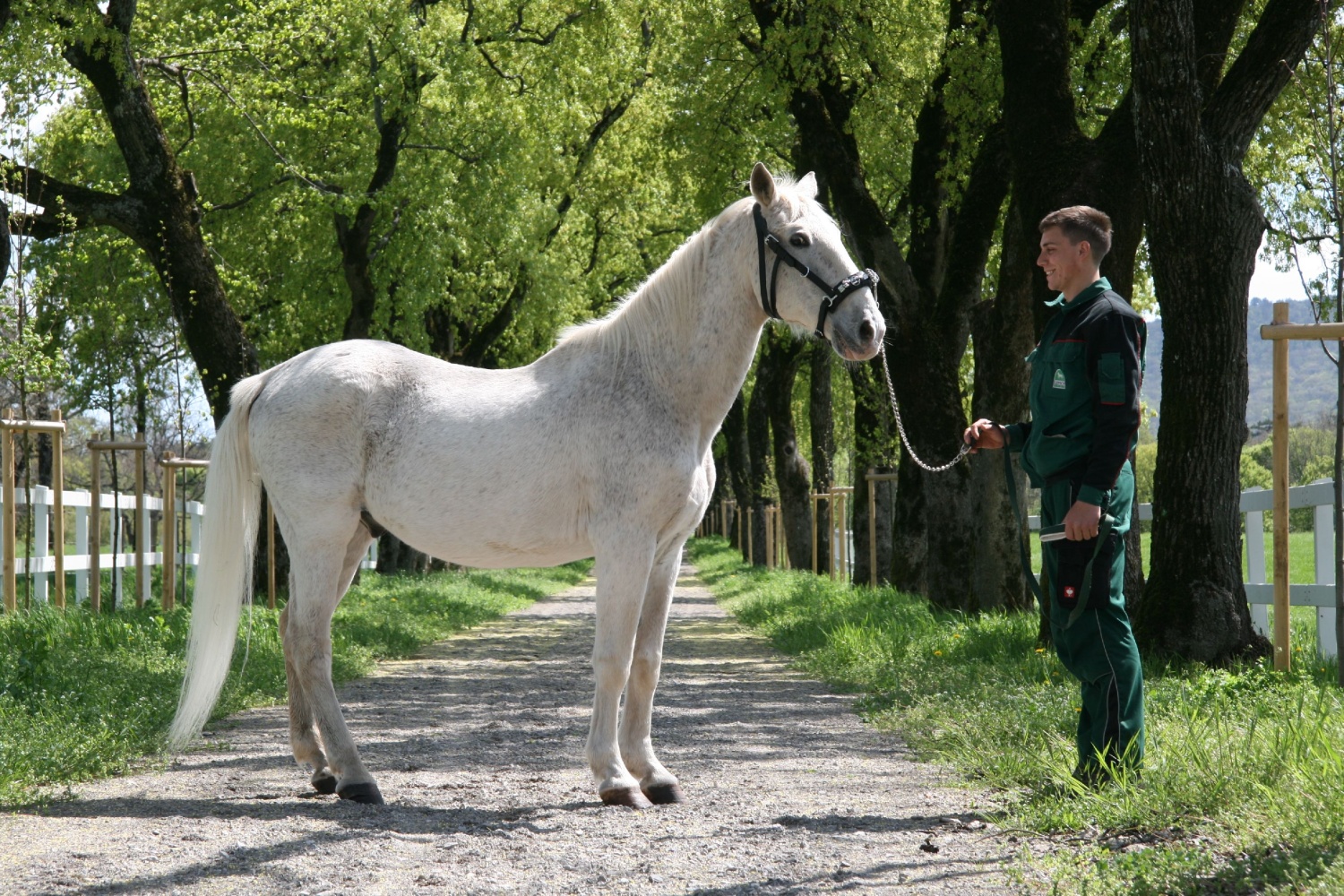
Für den ältesten Lipizzaner 926 Favory
Capriola XIV sorgt jetzt der jüngste
Pferdepfleger des Gestüts Lipica,
Klemen Braniselj, der gleich einige Jahre
jünger als der hochgezüchtete Hengst ist.
Besichtigung des Gestüts
Kutschenfahrt
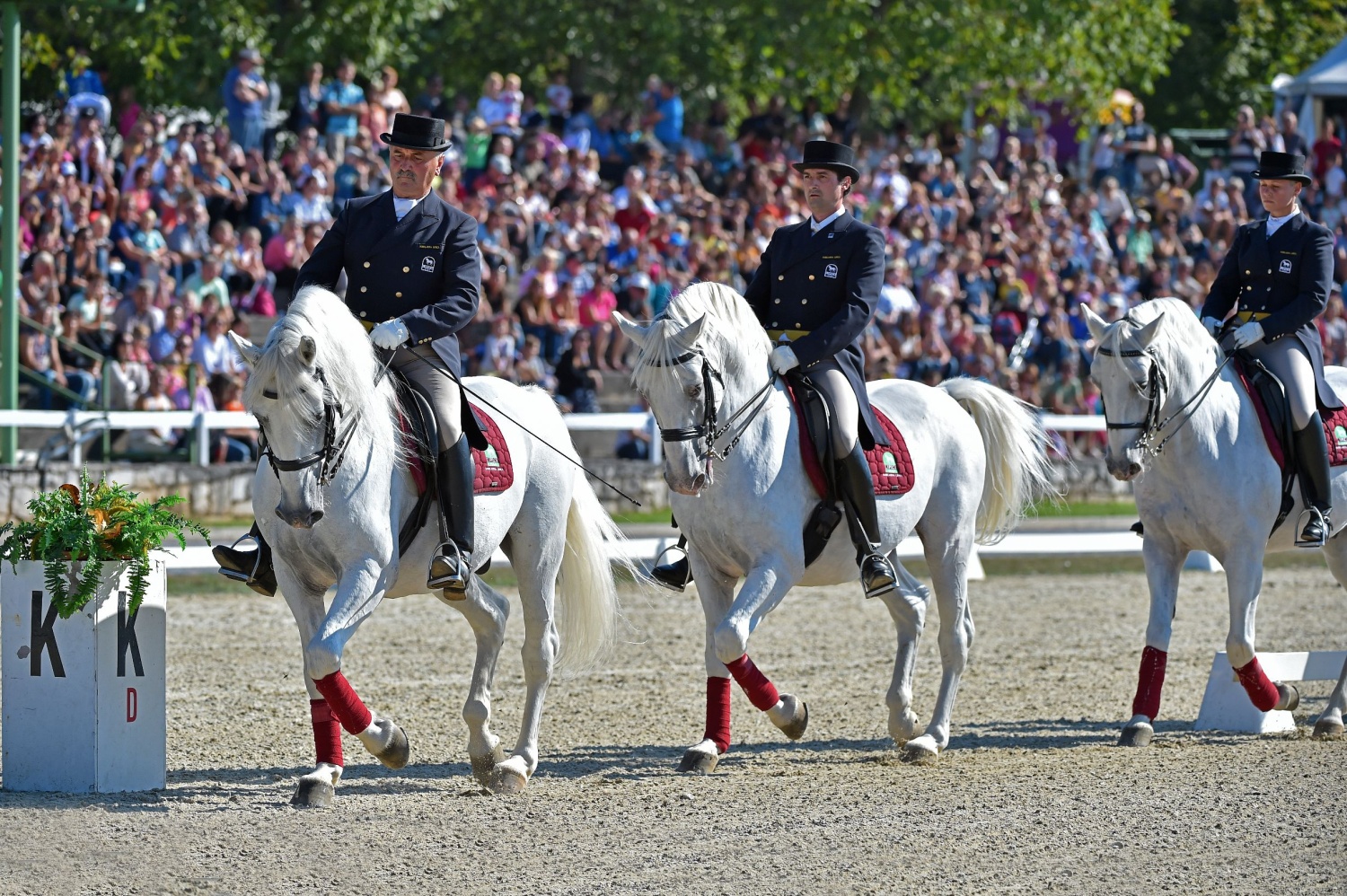
Adelsberger
Grotten (Postumia)
und Höhlenburg Lueg
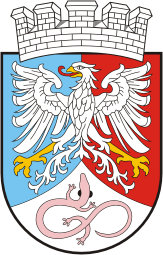
(46 km. / 45' Bus)
Beeindruckend spektakulär – die Höhlen von
Postumia
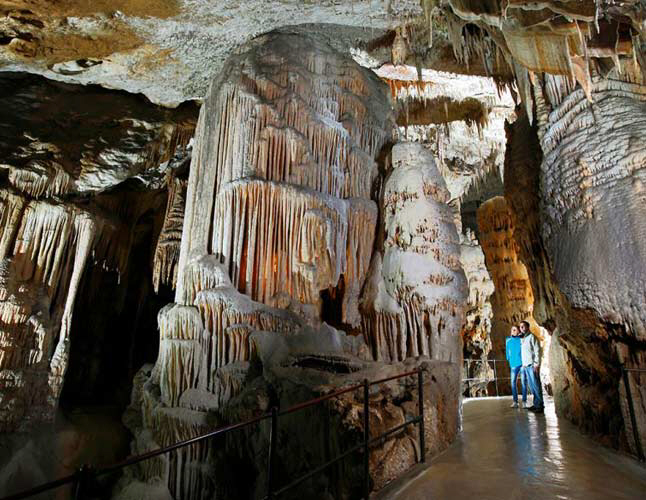
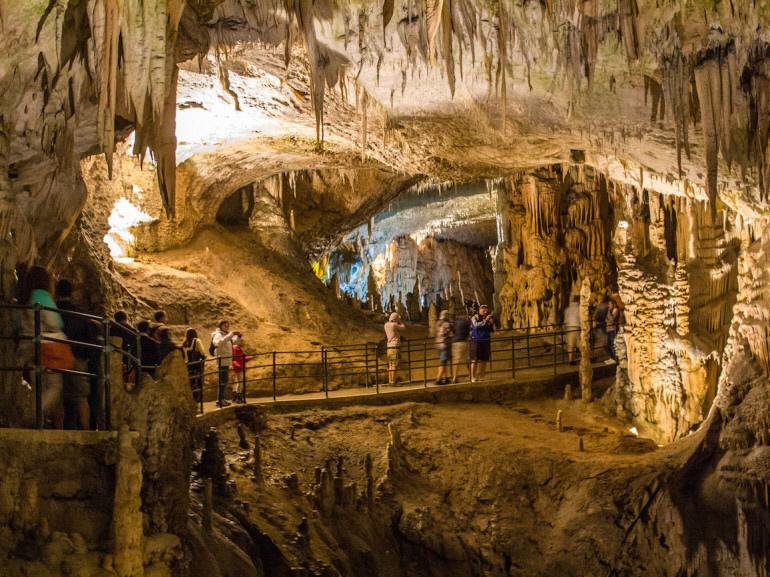
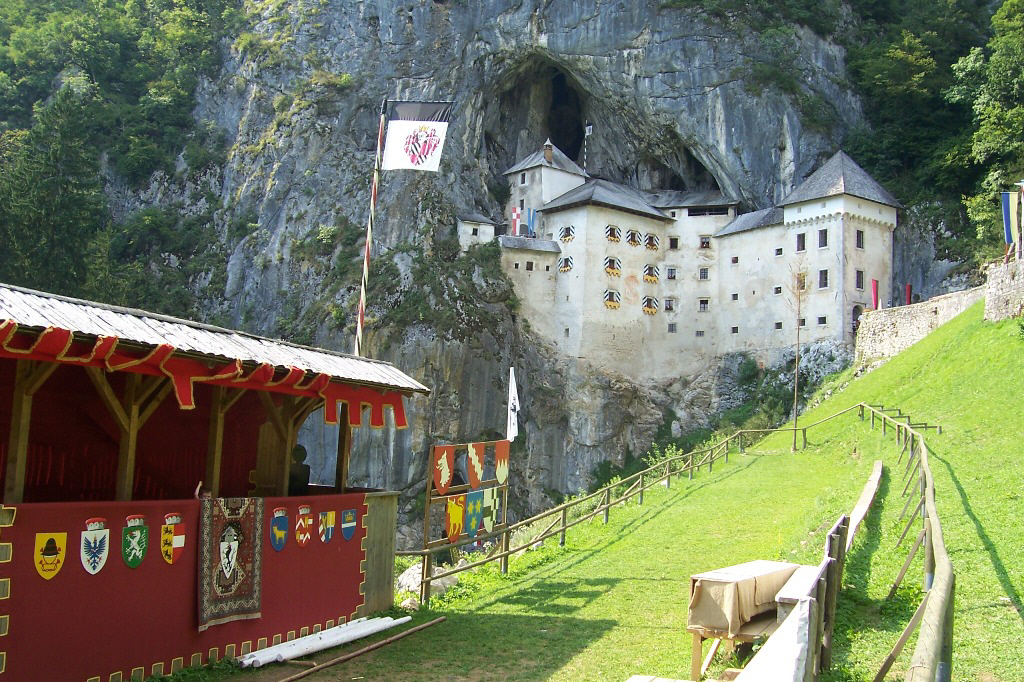
Ein sehr lohnendes Ziel ist ein Besuch der
berühmten Tropfsteinhöhle von Postojna. Die
Führung durch die Höhle, die früher
Adelsberger Grotte genannt wurde, dauert ca.
1, 5 Stunden und findet mehrmals täglich
statt, im Sommer zu jeder vollen Stunde. Der
Preis für die Besichtigung betrug im Sommer
2007 für Erwachsene 18 EUR, für Kinder 11
EUR.
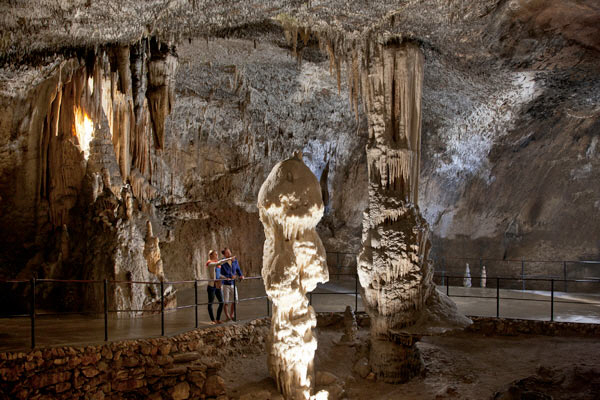
Die Besichtigung beginnt mit der etwa 2 km
langen Fahrt mit der Höhlenbahn durch
unterschiedlich hohe Gänge, Hallen mit
beleuchteten Tropfsteinen und den sog.
Ballsaal, die nicht nur unsere Kinder
begeistert hat. Endstation der
beeindruckenden Fahrt ist am „großen Berg“,
wo man aussteigt und die Besichtigung mit
einem deutschsprachigen Führer zu Fuß
fortsetzt.
Ganz in der Nähe (etwa 10 km entfernt) liegt
die ebenfalls sehenswerte Burg Predjama.
|
|
|
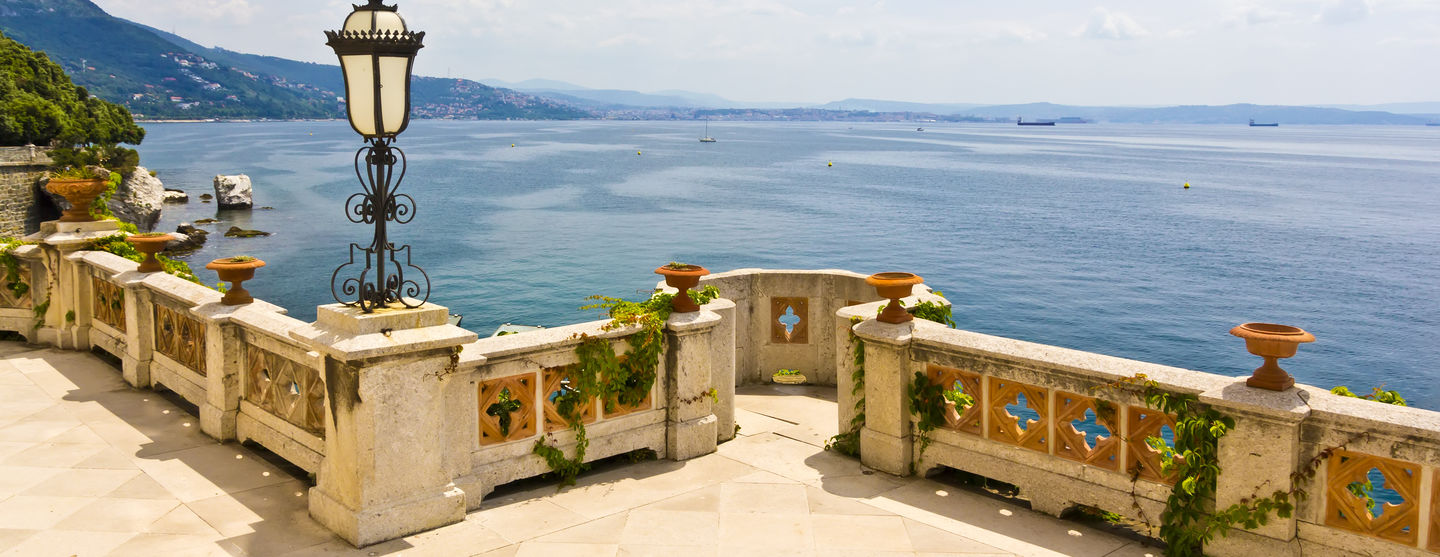

 Guide to Trieste
and its Riviera
Guide to Trieste
and its Riviera